
ISLAMABAD – A new case emerged from Khuzdar, Balochistan, exposing disturbing and rapidly evolving trend: the recruitment of young women into deadly terror networks.
Authorities arrested Laiba alias Farzana, a resident of the Chashma area in Zehri tehsil, in a high-stakes intelligence operation. What investigators uncovered during her interrogation has sent shockwaves through security circles.
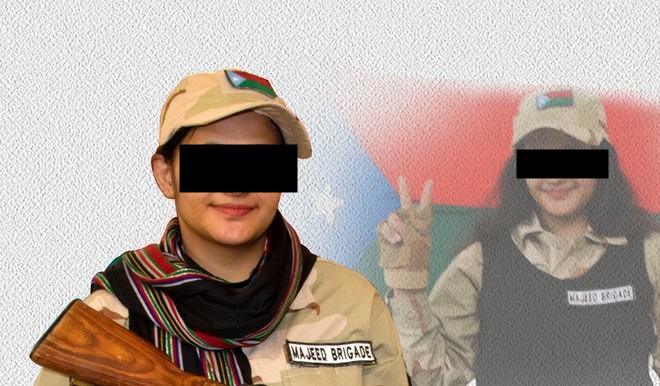
According to officials, Laiba was first approached by commander of Tehreek-e-Taliban Pakistan TTP, who prepared her for suicide mission. But the story does not end there. She was later transferred to the separatist group Baloch Liberation Army (BLA), where her role levels up and she was not only trained further but was also tasked with recruiting other young girls into the network.
Over the past few years, multiple female terror suspects have been apprehended across Balochistan. In 2022, a woman named Noor Jehan was arrested in Hoshab (Kech district). She was allegedly linked to the BLA’s elite Majeed Brigade and was planning a suicide attack targeting a Chinese convoy along the CPEC route. Authorities recovered a suicide vest and explosives from her possession.
The same year, another woman was detained in Turbat, reportedly being trained for a suicide attack under the same network connected to the Karachi University bombing, carried out by a female attacker.
If you look at year 2023, CTD arrested Mahil Baloch in Quetta’s Satellite Town, identifying her as a suicide bomber associated with the Baloch Liberation Front. As recently as December 2025, police intercepted a minor girl traveling from Balochistan to Karachi. She was radicalized via social media, and was on her way to meet her handler for a planned suicide attack.
Extremist groups like BLA are increasingly turning to women to carry out attacks. This shift became starkly visible in 2022 after the Karachi University attack, when a female suicide bomber struck, marking a turning point in militant strategy.
This evil move comes as women often face less stringent security checks in Pakistan, especially in KP and Balochistan site. They can be more easily manipulated through emotional, social, or familial pressure. Social media made online radicalization faster and more effective. In some cases, recruitment happens through close relatives or trusted contacts.
The involvement of women is reshaping the traditional landscape of terrorism, making detection more complex. However, officials insist that intelligence-based operations are successfully thwarting many planned attacks before they can occur.