DUBAI – Tensions across the Middle East intensified after Saudi Arabia intercepted ballistic missiles heading towards Riyadh, explosions were reported in Yemen’s capital, and unidentified projectile detonated near commercial tanker off the coast of Dubai, raising fresh concerns about regional security and global energy supplies.
The recent developments added another dangerous chapter to escalating confrontation between Yemen’s Houthi movement and Saudi-led coalition. With missile interceptions over Saudi Arabia, reported airstrikes inside Yemen and an unexplained maritime explosion near UAE, security concerns are mounting across the Arabian Peninsula and Gulf shipping routes.
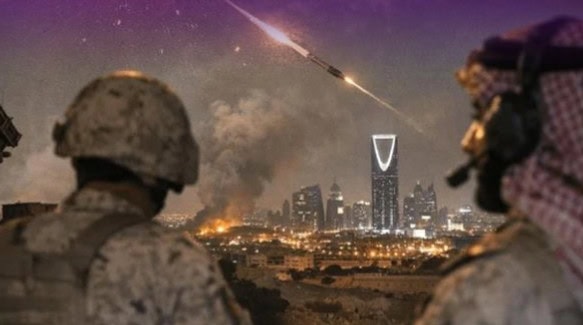
Both sides intensify their military operations, with strategic infrastructure, energy installations and commercial facilities increasingly caught up in the confrontation.
Saudi Arabia’s air defence systems intercepted two ballistic missiles heading towards Riyadh on Thursday, November 26, preventing the projectiles from reaching their intended targets, according to the Saudi-led coalition. Coalition spokesperson Major General Turki Al-Maliki confirmed the interceptions, while residents and journalists reported hearing powerful explosions across parts of the capital.
The latest threat was not limited to Riyadh. Saudi authorities also reported destroying two additional drones over the Eastern Province. Separate coalition updates referred to the interception of a cruise missile approaching western Saudi Arabia and a drone near Jeddah. The missile interceptions followed a November 24 attack on a prominent building in Riyadh’s King Abdullah Financial District. Saudi Civil Defence reported that 11 people were injured in the incident, including two Saudi nationals, two Indians, three Nepalese and four Egyptians.
The targeted high-rise is associated with the Public Investment Fund (PIF), Saudi Arabia’s sovereign wealth fund that finances major investment projects. Saudi officials attributed the attack to a Houthi drone, highlighting the growing threat to the kingdom’s commercial and financial infrastructure.
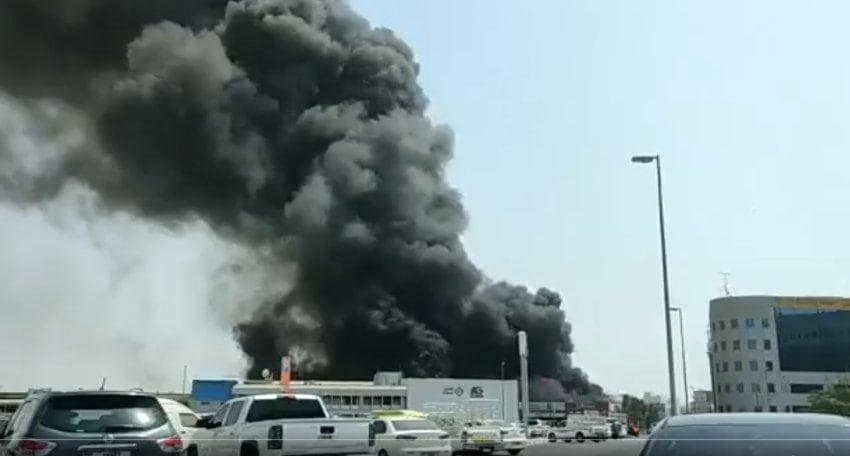
Yemen’s capital also witnessed fresh explosions following reported airstrikes near Sanaa International Airport and other locations. Houthi-affiliated media outlets, including Al-Masirah and Saba, reported powerful blasts in the vicinity of the airport. Residents described hearing explosions that reportedly shook nearby buildings.
The reports emerged after the Saudi-led coalition intensified military operations against Houthi positions and infrastructure in Yemen. Its reported targets included locations in Hodeidah, Saada and Amran.
Hodeidah remains particularly significant because its port serves as a major gateway for food, fuel and commercial supplies entering northern Yemen. Any prolonged disruption to its operations could worsen the humanitarian situation in the conflict-hit country.
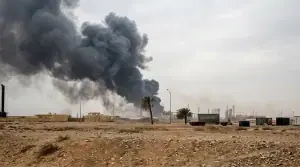
Saudi Arabia’s energy infrastructure has also become a major focus of the escalating confrontation. Houthi military spokesperson Yahya Saree claimed on November 25 that the group had launched an attack against the Ras Tanura oil complex in Saudi Arabia’s Eastern Province. Saudi-led coalition subsequently announced that its air defences had intercepted four drones over the Ras Tanura area.
The facility is important to Saudi Arabia’s petroleum industry. Its refinery has a processing capacity of approximately 550,000 barrels per day, while the adjoining export terminal plays a significant role in the kingdom’s crude oil supply network.
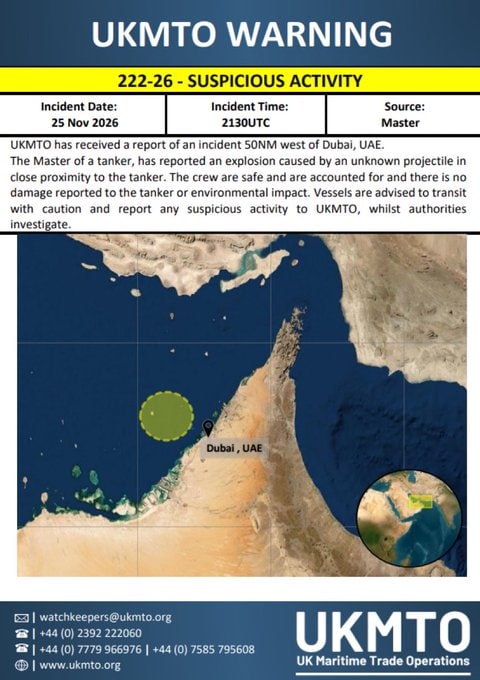
Adding another dimension to the regional security crisis, an unidentified projectile exploded close to a commercial tanker approximately 50 nautical miles, or 93 kilometres, west of Dubai.
UK Maritime Trade Operations (UKMTO) received the report from the vessel’s master and issued a maritime security advisory following the November 25 incident. The explosion occurred close to the tanker but did not hit the vessel. All crew members were reported safe, with no injuries, structural damage or environmental pollution.