
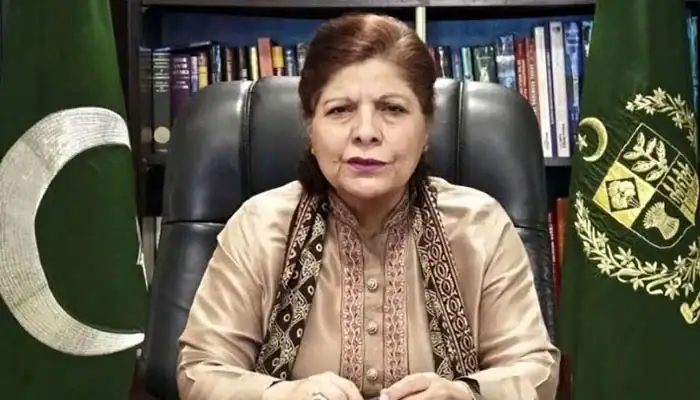
KARACHI – Dr Shamshad Akhtar, a pioneering economist, former caretaker finance minister, and the first female governor of the State Bank of Pakistan (SBP) passed away on Saturday following a cardiac arrest, leaving behind a legacy of transformative economic reforms and global recognition.
Dr Shamshad made history when she assumed office as state Bank governor on January 2, 2006, becoming the 14th governor of Pakistan’s central bank and the first woman to lead the institution since its inception in 1948.
Her tenure was hailed for bold financial sector reforms, decisive economic policies, and international engagement that raised Pakistan’s profile on the global stage.
Before her groundbreaking role at SBP, Dr Akhtar held senior leadership positions at Asian Development Bank (ADB). She served as Director General of the Southeast Asia Department from 2004, having earlier been Deputy Director General and Director of the Governance, Finance and Trade Division in ADB’s East and Central Asia Department. Her career at ADB began in 1990, and she steadily rose through the ranks, becoming a manager in 1998. Between 1998 and 2001, she coordinated ADB’s engagement with the APEC Finance Ministers Group and contributed to several key internal committees, including the Reorganisation, Appeals, and Oversight Committees.
Her work at ADB also gave her a global platform, representing the bank at major international forums, including the Bank for International Settlements and the International Organisation of Securities Commissions (IOSCO). She developed unmatched expertise in the financial and economic affairs of Southeast Asia, Central Asia, and China.
Earlier in her career, Dr Akhtar spent nearly a decade as an economist at the World Bank’s Resident Mission in Pakistan and briefly served in the planning offices of both the federal and Sindh governments. Her work spanned macroeconomic analysis, monetary and fiscal policy, financial sector development, and structural reforms in key sectors such as industry and agriculture.
She received her early education in Karachi and Islamabad, and earned BA in Economics from the University of Punjab in 1974, followed by an MSc from Quaid-e-Azam University, an MA in Development Economics from the University of Sussex in 1977, and a PhD in Economics from Paisley College of Technology, UK, in 1980.
A Fulbright post-doctoral fellow, she also served as a visiting fellow at Harvard University’s Department of Economics in 1987. Throughout her career, she presented numerous research papers at international conferences, focusing on monetary and fiscal policy, banking and capital markets, financial regulation, and industrial and corporate restructuring.
He death marks the end of an era for Pakistan’s economic leadership. Her trailblazing work, both domestically and internationally, leaves an indelible mark on financial governance, economic reform, and the empowerment of women in the field of economics.