
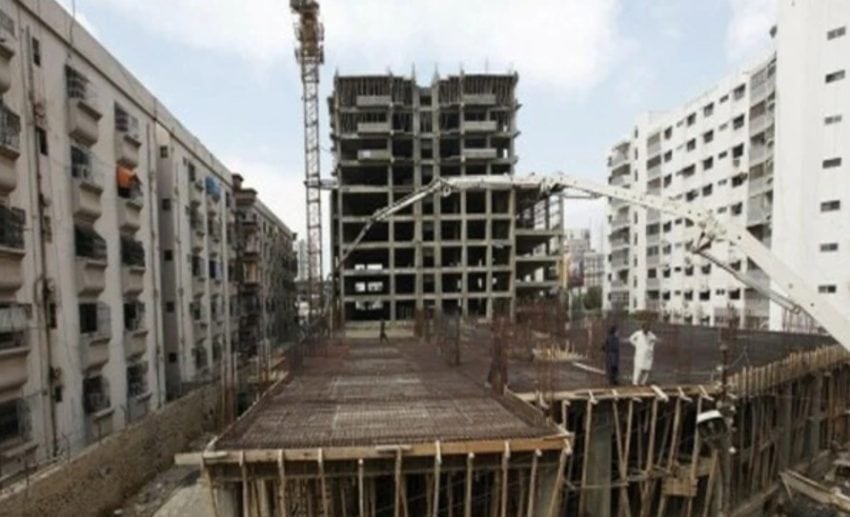
KARACHI – In light of recent decisions by the Supreme Court and the Federal Constitutional Court, the Sindh Master Plan Authority has withdrawn the ban imposed in 2019 on converting residential plots for commercial use across the province, including Karachi and Hyderabad.
A new formula for the distribution of infrastructure fees has also been introduced.
According to a notification issued by the Master Plan Authority, the Supreme Court’s decisions of 2018 and 2019, along with the Sindh Building Control Authority (SBCA) notification imposing the ban, have been declared ineffective and withdrawn. All relevant institutions have been directed to implement the court orders in letter and spirit.
Officials clarified that withdrawing the ban does not mean that every residential plot will automatically become commercial. Any change in land use will still require compliance with relevant laws, zoning regulations and the master plan, as well as obtaining the necessary NOC and approval from the competent authority.
Senior Director of the Sindh Master Plan Authority, Shakeel Siddiqui, said commercialization would be allowed on several major roads in Karachi, including Beach Avenue Road, Khayaban-e-Saadi, Khayaban-e-Rumi, Nishter Road, Dhoraji Road, Alamgir Road, Shahrah-e-Noor Jehan, Stadium Road, Shahrah-e-Usman, Tipu Sultan Road, Shahrah-e-Humayun, Shahrah-e-Faisal, Tariq Road, Rashid Minhas Road, University Road, Shahrah-e-Pakistan, Nazimabad A Road, North Nazimabad 300-Foot Road, Shahrah-e-Jahangir, Khayaban-e-Iqbal, Khayaban-e-Jami, Khalid Bin Waleed Road, Jamaluddin Afghani Road, Allama Iqbal Road, Sir Syed Ahmed Road and Shaheed-e-Millat Road, among others.
The court has also made it clear that amenity plots designated for parks, hospitals, schools, mosques, playgrounds and graveyards cannot be used for commercial or residential purposes under any circumstances.
The ban on commercial use of residential land in Karachi had kept several projects by builders and businesses pending for years. Along with lifting the restriction, a new formula for distributing infrastructure fees collected for changes in land use has also been implemented.
Shakeel Siddiqui said the Local Government and Housing and Town Planning Department had prepared a new formula for distributing infrastructure fees collected by the Sindh Master Plan Authority among various municipal bodies and authorities. A formal notification has been issued, cancelling all previous orders and notifications.
Under the new notification, the districts and divisions across Sindh have essentially been divided into three categories for the collection and distribution of fees.
In Karachi Division and Hyderabad district, 45% of the infrastructure fee collected for a change in land use will go to the relevant Town Municipal Corporations (TMCs), 25% to the Sindh Master Plan Authority, 20% to the Water and Sewerage Corporation, and 10% to the Metropolitan or Municipal Corporation.
A separate distribution mechanism has been established for the urban and rural areas of the divisional headquarters of Mirpurkhas, Shaheed Benazirabad, Sukkur and Larkana. Within the jurisdiction of a Municipal Corporation, the fee will be distributed on the same basis as in Karachi and Hyderabad: 45% to Town Municipal Corporations, 25% to the Sindh Master Plan Authority, 20% to the Water and Sewerage Corporation and 10% to the relevant Municipal Corporation.
In areas outside the jurisdiction of a corporation, 75% of the total fee will go to the relevant Municipal Committee, Town Committee or District Council, while the remaining 25% will be transferred to the Master Plan Authority.
Chairman of the Association of Builders and Developers (ABAD), Hassan Bakhshi, welcomed the decision, saying the real estate sector had breathed a sigh of relief following the development.
However, he cautioned that allowing unchecked commercialization without proper planning and infrastructure improvements could further strain Karachi’s traffic, water supply, sewerage and other civic services.
He said commercialization in Karachi had been halted at a time when it was allowed across the rest of Pakistan. He added that allowing commercialization along the 26 declared roads would create more employment opportunities and provide greater options for buyers.