As a Pakistani security analyst who’s spent years following the trail of regional terrorism, I’ve grown used to one of the worst parts of the job: turning unbearable grief into rows of numbers and dates on a screen. But no spreadsheet, no matter how detailed, can ever carry the sound that rips through you — the raw, throat-clawing cry of a mother whose child has just been taken, or the way an entire neighbourhood feels suddenly hollowed out and forever marked by blood.
This February 6 the numbers I’ve carried for years stopped being abstract and became wounds: a suicide bomber walked into the Khadija Tul Kubra mosque in Islamabad during Friday prayers and ended 32 innocent lives—people who had come to pray, to find solace—and injured more than 160 others so badly that hospitals became battlegrounds of their own, all of it happening in the centre of our capital, where safety should never feel conditional. Just as we tried to gather ourselves, Ramadan began, the month we turn inward for peace, mercy, and spiritual closeness, yet the violence answered instead: an explosives vehicle destroyed a security post in Bajaur, taking 11 courageous lives along with a child’s; then in Bannu a suicide attack and gunfire struck a military convoy, claiming more of the men and women who stand between terror and the rest of us, turning the holy month’s promise of calm into another layer of shared mourning.
As the death toll relentlessly climbed across the country, a sickening reality set in. Pakistan was under a sustained, calculated attack by an enemy acting with absolute impunity. But the bitterest pill wasn’t just the violence; it was the fact that we knew exactly where the architects of these massacres were sleeping safely at night.
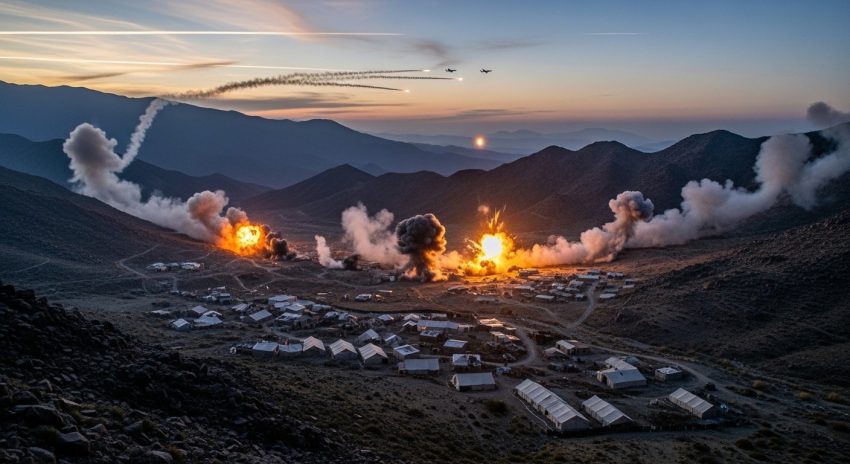
By late February, Islamabad hit an undeniable breaking point. For months, our diplomats had exhausted every available avenue to secure our borders. We handed over countless detailed dossiers to the Taliban-led interim government in Kabul, showing undeniable proof that Afghan soil was being used as a launchpad for transnational slaughter. They were met with deafening silence. Forced firmly into a corner, on the night of February 21, bleeding into February 22, Pakistan did the only thing it had left to do: we authorized a series of intelligence-based, precision airstrikes in Afghanistan’s Nangarhar, Paktika, and Khost provinces.
To those in the international community watching from the safety of afar, I understand how such a move looks like a terrifying escalation. But lived reality looks very different than geopolitical theory. This was a deeply reluctant, desperately necessary act of self-defense. International law firmly recognizes a sovereign state’s inherent right to defend its people against cross-border armed attacks—especially when the host country is unwilling, or functionally unable, to stop the threat. Let me be clear: we did not strike Afghanistan to wage a war against a neighbor. We crossed that airspace to strike seven meticulously mapped terrorist infrastructure nodes. We did it to keep Pakistanis breathing.
The sheer scope of what our operations uncovered should horrify anyone tracking global terror. It highlights just how massive a threat Kabul is quietly tolerating. Across Nangarhar, Khost, and Paktika, those precision strikes eliminated more than 105 terrorists tied to the Tehreek-e-Taliban Pakistan (TTP)—a group our state now accurately calls Fitna al-Khawarij, recognizing how deeply they have perverted Islamic faith to justify their nihilistic butchery.
And these weren’t just foot soldiers caught in the crossfire—these strikes went straight for the heart of the networks that have been bleeding our country for years. Our forces hit the nerve centers, the places where plans were hatched and orders given, neutralizing some of the most dangerous high-value targets who’d long evaded justice while directing terror from across the border. Among them was Maulvi Akhtar Khalil, a senior TTP figure who’d been hiding out in Ghani Khel, pulling strings for attacks deep inside Pakistan; Akhtar Muhammad, the right-hand man and direct deputy to the ruthless Hafiz Gul Bahadur, whose faction has orchestrated so much brutality in our northwest; and even Osama, a key local commander embedded with Al-Qaeda in the Indian Subcontinent (AQIS), whose presence underscored how these groups intertwine to threaten not just us but the wider region. Taking them out wasn’t about numbers alone—it was about severing command chains, disrupting operations at the highest levels, and finally denying these architects of pain the safety they thought Afghan soil would forever provide. For every mother who’s wept, every family shattered in Islamabad or Bajaur or Bannu, this precision delivered a measure of accountability that cold data could never capture, a quiet but firm step toward reclaiming security for the people who deserve to live without fear.
When you look at the tactical breakdown of these strikes, the illusion of a disorganized, rogue insurgency shatters. We are dealing with a heavily armed terrorist ecosystem entirely sheltered by—and integrated into—Afghanistan. The targets we hit laid bare a damning, undeniable complicity in Kabul. In Argun, terrorists weren’t hiding in caves; they were operating out of Taliban bases and using a local clinic as a staging ground. Over in Barmal, a supposed “religious school” was functionally operating as a fortified military redoubt for the “Special Brigade of Mansoori Corps.” Most shockingly, terrorists were actively commingled with regular troops belonging to the Taliban’s 1st Infantry Division’s Khalid bin Walid Corps.
Faced with this humiliating public exposure of their own state-sponsored sanctuary, the authorities in Kabul fell back on a masterclass of selective grievance. During one of our strikes—aimed at a base linked to the 2nd Public Order Battalion in Bihsud—17 civilians tragically lost their lives. As a Pakistani, I mourn those deaths unreservedly. The loss of any innocent life, whether Afghan or Pakistani, will always be a profound, shattering tragedy. I firmly believe our government must fierce prioritize civilian protection, and I demand that Islamabad conduct fully transparent after-action reviews to answer for collateral casualties.
But the global public cannot afford to be manipulated by the Taliban’s subsequent public relations machine. Afghan officials immediately weaponized those tragic civilian deaths, aggressively lobbying the world stage and painting themselves as the sovereign victims of foreign aggression. It is an exercise in suffocating hypocrisy.
Look at how the Taliban leadership has gone completely silent on the one thing everyone’s asking: why were these top TTP and AQIS commanders—men responsible for so much blood—living openly, almost comfortably, right inside Afghan military cantonments and border posts? Sovereignty matters, yes—it’s a bedrock of how nations treat each other. But it’s not a free pass. You can’t wrap yourself in the flag of sovereignty while letting your land become a launchpad for suicide bombers who walk into mosques in Islamabad or blow up markets in Bajaur during Ramadan, leaving families shattered and our streets stained. That silence isn’t dignity; it’s deafening. Kabul is demanding the respect owed to a legitimate state while openly running the machinery of an international rogue state. They cannot have it both ways.
Looking ahead, I need the world to understand that Pakistan has zero desire for a wider conflict. We share thousands of miles of border with Afghanistan, woven together by centuries of shared faith, deep history, and vital trade. A prosperous, stable Afghanistan isn’t just a talking point—it is heavily in Pakistan’s strategic, economic interest. We want a neighbor we can build regional infrastructure with, not one we have to exchange gunfire with.
But no one should mistake Pakistan’s desire for peace with endless strategic patience while our citizens bleed out. For us, the doctrine of “no safe havens” is no longer just polished diplomatic jargon. It is quite literally a prerequisite for our national survival. The strikes across Nangarhar, Paktika, and Khost sent one undeniable message: the days of burying our dead, crying in grief, and turning a blind eye to the sanctuaries plotting our doom across the border are permanently over. Until the leaders in Kabul prove they are a government capable of genuine statecraft—rather than a giant sanctuary for terror—Pakistan will not hesitate to use its rightful mandate to protect the lives of its people.
The Market for Mayhem: Dissecting the Financial Infrastructure of Fitna al-Hindustan