By the morning of February 17, 2026, the rhetoric emerging from Islamabad had shifted from strategic caution to a blunt, agonizing accounting of carnage. When Interior Minister Mohsin Naqvi detailed the financial inflation of death—a suicide bomber’s “rate” reportedly jumping from $500 to $1,500—he described more than a security failure. He described a market. To recognize that there is now a documented price hike for the destruction of human life is to look into the hollowed-out soul of modern proxy warfare. It forces a chilling question: who exactly is sitting in a boardroom, perhaps across the border, approving these payrolls for a campaign of regional sabotage?
The evidence now suggests that these are not spontaneous eruptions of local anger, but the cold outputs of a foreign-funded enterprise officially designated as Fitna al-Hindustan. The state’s pivot in May 2025 to label these groups—primarily the Balochistan Liberation Army (BLA)—as agents of “Fitna” was a linguistic and legal admission that the enemy is no longer internal. Behind the tragic scenes in Islamabad lies a trail of Indian sponsorship that treats Afghan soil as a laboratory for terrorism. With twenty-one terrorist organizations currently operating with near-impunity inside Afghanistan, one has to wonder if the Taliban administration in Kabul has become a willing landlord or merely an incompetent one. How long can a neighbor allow its territory to be a recruitment hall for $1,500-mercenaries before it, too, is consumed by the fire it facilitates?
Equally revealing is the collapse of the “missing persons” narrative, which for years served as a strategic smoke screen. Recent operations, particularly the high-stakes Radd-ul-Fitna, have begun to empty a Pandora’s box that many international observers would rather keep shut. We are increasingly finding that the “missing” are often discovered not in graves, but in tactical gear, neutralized in remote hideouts or identified in training camps across the border. These individuals weren’t disappeared; they were repurposed as foot soldiers for Fitna al-Hindustan. This discovery creates a moral crisis for those global human rights platforms that, for decades, unknowingly amplified the propaganda of trained terrorists. Why were the families of those undergoing training for $1,500 missions presented to the world as victims of state overreach?
On the digital front, the war is becoming equally visible. The state’s aggressive move to identify and suspend hundreds of BLA-linked propaganda accounts marks a significant escalation in information warfare. These digital channels have functioned as the recruitment and PR wings of Fitna al-Hindustan, turning barbaric acts into cinematic spectacles for consumption on Indian television. The ultimatum issued to social media platforms is a sobering one: host the narrative of a terrorist proxy, or lose access to a nation’s digital space. In an age where an execution video is as much a weapon as an IED, can any global tech giant justify being a silent partner in this bloodshed?
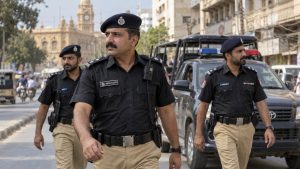
Domestically, however, the mirror provides a sharper, more painful reflection. Minister Naqvi’s admission that Islamabad remains vulnerable at its 93 entry points, with an aging police force whose median age pushes past fifty, suggests a systemic rot that requires urgent, painful reform. The security found in army-vetted Cantonments shouldn’t be a gated privilege; it must be the civilian standard. If we can achieve military-level scrutiny in one district, why must a shopping district in Islamabad remain a soft target for a handler in a foreign consulate? True sovereignty is found in a professionalized, honest, and modernized police force that cannot be bribed, bypassed, or outrun by $1,500 assets.
As we stand at this threshold in early 2026, the international community continues its delicate dance, balancing trade with India against the mounting evidence of state-sponsored terror. But for those on the ground, the calculus is far simpler. Operation Radd-ul-Fitna has already silenced 216 Fitna al-Hindustan terrorists, and the crackdown on financiers and facilitators has begun to dismantle the networks that provide the “oxygen” for these attacks. This is not just a fight against gunmen; it is a fight to bankrupt a terror-crime nexus that thinks $1,500 is enough to break a country’s back.
The blood of the martyrs is not for sale. The only question that remains is how much more of its own currency the sponsors of Fitna al-Hindustan are willing to waste before realizing that Pakistan’s resolve is an asset they cannot afford to buy.