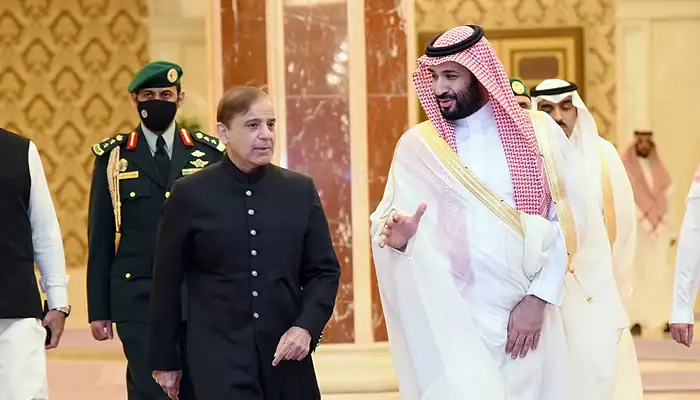
ISLAMABAD – Prime Minister Shehbaz Sharif reached out to Saudi Crown Prince Mohammed bin Salman as Middle East erupted in chaos in wake of devastating military exchanges involving Israel, Iran, and the US.
Pakistani premier condemned shocking regional escalation triggered by Israeli strikes on Iran and retaliatory missile salvos that sent shockwaves across the Gulf. In powerful display of solidarity, PM Sharif vowed Islamabad’s unwavering support for Saudi Arabia, declaring that Islamabad would stand by its Gulf ally “under all circumstances.” With prayers for peace during Ramadan, he also signaled Pakistan’s readiness to help defuse the crisis before it spirals further out of control.
But diplomatic storm didn’t end there. The Prime Minister also contacted the President of the United Arab Emirates, expressing deep sorrow after reports that a Pakistani citizen was killed in Abu Dhabi amid the chaos. He condemned the widening conflict and reiterated Pakistan’s commitment to standing with the UAE during its time of grief and instability.
Meanwhile, Pakistan’s top foreign officials entered the fray. The Deputy Prime Minister and Foreign Minister held urgent talks with Iran’s foreign minister, blasting the attacks on Iran while demanding an immediate halt to hostilities. Both sides emphasized diplomacy as the only path forward—yet the battlefield realities told a different story.
The violence erupted after Israel and the United States launched strikes on Iranian targets, provoking a fierce and sweeping response. Iran retaliated with missiles aimed at Gulf states and Israeli positions, marking a dangerous escalation that observers fear could ignite a broader regional war. Iran’s Islamic Revolutionary Guard Corps claimed the strikes targeted U.S. military facilities and Israeli sites, a statement that fueled further tensions.
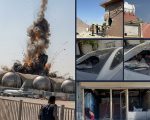
Air defense systems across the Gulf sprang into action as missiles streaked through the night skies. Authorities in Bahrain, Qatar, the UAE, and Jordan reported intercepting incoming projectiles, but the human cost was still unfolding. In Abu Dhabi, officials confirmed a tragic fatality, while reports of explosions and air-raid alerts rippled across the region.
Inside Iran, the situation remained equally dire. A missile strike on a school reportedly killed 24 people, according to local officials—an incident that underscored the human toll of the escalating confrontation. Images of destruction and reports of casualties shocked observers worldwide.
The conflict even reached the heart of Tehran, where security forces flooded the streets and smoke rose from impacted districts.
As the world watches with bated breath, the Middle East stands at a perilous crossroads. Diplomatic appeals for de-escalation clash with military realities, and the risk of a broader conflict looms large. Will negotiations prevail, or is the region sliding toward an all-out confrontation? The coming days could determine the answer.