
The events of May 2025 marked more than a moment of military or diplomatic significance for Pakistan. They exposed a deeper reality about the changing nature of conflict in the modern world. Wars today are no longer fought only through weapons, borders, and conventional battlefields. They are increasingly fought through narratives, perception, digital influence, media framing, and public psychology. In the twenty-first century, the battle for global perception can at times become as consequential as the battle on the ground itself.
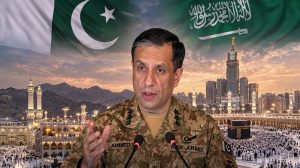
For many Pakistanis, particularly the youth, the developments of the past year became a rare moment of collective confidence and national unity. Across universities, digital platforms, overseas communities, and public spaces, there emerged a visible shift in national discourse. The conversation was no longer centered solely on retaliation or emotional nationalism. Instead, it reflected resilience, strategic maturity, diplomatic restraint, and Pakistan’s ability to respond responsibly under pressure. The first anniversary of Marka-e-Haq therefore represents not merely the remembrance of a national moment, but a reflection on how narrative, discipline, and unity shape modern statecraft.
The significance of these events extends beyond South Asia. The current global climate of wars and geopolitical instability has demonstrated how deeply conflicts affect not only regional security but also the economic stability of the entire world. From disrupted trade routes and rising inflation to energy shortages and declining investor confidence, modern conflicts leave consequences that travel far beyond borders. In such an environment, nations capable of balancing strength with diplomacy increasingly emerge as important negotiating actors in international affairs.
This is where Pakistan’s evolving role becomes particularly important. Over the past year, Pakistan has attempted to position itself not merely as a country responding to crises, but as a responsible voice advocating restraint, dialogue, and regional stability. Its diplomatic engagement in encouraging de-escalation and facilitating communication between Iran and the United States reflected a broader strategic reality: countries that can open channels for dialogue during periods of polarization acquire influence that extends beyond military capability alone. In a fractured world, the ability to encourage peace has become a form of power.
Yet these developments also revealed another battlefield often ignored by developing nations: the battlefield of perception. We are living in the era of fifth-generation warfare, where narratives shape realities and digital spaces influence international opinion more rapidly than official diplomacy. Global audiences increasingly form opinions about countries not through direct experience, but through films, streaming platforms, social media algorithms, political messaging, and selective international coverage. In such an environment, repetition often becomes accepted as truth.
For decades, Pakistan has struggled against a narrowly constructed international image shaped largely by external storytelling. Across segments of international media and entertainment industries, Pakistan has frequently been portrayed through the lens of instability, extremism, and insecurity. Such portrayals rarely reflect the complexity of a country of more than 240 million people possessing cultural diversity, intellectual talent, entrepreneurial ambition, historical depth, and extraordinary resilience. More importantly, they often ignore the immense sacrifices Pakistan itself has made in combating extremism and preserving regional stability.
The events of May 2025 challenged some of these assumptions. For perhaps the first time in years, many international observers witnessed a different image of Pakistan: a country capable of strategic restraint, disciplined communication, institutional coordination, and diplomatic composure during a period of heightened tension. While emotions across the region understandably remained intense, Pakistan’s response demonstrated an important lesson often forgotten in modern geopolitics: sustainable influence is built not merely through aggression, but through credibility, coherence, and the ability to command international trust.
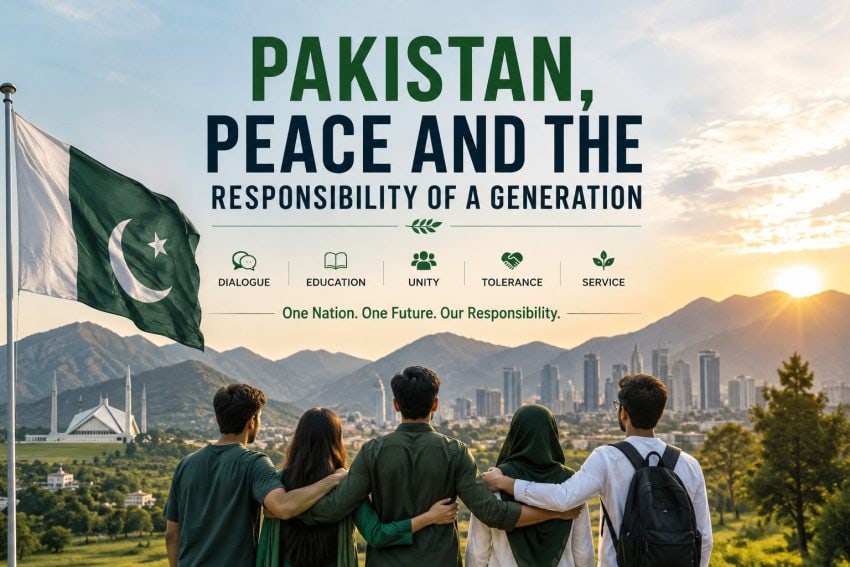
This lesson is especially important for Pakistan’s youth. Nearly two-thirds of the country’s population is under the age of thirty. This generation has grown up in a digitally interconnected world where information travels instantly and narratives are shaped in real time. Unlike previous generations, young Pakistanis are no longer passive consumers of global discourse; they are active participants in shaping it. Through journalism, technology, academia, entrepreneurship, public policy, diplomacy, research, and digital engagement, they possess the ability to redefine how Pakistan is perceived internationally.
However, this opportunity also carries immense responsibility. National confidence must not transform into hostility, misinformation, or reactionary emotionalism. Patriotism without wisdom quickly becomes noise. Narrative strength is not built through online abuse, conspiracy theories, or temporary emotional trends. It is built through intellectual credibility, responsible conduct, innovation, institutional stability, and meaningful achievements.
Peace therefore remains central to this discussion. Stability in South Asia serves the interests of ordinary citizens across the region far more than perpetual hostility ever can. Millions of young people seek opportunities, education, economic mobility, innovation, and social progress rather than endless cycles of tension inherited from history. Peace should never be mistaken for weakness, nor should restraint be interpreted as compromise on sovereignty. A nation capable of defending itself while simultaneously advocating dialogue reflects strategic confidence rather than insecurity.
Pakistan’s future influence will depend not only on military capability, but also on its ability to emerge as a responsible intellectual, diplomatic, and economic force within the Muslim world and beyond. With strategic relevance, diplomatic reach, and one of the world’s largest youth populations, Pakistan possesses significant potential in shaping regional and global discourse. Perhaps this is the greatest lesson Marka-e-Haq leaves behind one year later: modern power is defined not only by defending borders, but by shaping narratives, maintaining unity, contributing to peace, and inspiring confidence at home and abroad. Nations that fail to tell their own stories eventually find themselves defined by others.
For Pakistan’s youth, this moment should serve as an awakening rather than merely a celebration. The responsibility of shaping Pakistan’s future image does not rest solely with governments or institutions. It belongs equally to writers, students, researchers, filmmakers, journalists, entrepreneurs, artists, diplomats, and ordinary citizens whose conduct represents the country every day. A nation’s reputation is not transformed through slogans or emotional reactions. It is built gradually through excellence, integrity, creativity, and consistent contribution.
The events of May 2025 may eventually fade from headlines, but the larger lesson should endure. Modern conflicts are no longer confined to borders or battlefields alone. They are fought in classrooms, digital spaces, media platforms, economic corridors, research institutions, and international conversations. If Pakistan wishes to secure not only its sovereignty but also its global standing, it must continue winning the far more enduring battle: the battle of narrative, credibility, peace, and progress.