Written by: Adrak Hussain
Situated at the headwaters of key transboundary rivers, Afghanistan holds a unique upstream position relative to Iran, Pakistan, and Central Asia. Historically limited by conflict and infrastructure constraints, Afghanistan used little of its water, thereby enabling downstream dependence on continuous flows. Today, climate stress and Afghanistan’s efforts to expand irrigation and hydropower are disrupting this, increasing water scarcity downstream.
This insight argues that, in the absence of comprehensive, institutionalised water-sharing agreements, Afghanistan’s water disputes with neighbouring countries are evolving into a regional problem that necessitates basin-wide accords.
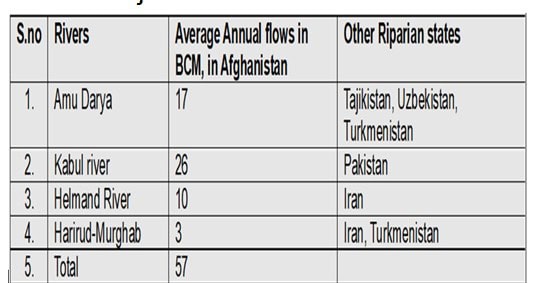
Afghanistan has one of the highest per capita water endowments in the region. It possesses an estimated 57 billion cubic meters (BCM) of reusable surface water annually, as shown in Table 1, with an additional 10 BCM of groundwater. Yet actual annual withdrawals remain limited to roughly 20 BCM (35%), almost entirely for agriculture. Crucially, around 65% of Afghanistan’s surface water flows across international borders, making the country a hydrological linchpin for its neighbours.
Afghanistan has very limited bilateral and multilateral legal agreements on water cooperation with neighbouring countries. This has led to disputes with Central Asian states, including Tajikistan, Turkmenistan, and Uzbekistan, over the Amu River, with Iran over the Helmand River, and with Pakistan over the Kabul River.
Table 1: Major River Basins and Flows in Afghanistan
Source: Afghanistan Analysts Network2
Water sharing between Afghanistan and the Central Asian states is based on the fragile Soviet-era 1958 water protocols, as Afghanistan is not included in the 1992 Almaty Agreement, which established water quotas for post-Soviet states.
| Afghanistan’s water disputes are no longer peripheral irritants; they are emerging that lines in regional geopolitics where unilateral approaches will only deepen mistrust and instability. |
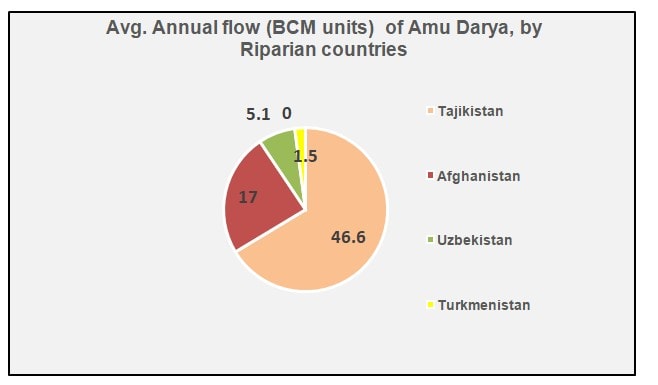
The Amu River’s (Oxus River) total annual discharge is estimated at approximately 75 BCM, of which Afghanistan contributes roughly 23%, i.e. 17 BCM, as shown in graph 1. Yet Afghan withdrawals remain limited to 1.5-2 BCM, compared with upper-riparian Tajikistan and lower riparian states such as Uzbekistan and Turkmenistan, which collectively use over 80% of the basin’s water, largely under Soviet-era allocation norms.
Graph – 1
Source: Afghanistan, the Amu Darya Basin and Regional Treaties, Chinese Journal of Environmental Law
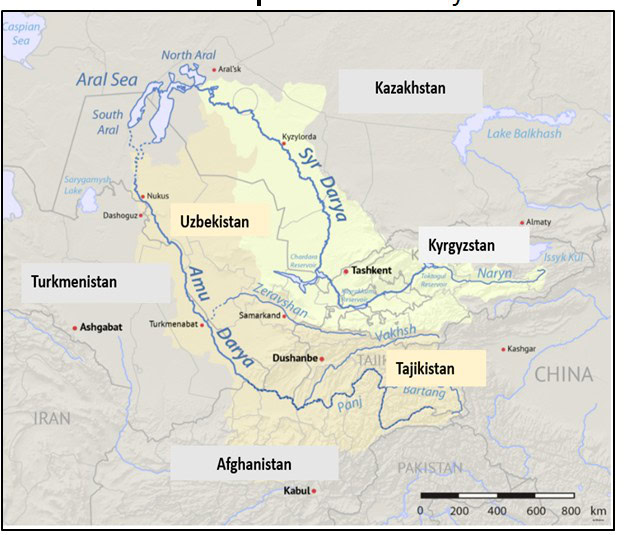
Afghanistan’s ambitious Qosh Tepa Canal, diverting water from the Amu River, designed to irrigate northern farmlands, could divert up to 21% (13-15 BCM) of the annual flow once fully operational by 2028. Downstream states (Turkmenistan and Uzbekistan) fear significant impacts on agriculture, owing to developments in Afghanistan and to emerging water stress due to climate change. Although Afghanistan claims to be open to dialogue, it has refused to negotiate the construction of the canal, asserting that it is a domestic issue. The absence of a comprehensive basin-wide water governance treaty among all riparian states of the Amu Darya (Tajikistan, Afghanistan, Turkmenistan, and Uzbekistan) could lead to the securitisation of the water issue, potentially giving rise to conflicts.
Map – 1: Amu Darya
Source: https://www.bing.com
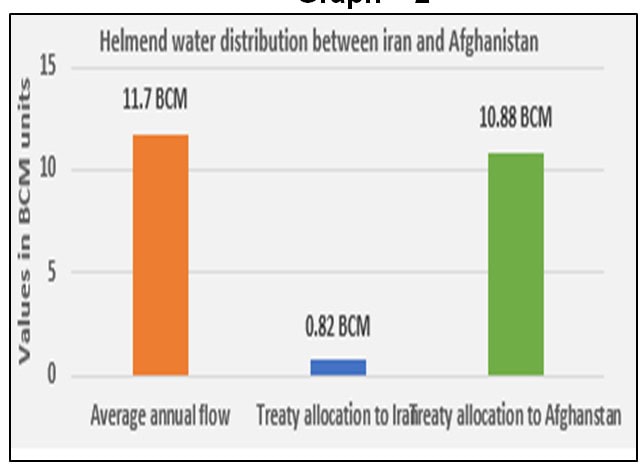
With Iran, Afghanistan’s water dispute is becoming prominent. Afghanistan shares four rivers with Iran: Helmand, Khash, Farah and Hari Rud. However, the formal agreement covers only the Helmand River. The 1973 Helmand Water Treaty obliges Afghanistan to release 820 million cubic meters (0.82 BCM) annually to Iran, as shown in Graph 2.
Graph – 2
Source: The Afghan-Iranian Helmand Water Treaty
While this remains Afghanistan’s only formal transboundary water treaty, it has proven insufficient to manage current realities. Iran is facing a water crisis due to climate change. Iran has accused Afghanistan of non-compliance with developments at upstream dams such as Kajaki and Kamal Khan, as well as of weak joint monitoring mechanisms. Afghanistan, in turn, argues that reduced flows are climate-induced rather than politically motivated.
There is another dispute over the water of the Hari Rud River, where Afghanistan has violated customary rights by constructing the Slama and Pashdan dams, diverting approximately 70% of the river’s water in the absence of a water sharing treaty.
Map – 2
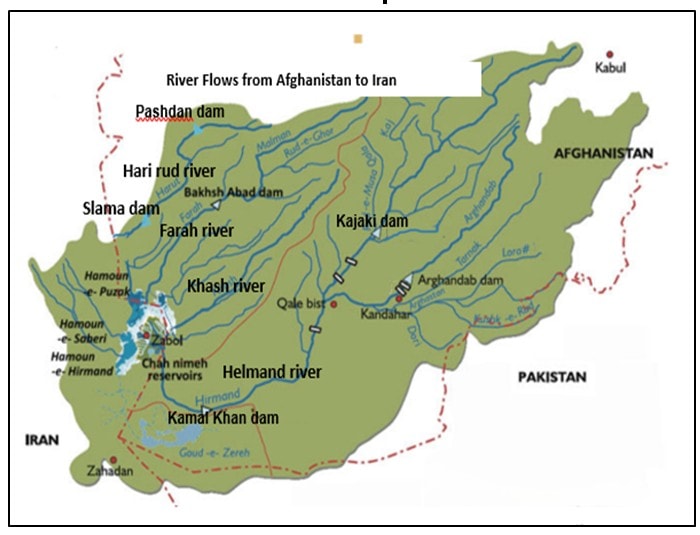
Source: Scientific Reports, Transboundary Hydro Political Conflicts
The result is a cycle of mutual suspicion and securitisation of water. The two countries engaged in deadly border clashes following a dispute over reduced water flows in 2023. The Harirud and Helmand cases demonstrate that the lack of agreements or treaties without adaptive mechanisms, transparent data-sharing, and joint institutions is inadequate under climate stress.
Afghanistan has no water-sharing treaty with Pakistan regarding the ten rivers and tributaries that flow across the border. Three major rivers, Kabul, Kurram and Gomal, flow from Afghanistan into Khyber Pakhtunkhwa (KP), while six small seasonal rivers or streams flow into Balochistan. Kunar flows from Pakistan into Afghanistan, joins the Kabul River before re-entering Pakistan, and gives it a position of both an upper and a lower riparian state.
Table – 2: 10 Transboundary Rivers/Tributaries between Afghanistan and Pakistan
| 1 | Kunar River | 6 | Kand |
| 2 | Kabul River | 7 | Kadanai |
| 3 | Kurram River | 8 | Kandar |
| 4 | Gomal River | 9 | Kaiser River |
| 5 | Pishin Lora | 10 | Abdul Wahab Stream |
Pakistan relies heavily on the Kabul River for nearly 80% of KP’s agriculture and for power generation. Approximately 28 BCM of water flows annually from Afghanistan into Pakistan, with roughly 21 BCM coming from the Kabul River alone. Of this, around 10 BCM comes from the Kunar River.
Map – 3: Transboundary Rivers between Afghanistan and Khyber Pakhtunkhwa
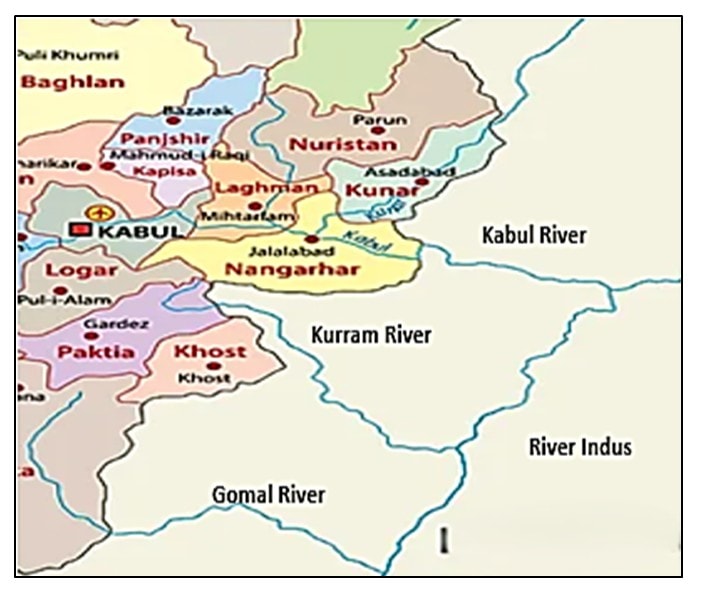
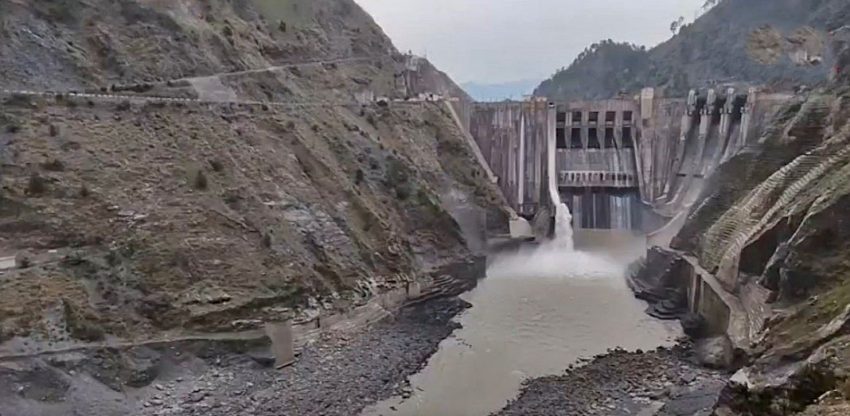
Afghanistan currently uses approximately 2–2.5 BCM, which could be raised to 4-6 BCM with the development of the planned 12 dams on Kabul River tributaries, backed by foreign aid and Indian investment, within the next decade, as shown in Map 4. Of these, the construction of three dams, Kharwar, Panjsher and Sha-wa-Arus, has been completed, while the Shatoot dam is under construction. These developments could reduce the water flow into Pakistan by 16-17%. For Kabul, these projects represent an assertion of sovereign rights in the service of agricultural and economic imperatives. However, Pakistan views the one-sided developments backed by India, in the absence of formal water-sharing agreements, as a threat to its interests.
Map – 4: Afghan Energy Information Centre
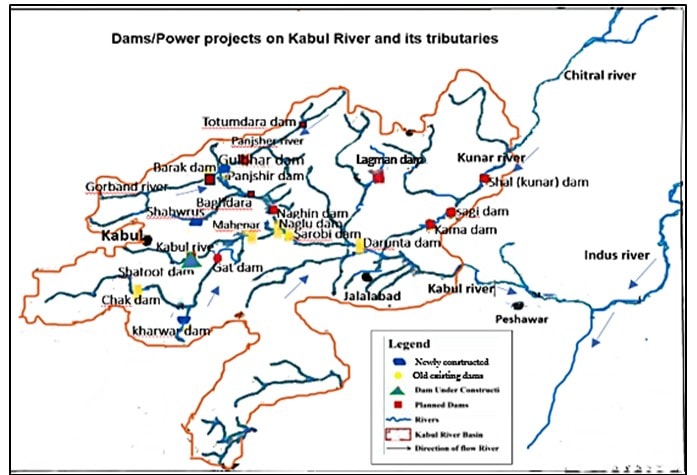
Table – 3: Dams in Kabul River Basin
| Ser | Name of Dams | Construction Start Date | Completion Date/Status |
| 1. | Chak Dam | 1930s | 1938 |
| 2. | Darunta Dam | 1960 | 1964 |
| 3. | Mahepar Dam | 1952 | 1966 |
| 4. | Sarobi Dam | 1957 | 1968 |
| 5. | Naglu Dam | 1960 | 1968 |
| 6. | Kharwar Dam | 1930s | 2024 |
| 7. | Sha Wa Arus Dam | 2010 | 2025 |
| 8. | Panjsher Dam | 2013 | 2025 |
| 9. | Shatoot Dam | 2021 | Under construction |
| 10. | Shal/Kunar Dam | Planned | Construction about to start |
| 11. | Sagi Dam | Planned | Construction about to start |
| 12. | Karna Dam | Planned | Construction about to start |
| 13. | Iagman Dam | Planned | – |
| 14. | Totumdara Dam | Planned | – |
| 15. | Naghin Dam | Planned | – |
| 16. | Baghdara Dam | Planned | – |
| 17. | Barak Dam | Planned | – |
| 18. | Gulbhar Dam | Planned | – |
Source: Prepared by the author
To prevent water from becoming a catalyst for conflict while leveraging water as a source of cooperation, Afghanistan and its neighbours need to pursue basin-wide, legally grounded water accords. For that purpose, the Indus Water Treaty (IWT) between Pakistan and India, which survived five wars or armed conflicts, could serve as a model.
Pakistan needs to adopt calibrated water diplomacy with Afghanistan that blends technical engagement with strategic caution, as both countries need a water-sharing agreement to preserve their common interests.
The writer can be reached at adrakhussain01@gmail.com