
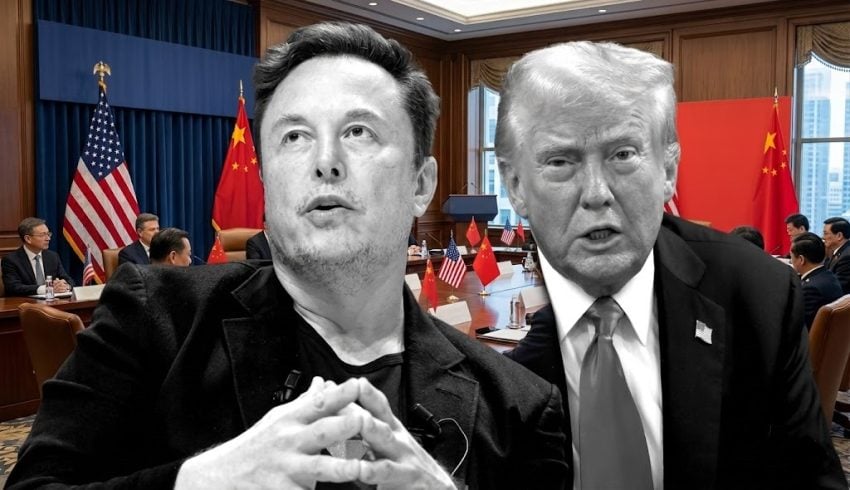
WASHINGTON – Tech pioneers like Elon Musk and Apple CEO Tim Cook are among 17 major corporate leaders to accompany US President Donald Trump on high-profile visit to China from May 13–15, 2026.
Trump’s trip is being described as landmark diplomatic and economic mission, bringing together top business figures and political leadership for talks aimed at managing escalating US–China tensions and exploring potential trade and investment deals between the world’s two largest economies.
A high-voltage diplomatic and economic spectacle is brewing as U.S. President Donald Trump prepares for a headline-grabbing visit to China from May 13–15, 2026—his first trip there in his second term and the first by a sitting American president in nearly a decade. But this is not shaping up as a routine state visit. It is being described as a fusion of geopolitics, corporate power, and high-stakes deal-making on a global stage.
What has stunned observers is the extraordinary guest list accompanying Trump. Instead of a traditional diplomatic-only delegation, the president is bringing some of the most influential figures in global capitalism. Among them are Elon Musk and Tim Cook, alongside heavyweight financial and investment leaders from BlackRock, Goldman Sachs, and Blackstone Inc.. One originally expected attendee, Cisco Systems’ chief executive, reportedly pulled out at the last moment, adding even more intrigue to the already closely watched trip.
Trump is expected to sit down with Chinese President Xi Jinping alongside a carefully selected group of 16 top corporate executives in what is being framed as an unprecedented blend of diplomacy and boardroom negotiation.
Behind closed doors, discussions are expected to revolve around bold new proposals such as a “U.S.–China Board of Trade” and a “Board of Investment”—mechanisms designed to stabilize an increasingly volatile economic relationship while keeping critical flows of goods, capital, and technology alive despite escalating strategic rivalry.
The economic stakes are enormous. Reports suggest that Boeing could be on the verge of securing massive aircraft orders from China, potentially among the largest in years, while American agricultural exports, especially soybeans, may see renewed large-scale purchase commitments.
Meanwhile, corporate giants like Apple and Tesla are expected to aggressively lobby for smoother regulatory conditions inside China, where tightening oversight and intense domestic competition have increasingly squeezed U.S. firms. Financial titans are also eyeing expanded access to China’s multi-trillion-dollar investment markets, raising the financial stakes even further.
Taiwan, semiconductor export restrictions, AI governance, cybersecurity risks, fentanyl precursor flows, and competition will be discussed for future technologies.