
TEHRAN / ISLAMABAD – US-Iran Peace Deal pushed Iranian authorties to open key maritime chokepoint Strait of Hormuz but Tehran announced that all vessels seeking passage through the Strait of Hormuz must obtain advance authorization and coordinate their transit with Iranian authorities under a newly implemented framework linked to the Islamabad Memorandum of Understanding (MoU).
Persian Gulf Strait Authority (PGSA), the coordinating body under the Islamic Republic of Iran, issued notice requiring shipowners and operators to submit transit requests at least 48 hours before arriving at the strait. Vessels must also obtain approval for designated routes and scheduled passage times before entering the waterway.
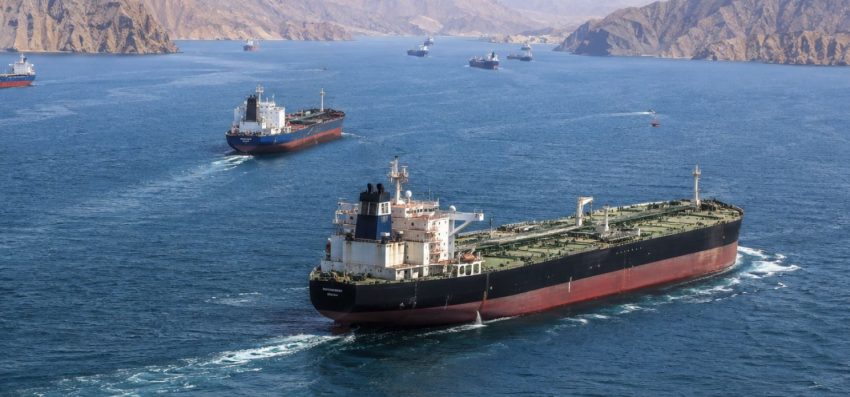
The move comes amid heightened regional security concerns and ongoing maritime risks in and around the Strait of Hormuz, a narrow corridor through which a substantial portion of the world’s seaborne oil and gas exports passes.
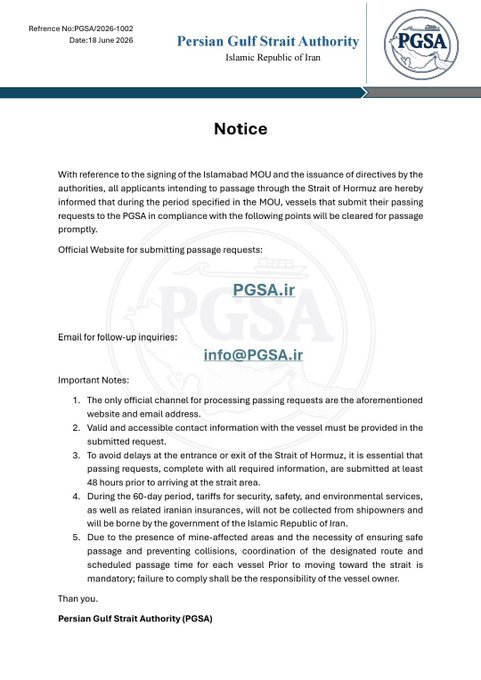
It said vessels that comply with the new procedures will be granted passage during the 60-day period covered by the Islamabad MoU. Iran stated that all costs associated with security, navigational safety, environmental protection services, and related Iranian insurance requirements will be paid by the Iranian government during the temporary arrangement.
Maritime analysts see the waiver of transit-related charges as a notable incentive aimed at encouraging participation in the new system while ensuring that vessel operators adhere to the authority’s routing and scheduling requirements.
The notice highlights presence of mine-affected areas near transit routes, emphasizing that pre-approved routing and timing are mandatory to reduce navigational risks and prevent maritime incidents. Vessel owners who fail to comply with assigned routes or schedules will bear responsibility for any resulting consequences, the authority warned.
The provision said the service and insurance fees will not be collected during the initial 60-day period. The language has fueled speculation that Iran may introduce a formal fee structure for security, safety, environmental, and insurance services once the temporary arrangement expires.
If fully implemented, the framework would represent one of the most significant changes to Strait of Hormuz transit procedures in recent years, potentially giving Iranian authorities a greater operational role in coordinating vessel movements through the critical waterway.
Any change in transit requirements or operational control is therefore likely to attract close attention from shipping companies, insurers, energy markets, and governments worldwide.
US, Iran sign MoU to end hostilities, reopen Strait of Hormuz