

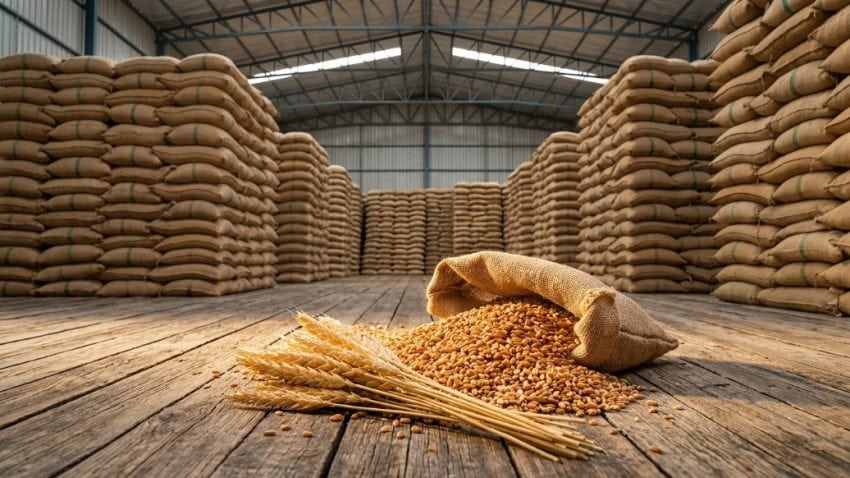
ISLAMABAD – Pakistan’s wheat crisis continues to raise questions as people are asking Where did more than 5.1 million tons of wheat disappear in two of the country’s major regions?
Recent reports claim around 4.5 million tons of wheat in Punjab and another 600,000 tons in Sindh, cannot be accounted for in official records. The missing stocks sound alarm bells, not only because of their sheer volume but also because the federal government has already decided to import one million tons of wheat to meet domestic demand.
The mystery surfaced when Punjab officials asked other provinces whether the missing wheat had been transported across provincial borders. The response was clear as no province reported receiving such quantities. That shifted attention to another possibility, that a major amount of wheat may have been purchased by private traders and moved into storage outside the government’s tracking system.
If those stocks are not located, experts warn Pakistan could once again find itself spending close to $1 billion on wheat imports, putting fresh pressure on the country’s economy and foreign exchange reserves. Ironically, the crisis comes despite encouraging production figures as wheat cultivation expanded from 9.07 million hectares last year to 9.48 million hectares, while production jumped to 29.61 million tons.
Normally, a larger crop would ease supply concerns. Instead, questions are being raised about what happened after the harvest. Agriculture experts believe the answer lies in the way wheat procurement has changed over the past few years.
For decades, Pakistan purchased large quantities of wheat directly from farmers, ensuring strategic reserves and price stability. But after changes in policy and the gradual withdrawal of the wheat support price mechanism, authorities increasingly relied on the private sector to buy and store wheat. This year, however, the system failed to deliver the expected results.
Punjab managed to procure only 480,000 tons against target of 3 million tons, while Sindh purchased around 200,000 tons. That left government warehouses with far smaller reserves than planned. Officials said the support price of Rs3,500 per maund also discouraged private buyers. When Punjab later encouraged the private sector to step in, traders reportedly demanded bank financing before making large purchases.
At the beginning of procurement season, wheat prices in Sindh and KP climbed to around Rs4,500 per maund, making private purchases increasingly attractive. Many stockists bought wheat directly from farmers without tax documentation or permit requirements before storing large quantities in private warehouses. While there is no official confirmation linking these stocks to the missing wheat, the developments have intensified concerns over weak monitoring and oversight.
Ending support price system without putting an effective alternative in place left both farmers and the government vulnerable. At the same time, inadequate procurement by provincial governments reduced public wheat reserves at a time when private players became increasingly active in the market.
Last year, Pakistan spent more than $1 billion importing nearly 3.5 million tons of wheat. Even after those imports, the country is still estimated to face a wheat shortfall of around 3.5 million tons. If the current situation is not resolved, experts believe additional imports may become unavoidable.
To prevent supply disruptions, the federal government decided to import one million tons of wheat and release available wheat stocks held by the Pakistan Agricultural Storage and Services Corporation (PASSCO) to provinces according to their needs.
In July, the national average reached Rs4,611 per 40 kilograms, compared with Rs4,516 a week earlier. Wheat was selling at around Rs4,423 in Punjab, Rs4,625 in Sindh, Rs5,100 in KP, and Rs4,800 in Balochistan and other regions.