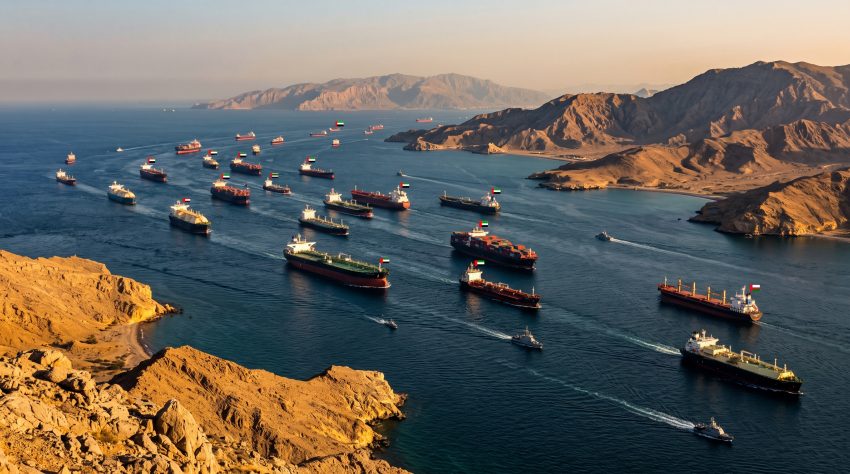
ISLAMABAD – Iran and Oman agree on a new navigation map for the Strait of Hormuz. With tensions rising around 20% of world’s seaborne crude passing through the key waterway, the new move could reshape how commercial vessels move through one of the world’s most critical energy corridors.
The agreement comes amid heightened regional tensions and growing concerns over safety of international shipping. Tehran says its talks with Muscat have been progressing smoothly, with no major technical or political hurdles standing in the way.
Both sides agreed on designated maritime routes designed to make navigation through the Strait of Hormuz safer and reduce the risk of collisions, disruptions and confrontations involving commercial vessels.
Iranian Foreign Ministry spokesman Esmail Baghaei said negotiations with Oman were moving in the right direction, with both sides continuing to work toward positive outcomes. The development could strengthen maritime and security coordination between the two neighbouring countries, whose coastlines sit on opposite sides of the strategically vital waterway.
While highlighting the progress with Oman, Tehran delivered a sharp message over the wider security situation. Baghaei rejected claims that Iran was responsible for instability in the Strait, arguing that the region had remained normal until February 28.
He alleged that after that date, the United States and Israel began using the Strait and surrounding sensitive maritime areas for military and security purposes against Iran, contributing to the deterioration in regional conditions. Tehran insists that foreign military activity—not Iranian policy—is behind the growing risks facing maritime traffic.
Iran has also made it clear that the new arrangement with Oman does not mean Tehran is giving up its sovereign rights. Baghaei said Iran retains the right to take necessary measures to protect its national security, territorial integrity, economic interests and maritime interests.
The warning comes as the Strait remains under intense international scrutiny because even a major disruption there could have consequences far beyond the Gulf.
Oman maintained close channels with Iran while also acting as a mediator between Tehran and Western countries. With tensions escalating since February 28, Muscat has once again taken an active diplomatic role aimed at reducing confrontation and keeping vital shipping lanes open.
The new navigation framework therefore carries important beyond Iran-Oman ties as it could also serve as a mechanism to reassure international shipping operators that commercial traffic can continue through the Strait despite the wider geopolitical crisis.
By working with Oman on maritime security, Tehran appears keen to demonstrate that regional states can cooperate to manage the security of the Gulf without relying entirely on foreign military powers. At the same time, Iran’s repeated accusations against Washington and Tel Aviv show that the underlying confrontation remains far from resolved.
Tehran draws Red Line over Hormuz as Beirut strike dents fragile US-Iran Talks