
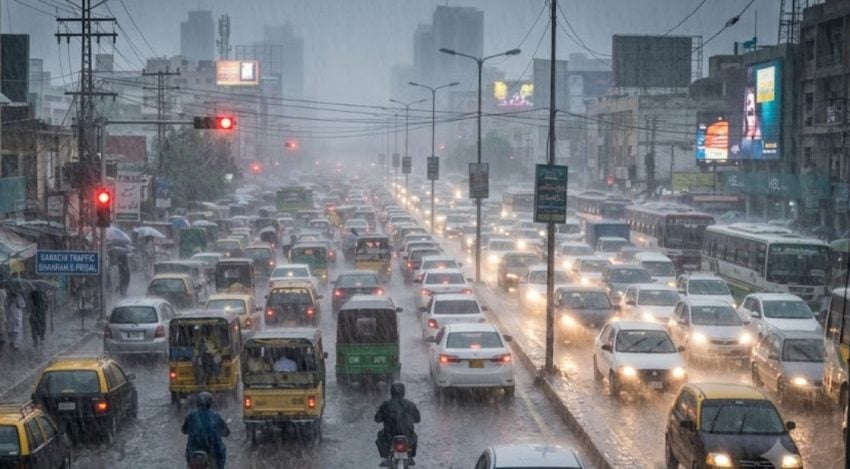
ISLAMABAD – Pakistan is expected to receive more rain and hailstorms across several parts of the country from September 14 to September 17, according to the Meteorological Department.
Islamabad is likely to experience further rain accompanied by thunderstorms, while rain is also expected in Rawalpindi, Murree, the Galiyat region and several other districts of Punjab.
In Khyber Pakhtunkhwa, areas including Peshawar, Swat, Chitral and several other districts are likely to receive rainfall. Intermittent rain has also been forecast for parts of Gilgit-Baltistan and Azad Kashmir.
Sindh is also expected to see rain, with Karachi, Hyderabad, Sukkur and Larkana among the cities where showers are likely. In Balochistan, rainfall is expected in areas including Zhob, Barkhan and Musa Khel.
From September 15 to 17, rain is forecast in Lahore, Sialkot, Sheikhupura, Narowal and Gujrat, along with Gujranwala, Wazirabad, Kasur, Okara, Nankana Sahib and surrounding areas.
The same period is expected to bring rain to Peshawar, Dir, Chitral, Swat, Malakand and Mardan. Authorities have warned of a risk of landslides in mountainous areas of Khyber Pakhtunkhwa, Gilgit-Baltistan, Murree, Galiyat and Kashmir.
Meanwhile, a report assessing the ability of major cities around the world to cope with climate-related threats has identified four Pakistani cities among those facing significant challenges.
The report, prepared by climate-risk assessment company AlphaGeo, examined 72 major cities and assessed both their exposure to climate risks and their preparedness to deal with them.
According to the report, six South Asian cities were among those with the lowest capacity to cope with climate-related threats. India’s Ahmedabad ranked first with a score of 41, followed by Hyderabad. Pakistan’s Multan ranked third with a score of 38, while Dhaka was fourth.
Lahore ranked fifth, while Faisalabad and Karachi were placed seventh and eighth respectively.
AlphaGeo identified extreme heat and limited adaptation measures as major factors contributing to the climate risks facing these cities. The company said many South Asian cities have yet to bring adaptation and protective measures up to the level required to match the intensity of the climate threats they face.