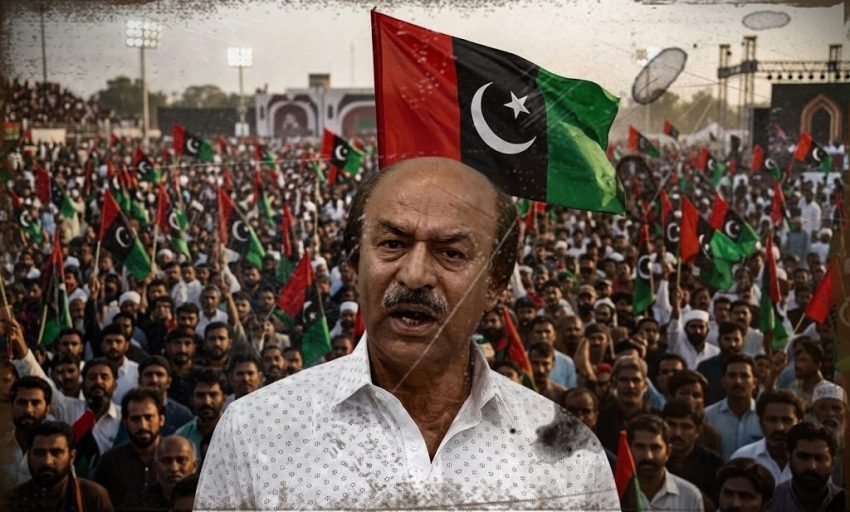
I will state my position up front. I think Sindh would be better governed with smaller administrative units, closer to the people who actually live under them, and I think Nisar Khuhro’s conduct this past week shows exactly why that reform keeps getting strangled before it ever reaches the public.
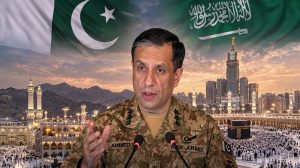
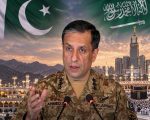
Start with what he actually said. His entire complaint against Interior Minister Mohsin Naqvi was that Naqvi had dragged the Field Marshal into politics. Then Khuhro did it himself, more directly than Naqvi ever did. We did not run away out of fear of Ziaul Haq, he said, we did not run away out of fear of Musharraf, so this field marshal also cannot confront us. That is not defending an institution from politics. That is picking up the institution’s rank and swinging it at a political rival, and he only dropped it once the backlash made clear how badly it had landed.
I want to be upfront that what follows is my opinion, not a documented fact. I do not know exactly what happened inside PPP’s leadership after that line went viral. But a senior party figure does not usually improvise something that provocative and then fully reverse himself within a single day, on his own initiative, with nobody above him weighing in. It has the shape of a man who said more than his party wanted said, and was pulled back into line by people with more authority than he has.
Now the argument he has spent all week avoiding. Naqvi’s case for new administrative units is not abstract. Four out of ten children in this country are not getting the education they need. Only about half the population has reliable access to clean drinking water. Sindh outside Karachi, districts like Larkana, Sukkur, Shikarpur and Tharparkar, has been run out of one provincial capital for decades, and the distance between where decisions get made and where people actually live is a big part of why those numbers look the way they do. Smaller administrative units mean local budgets, local accountability, and a district government that cannot blame a province three hundred kilometres away for a school with no roof or a well with no water. Naqvi has said repeatedly this is about governance, not identity, and that no unit gets created without public consent. Khuhro has never once answered that case on its merits. He has only ever answered it with outrage.
It is worth asking who actually benefits from nothing changing. Khuhro spent years as Sindh’s food minister and later as assembly speaker, years that came with one NAB inquiry after another, wheat procurement irregularities, an assets beyond known income case, questions about his own bank accounts, bail sought more than once. None of it produced a conviction as far as the public record shows, and I say that plainly because pretending otherwise would be dishonest. But a man with that much unresolved history around his own department’s money has no standing to present himself as Sindh’s protector against anyone.
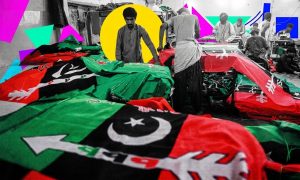
That is what actually happened on September 3. Khuhro and 105 PPP legislators stood in the Sindh Assembly holding Sindh Dharti Maa banners and voted the entire question closed before the public outside that chamber was asked anything at all. If PPP were as confident as it claims that Sindh’s people reject smaller administrative units, the honest move would be to let them say so directly, through an actual vote. Instead the party settled it inside a room full of its own members and called the matter finished. That is not defending Sindh. That is one party deciding, on everyone else’s behalf, that the conversation is over.
Not everyone who raises doubts about administrative reform is doing it for Sindh’s sake, and Khuhro is the clearest example of that. Strip away the talk of dignity and Ziaul Haq and Musharraf, and what is actually being protected is a party that has run this province for most of two decades, led in Sindh by a man whose own record still has more questions attached to it than answers. That is not principle. That is a grip on power, dressed up as devotion to the land.
One of Us: Eighteen Years of Sindh Government, Same Old Story