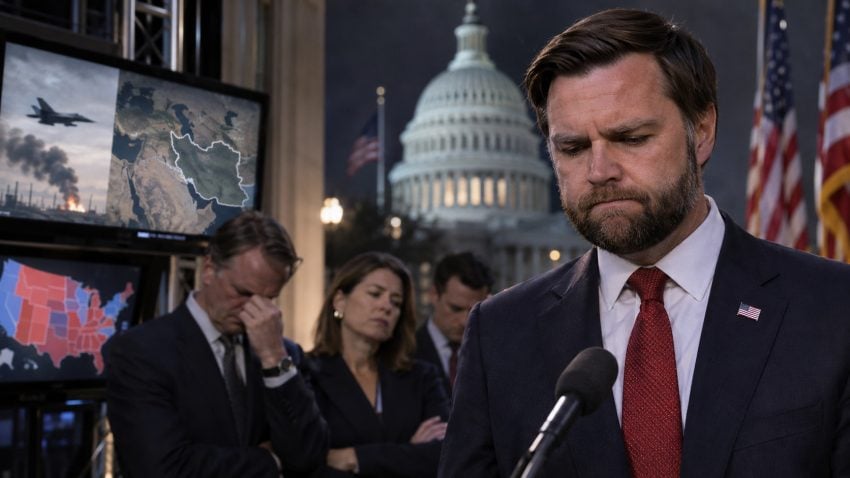
WASHINGTON – US Vice President JD Vance openly blamed war with Iran for party’s crushing defeat in 2026 midterm elections, delivering one of the most striking assessments of President Donald Trump’s foreign policy from within his own administration.
With Democrats securing control of Congress, Vance acknowledged that growing public opposition to the Iran conflict, rising inflation and dissatisfaction with immigration policies had driven away voters who helped Trump return to the White House in 2024. In an unusually direct assessment of the election results, the vice president declared, “The reason we lost is the war.”
His remarks raised questions about divisions within Republican leadership and Vance’s potential ambitions for the 2028 presidential election. Republican Party’s defeat in the November 3 midterm elections has triggered a fierce debate over the policies and decisions that contributed to its loss of congressional control.
While some Republicans have sought to link electoral setback to individual candidates and campaign failures, Vance offered a considerably more direct explanation. The vice president identified war with Iran as the central factor behind the party’s poor performance, acknowledging that public frustration with the prolonged conflict had translated into political losses.
His comments were particularly significant given his previous support for the administration’s approach toward Iran. After months of defending the military campaign publicly, Vance’s willingness to acknowledge its electoral consequences represented one of the clearest signs yet that senior Republican figures are reassessing the political cost of the conflict.
Vance acknowledged that many Americans who supported him and President Trump in the 2024 presidential election had turned away from Republican candidates in the midterms. Opposition to the Iran war was accompanied by dissatisfaction over rising consumer prices and other economic pressures facing American households.
The combination of overseas military involvement and domestic financial difficulties had weakened Republican support among voters who previously backed the administration’s agenda.
Vance conceded that some voters were unhappy with the administration’s handling of immigration and indicated that certain policy adjustments could be considered. His remarks suggested that the Republican leadership now faces pressure to reconsider parts of its political agenda after losing support among sections of its traditional electoral coalition.
The conflict with Iran becomes increasingly divisive issue in American politics, particularly as the economic and political consequences of the confrontation continue to affect public opinion.