
NEW YORK – Tech giant NVIDIA lost nearly the value of Pakistan’s entire economy in just 48 hours in a major financial blow as $430 billion vanished from its market value amid allegations surrounding CEO Jensen Huang’s reported relationship with a suspected Chinese intelligence operative.
The company’s shares suffer dramatic sell-off on Wall Street as chipmaker lost approximately $430 billion in market value over two trading sessions, raising fresh concerns about corporate security, US-China technology tensions and the future of one of Silicon Valley’s most influential executives.
Investors are already growing nervous about the sustainability of the AI boom, making controversy particularly sensitive for a company whose success has been closely associated with its chief executive.
NVIDIA shares suffered another major setback on Tuesday, falling 5.47%, or $9.78, to close at $168.89, compared with the previous closing price of $178.67. The decline followed a 4.27% drop on Monday, bringing the company’s combined two-day share-price losses to approximately 9.5%. However, Wednesday brought some encouraging signs for investors.
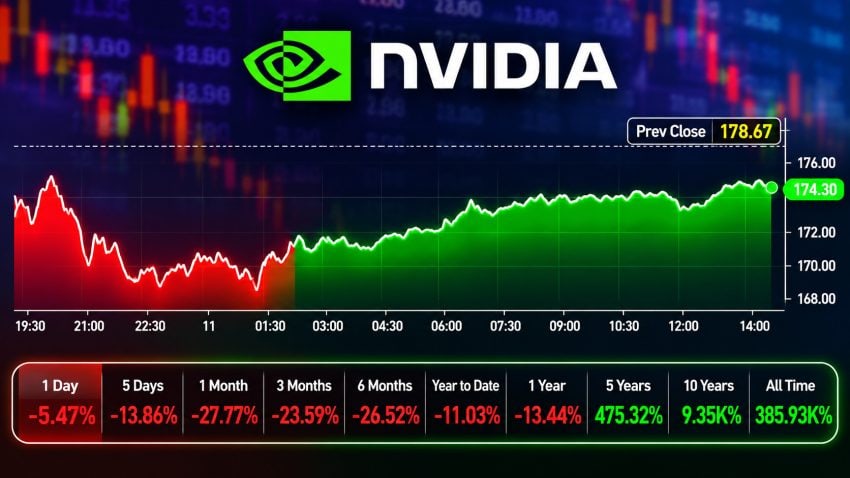
NVIDIA shares climbed to $174.30 in pre-market trading on November 11, gaining $5.41, or 3.20%, from Tuesday’s closing price. The rebound suggested that buyers were returning after two difficult trading sessions, although uncertainty surrounding the company and broader technology market conditions remained.
NVIDIA’s recent market performance reveals a much deeper downturn. Its shares have fallen 13.86% over five days, while the one-month decline has reached 27.77%. Over three months, the stock has lost 23.59%, with six-month losses standing at 26.52%. NVIDIA is also down 11.03% since the beginning of the year and 13.44% over the past 12 months.
Who is Alice Huang? Former Chinese Journalist linked to Nvidia CEO in ‘Espionage Affair’
These figures show pressure facing semiconductor giant as investors reassess technology valuations and the enormous spending associated with artificial intelligence infrastructure. At center of the reported controversy is Jensen Huang, NVIDIA’s 63-year-old co-founder and chief executive, whose alleged relationship with Chinese businesswoman Alice Huang has attracted scrutiny.
Alice Huang has been accused of having connections to Chinese intelligence operations. The allegations suggest that the relationship may have exposed NVIDIA’s leadership to a potential foreign intelligence operation.
Some reports have claimed that Jensen Huang acknowledged being unfaithful to his wife and expressed regret over the personal matter, although the circumstances surrounding the alleged relationship have not been independently established. The controversy reportedly prompted NVIDIA’s independent directors to engage outside legal counsel to examine whether the company’s chief executive had been targeted by foreign intelligence interests.
The allegations nevertheless raise questions about potential risks to NVIDIA, particularly because Huang has been instrumental in building the company’s position at the center of the global AI industry. The reported controversy has taken on a broader national security dimension following allegations involving billions of dollars in advanced NVIDIA processors.
The network facilitated access to NVIDIA processors worth at least $7.5 billion, raising questions about compliance with US export restrictions. The reported operation allegedly involved approximately 240,000 processors, including NVIDIA’s H100, H200 and A100 models.
One company identified in the allegations, Shanghai Century Litong, was reportedly established in June 2023 and subsequently obtained preferred cloud partner status with NVIDIA.
However, the shipment figures, intelligence allegations and any suspected violations remain subject to verification and have not been established as proven criminal wrongdoing.
The reported controversy has emerged during one of NVIDIA’s most challenging trading periods, prompting questions about whether the allegations contributed to the company’s falling share price. NVIDIA shares dropped more than 4% on November 9, followed by another 5.47% decline on November 10.
The two-day sell-off erased approximately 9.5% of the company’s share value and reportedly reduced its market capitalization by around $430 billion. The timing has fueled speculation about a possible connection between the allegations and worsening investor confidence.