ISLAMABAD – Pakistan is setting its sights on Southeast Asia’s vast economic potential, looking to unlock new trade routes, attract foreign investment and strengthen ties with 11 ASEAN nations.
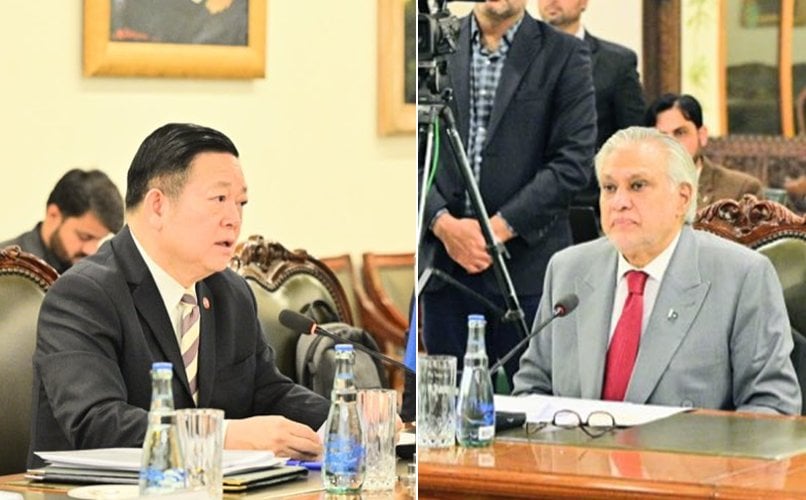
Deputy Prime Minister and Foreign Minister Ishaq Dar held high-level talks with ASEAN Secretary-General Dr Kao Kim Hourn in Islamabad today, in fresh push to strengthen economic ties with the influential 11-nation regional bloc.
During delegation-level discussions at the Ministry of Foreign Affairs, Ishaq Dar and the ASEAN chief examined ways to inject new momentum into the Pakistan-ASEAN Sectoral Dialogue Partnership. Expanding trade, attracting investment and connecting business communities emerged as major priorities, with both sides exploring opportunities to deepen economic engagement beyond existing diplomatic arrangements.
Deputy Prime Minister/Foreign Minister Senator Mohammad Ishaq Dar @MIshaqDar50 and H.E. Dr. Kao Kim Hourn, Secretary-General of ASEAN, held delegation-level talks at the Ministry of Foreign Affairs today.
The two sides reviewed progress under the Pakistan–ASEAN Sectoral Dialogue Partnership. Discussions focused on expanding trade and investment, strengthening regional connectivity and deepening cooperation in agriculture and food security. They also explored opportunities for collaboration in climate resilience, disaster preparedness and digital innovation.
The DPM/FM highlighted the scope for closer links between the business communities of Pakistan and ASEAN member states. He also underscored the importance of scholarships, student exchanges and joint research in strengthening people-to-people ties.
The two sides also exchanged views on regional developments. The Secretary-General appreciated Pakistan’s constructive role in promoting regional peace and stability through dialogue and diplomacy.
The DPM/FM reaffirmed Pakistan’s commitment to working closely with the ASEAN Secretariat and member states to advance the partnership.
— Ministry of Foreign Affairs – Pakistan (@ForeignOfficePk) November 19, 2026
Dar stressed the importance of building direct connections between Pakistani entrepreneurs, investors and businesses operating across ASEAN member states. Such engagement could create new opportunities for Pakistani exporters and investors while encouraging Southeast Asian companies to explore Pakistan’s market. he said.
The talks also focused on improving regional connectivity, strengthening agricultural partnerships and developing cooperation in food security. With climate-related threats and natural disasters placing increasing pressure on economies, both sides discussed joint efforts in climate resilience, disaster preparedness and emergency response.
Digital innovation was another key area, reflecting growing interest in technological partnerships and knowledge-sharing. Pakistan also sought stronger educational and people-to-people connections with Southeast Asia, with Dar emphasising the potential of scholarships, student exchange programmes and joint academic research.
Greater cooperation between educational institutions could provide students and researchers with opportunities to gain international experience, develop specialised skills and establish long-term professional connections.
These initiatives were discussed as possible avenues for strengthening bilateral understanding and expanding cooperation beyond government-level contacts.
Regional peace and security also featured in the meeting, with both delegations exchanging views on developments affecting stability. According to the Foreign Office, the discussions acknowledged Pakistan’s constructive role in promoting regional peace and stability.
Dar reaffirmed Islamabad’s commitment to maintaining close coordination with the ASEAN Secretariat and its member countries to advance shared interests. The latest engagement follows Dar’s participation earlier this year in the 33rd ASEAN Regional Forum Ministerial Meeting in Manila.
Pakistani foreign minister drew attention to international security challenges and tensions threatening peaceful coexistence. He also raised the longstanding Kashmir dispute and concerns over India’s threats to Pakistan’s share of water.
ASEAN represents a major regional partnership opportunity for Pakistan because of its broad network of economies and growing influence in international commerce.
The organisation was established on August 8, 1967, when Indonesia, Malaysia, the Philippines, Singapore and Thailand signed the Bangkok Declaration to promote economic cooperation and regional stability. Over the decades, the bloc expanded to include Brunei, Vietnam, Laos, Myanmar, Cambodia and Timor-Leste, bringing its membership to 11 countries.
Pakistan’s formal engagement with ASEAN began in 1993 when it became a Sectoral Dialogue Partner. The relationship expanded further in 2004 with Islamabad’s entry into the ASEAN Regional Forum.
These arrangements have provided Pakistan with diplomatic platforms for engaging Southeast Asian governments on political, economic and security matters.