
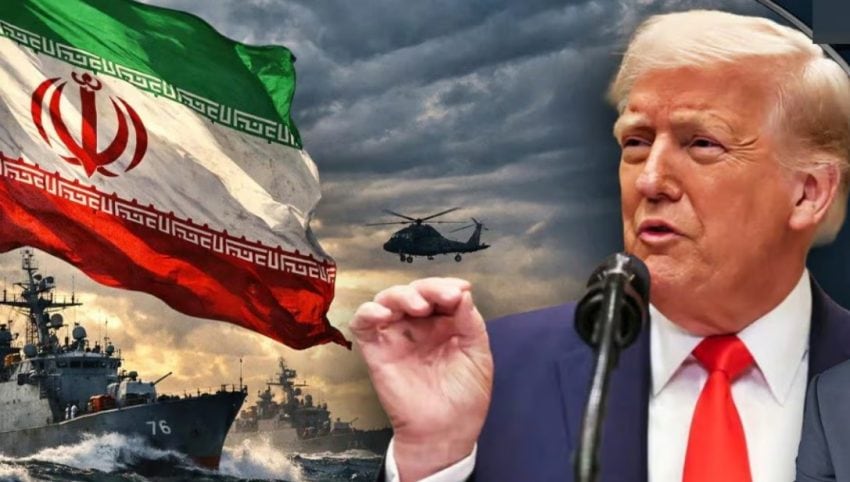
WASHINGTON – US President Donald Trump said Iran war is “over,” as he told Congress in a letter, but tensions remain as negotiations stall amid deep dissatisfaction on both sides after fragile ceasefire.
The announcement allows White House to sidestep the 60-day deadline under War Powers Resolution, which normally requires presidential military action to gain congressional approval within that timeframe.
In formal letter, Trump said no fighting has taken place since the cease-fire and described the war as concluded. However, he also issued a warning that Tehran remains major security threat, leaving open the possibility that tensions could erupt again if the situation deteriorates.
The administration is arguing that the War Powers law may not apply due to the cease-fire, with some officials even questioning its constitutionality. Under this interpretation, if military operations resume, a new 60-day authorization clock could be triggered.
Congressional Democrats strongly reject this view, insisting the law clearly mandates congressional approval after 60 days of conflict. They also point to continued U.S. military presence in the region as evidence that the situation cannot be considered fully resolved.
Republicans in Congress largely backed administration’s position, but critics argue the war has been expensive, deeply unpopular, and lacking a clear exit strategy, fueling a growing political battle over how and when the conflict truly ends.
2026 US–Iran war, started on February 28, 2026, with coordinated US and Israeli strikes on Iranian targets. Iran quickly responded with attacks on US bases, Israel, and several Gulf states, and the violence also spread into Lebanon. After weeks of intense fighting, a fragile ceasefire was reached in early April 2026.
The war caused heavy losses on all sides, though Iran suffered the highest casualties, with thousands killed and tens of thousands injured. US and Israeli forces also reported deaths and injuries, but in much smaller numbers. Fighting in Lebanon and other regional spillovers added to the toll.
The conflict caused major destruction, including damaged military bases, missile systems, and infrastructure across the region. Costs ran into tens of billions of dollars for the US and potentially hundreds of billions for Iran, along with global economic disruption, especially in energy markets.
Although the ceasefire has paused active combat, the overall human and economic impact remains severe, and the full scale of damage is still being assessed.
Iran ready to share ‘Battle-Tested Defense Power’ with Pakistan, SCO allies amid war with US