
When the news broke on Thursday, it didn’t just cycle through our screens; it stopped conversations cold. A former Director-General of the ISI—once the definition of untouchable power—was sentenced to 14 years in prison. For years, there has been a pervasive but wrongly built narrative that the uniformed elite are immune to accountability. With this verdict, that narrative has been proven wrong once again. The doors of speculation have been thrown open, replaced by the heavy, undeniable reality of accountability.
However, to truly understand the significance of this move, one must go beyond the personalities and examine the process. How does the military justice system function? What does the law actually say? And where does this investigation go from here?
To understand the magnitude of this decision, we must analyse the key questions defining the “Fall of a Titan.”
Who Was Faiz Hamid and Why Does This Matter?
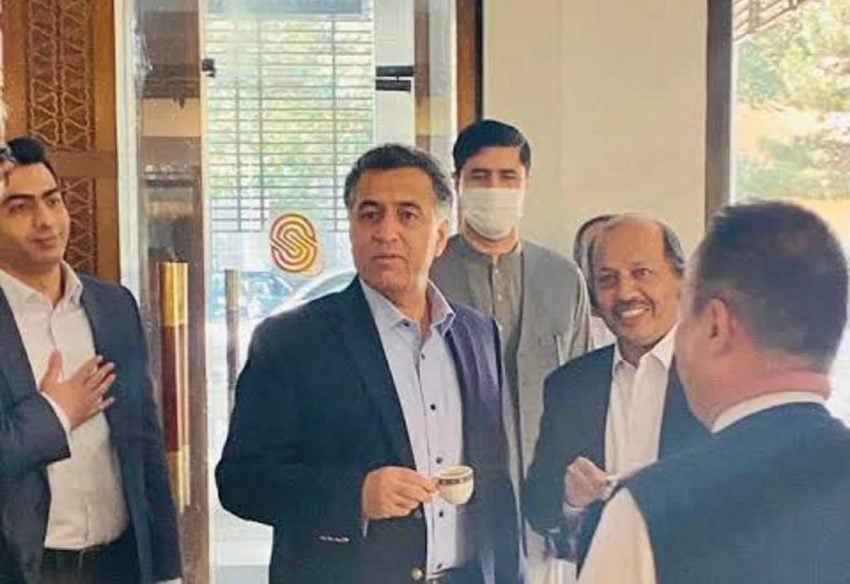
General (Retd) Faiz Hamid was not an ordinary officer. As the former DG ISI and later the Corps Commander of Peshawar and Bahawalpur, he held some of the most sensitive and powerful positions in the state apparatus. In the history of Pakistan, individuals holding such classified portfolios have been mainly considered “above the system.”
His sentencing shatters this myth. It proves that the institution views rank as a responsibility, not a shield. When a three-star general is treated as a strict subject of the law, it establishes a precedent that accountability in the Pakistan Army flows from the top down, not just the bottom up.
How Does the Pakistan Army Act Work?
Civilian observers often confuse the military justice system with summary dismissal. In reality, the Pakistan Army operates under the Pakistan Army Act (PAA) of 1952. This case has demonstrated that the internal justice system of the Armed Forces is most efficient, speedy, and applies across the board.
Under the PAA, the justice system is hierarchical. For a crime of this magnitude, the mechanism triggered is the Field General Court Martial (FGCM). The law dictates that an officer cannot simply be “jailed.” He must face:
A Court of Inquiry: To establish the initial facts.
Summary of Evidence: Where statements and proofs are legally recorded.
The Trial (FGCM): Where the accused is formally charged and given the right to defend himself.
One cannot help but draw a comparison here. If this level of efficiency were replicated in our civilian court system, justice could be provided to the masses effectively. If similar examples of speed and self-accountability were created for other institutions, the fate of the nation would change.
How Was the Sentence Delivered?
The verdict of 14 years of rigorous imprisonment was not an overnight decision. It resulted from the FGCM adhering to strict due process. As confirmed by the ISPR and military sources, General Hamid was granted full legal rights, including the fundamental right to a defence counsel of his choice. The court operated under the logic that justice must not only be done but be seen to be done. By stripping him of his rank and freedom, the FGCM utilised its authority to punish violations of the Official Secrets Act and “conduct unbecoming of an officer.”
How Long Did the Investigation Take?
Critics who argue that this was a rushed judgment are ignoring the timeline. The process has been exhaustive. The specific proceedings commenced in August 2023, shortly after he was taken into custody.
The investigation and trial spanned over 15 months. This duration is significant. It indicates that the prosecution built a watertight case. Unlike civilian corruption cases that often drag on for decades due to loopholes, the military system moved with “deliberate speed”—thorough enough to be just, swift enough to be effective.
What Specifically Has Been Concluded?
The 14-year sentence specifically adjudicates two main areas of guilt: The Top City Scandal: Abuse of authority to manipulate private housing schemes for personal benefit—violation of the Official Secrets Act: Unauthorised retention of classified documents.
Who Were the Beneficiaries?
This is where the legal text meets the political context. The investigation has pointed toward a “nexus” between the former spy chief and political elements. Here, the legal text peels back the curtain on a far darker drama. The investigation points to a symbiotic relationship between a serving general and the political leadership of the PTI. The findings suggest that Imran Khan was the direct beneficiary of General Hamid’s unchecked power. This was not simply a case of a soldier lining his pockets; it was an alleged coordination to sabotage the state’s internal cohesion for political gain. It portrays a disturbing reality where an intelligence chief may have been acting as a political operative from within.
What Happens Next? Is the Book Closed?
Yet, the most haunting aspect of this verdict is what remains unspoken and unfinished. Even as the prison doors close behind Faiz Hamid for the next 14 years, the military has issued a chilling clarification: the investigation into the dark events of May 9 is being handled separately. This current sentence settles the score on his private greed—the Top City scandal and the misuse of secrets. But the shadow of May 9 looms larger. His alleged role in collaborating with the PTI leadership to orchestrate riots and ‘foment instability’ moves beyond simple corruption; it enters the grave territory of mutiny and sedition.
The conclusion is clear: The system works. The internal mechanism of the Pakistan Army has successfully cleaned its own house. But while the door closes on Faiz Hamid’s career, the door to the investigation into his political co-conspirators—and the tragedy of May 9—remains wide open. Justice has spoken, but it has not yet finished speaking.