
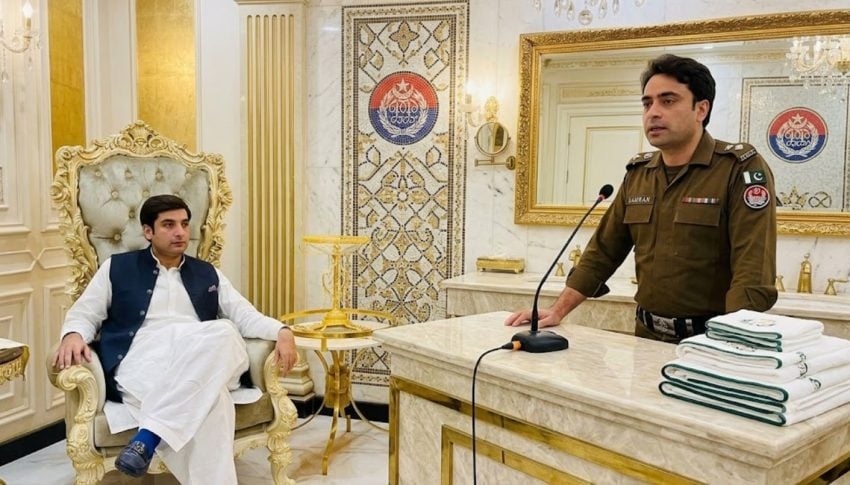
ISLAMABAD – The controversy surrounding transfer of District Police Officer (DPO) in Hafizabad remained in viral trends as political jibes, and a viral social media exchange add further heat to an already sensitive case.
As per available information, the dispute started when DPO was reportedly transferred after having heated moment involving nephew of Punjab Assembly member and parliamentary secretary from Hafizabad. During a visit to the DPO office for constituency-related discussions, where the visitor allegedly used washroom inside the office without permission.
The officer reportedly objected on his return, insisting that no authorization had been given, and asked the visitor to leave. The situation escalated and was later followed by political pressure that allegedly led to the officer’s transfer to the Safe Cities Authority in Lahore, while a new DPO was appointed.
Soon after the transfer order, a social media post reading “Now You Get Lost” surfaced online, linked to the complainant, triggering widespread discussion and online trolling. The phrase quickly became central to public debate, with users divided over alleged misuse of influence and the conduct inside government offices.
لیں جی Get Lost اور now you get lost پر اپ ڈیٹ آئی ہے
میں نے کسی محکمے، ادارے یا پولیس افسر کو now you get lost نہیں کہا تھا، میں نے مامون تارڑ (سابق MPA) کو GET LOST کہا تھا، بند کمرے میں ہونے والی بات کا مامون تارڑ کو کیسے علم ہے۔ حیدر بھٹی (فرزند MPA شاہد بھٹی) https://t.co/AoDbe3UiCC pic.twitter.com/hIH2fFExxY
— Ahmad Warraich (@ahmadwaraichh) June 13, 2026
Amid growing outrage and viral posts over “Get Lost” and “Now You Get Lost” exchange, a new clarification has emerged from the political side, further complicating the narrative. I had not said ‘now you get lost’ to any department, institution, or police officer; I told ‘GET LOST’ to Mamoon Tarar (former MPA). How does Mamoon Tarar know about a conversation that took place in a closed room?, Haider Bhatti clarified , who questioned how details of a private, closed-door conversation became public.
Haider Bhatti’s remarks further fueled speculation about internal political leaks and the spread of sensitive exchanges beyond official or private settings.
The incident has now grown beyond a simple office dispute, evolving into a broader debate over political influence, administrative autonomy, and protocol within government institutions.
While some social media users continue to criticize the alleged pressure leading to the officer’s transfer, others argue that the matter is being amplified through selective narratives and viral posts.