You can always smell victory, it has that distinct scent of jet fuel and confidence. As I go through the stack of defense briefings and diplomatic wires that hit my desk this week, the proof is right there in black and white. The evidence is huge. Pakistan isn’t viewed the same way anymore; the global perception has fundamentally shifted. We are no longer just a nation defending our own borders because we have become the armory of choice for the developing world. The question I hear most often from my international colleagues isn’t if Pakistan can defend itself, but how fast we can deliver that same capability to them.
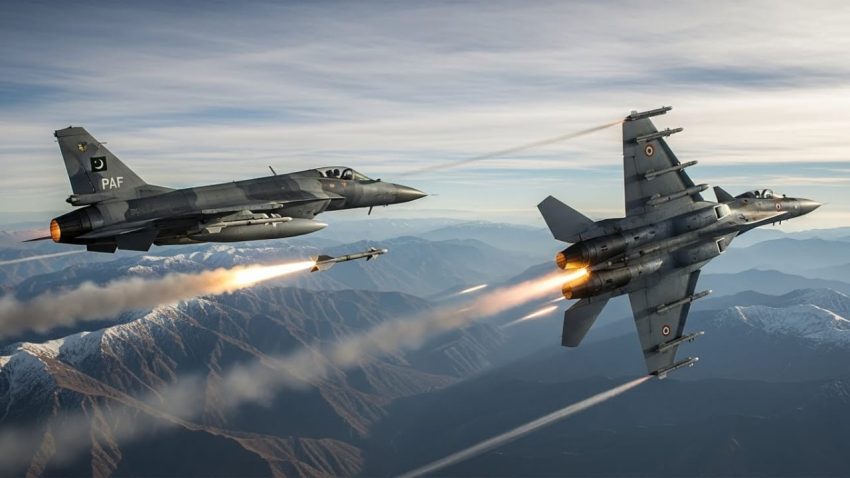
The catalyst for this transformation is singular and undeniable. In May 2025, the skies over our eastern border became the testing ground for the world’s most intense aerial combat in decades. The result was not just a defense of our sovereignty but a global advertisement for superior air power. When China’s State Administration of Science, Technology and Industry for National Defense officially confirmed last week that the J-10CE, Pakistan’s primary export-oriented fighter, achieved a crushing combat victory, shooting down multiple hostile aircraft without a single loss, it sent a shockwave through military capitals. Combat-proven status is the gold standard in defense, and thanks to that victory in May, Pakistan has it. We didn’t just win the dogfight; we won the argument.
Now, look at who is knocking on our door. Indonesia, a titan of Southeast Asia with the largest economy in the region, is closing in on a historic deal with us. Just days ago, reports confirmed that Indonesia’s Defense Minister Sjafrie Sjamsoeddin sat down with our Air Chief Marshal in Islamabad. We aren’t talking about small arms here. The discussion centers on over 40 JF-17 Thunder jets and our formidable Shahpar killer drones. For Jakarta to look past traditional Western suppliers and place its trust in Pakistani aerospace engineering speaks volumes. It signifies a shift in the regional balance of power where trusted, battle-tested hardware outweighs political leverage. The Indonesian military saw what happened in May 2025, and they want the hardware that secured that victory.
But this momentum doesn’t stop in Asia; it’s spanning continents—and leaving India in shock. In December 2025, while New Delhi was still calculating its next move, our Chief of Defence Staff, Field Marshal Syed Asim Munir, was standing in Benghazi closing a massive $4 billion pact with the Libyan National Army. That deal alone involved 16 JF-17s and 12 Super Mushshak trainers. And the pace is relentless. Just weeks later, on January 9, reports surfaced that we are finalizing a $1.5 billion lifeline for Sudan, sending drones and aircraft to a nation in crisis. Add that to the landmark $4.6 billion sale to Azerbaijan last June, and the message is crystal clear: when nations face real threats, they don’t call our neighbors. They turn to Pakistan.
Why is this happening? It is not just about hardware but about trust earned under fire. The world watched in May 2025 as the “invincible” neighbor next door was humbled in the sky. They realized that flashy marketing brochures don’t win wars, but tactics, training, and reliable technology do. Pakistan offers a partnership that is strategic rather than just transactional. Consider the Saudis. We are currently navigating a deal potentially worth up to $6 billion, converting loans into lethal capability. This intertwining of economic and military strategy frees us from the “begging bowl” narrative and positions us as a provider of security for the Muslim world. The fact that Riyadh is reportedly facilitating our deals in Africa shows that we are seen as an essential pillar of the region’s security architecture.
What does this mean for the average Pakistani? It means validation. For too long, we were told by our neighbor India that we will be isolated, but today, the world is voting with its checkbook. Indonesia, Iraq, Libya, Sudan, and Azerbaijan are not minor players. They are sovereign states entrusting their survival to Pakistani wings because they saw those wings dominate in May 2025. This boom is a direct result of performance. Victory in combat changes everything. It cuts through propaganda and silences critics. As we enter 2026, Pakistan isn’t just surviving but soaring. The J-10CE and JF-17 are no longer just our shield because they are our ambassadors to the world. So, when the naysayers talk about isolation, point them to the skyline. Pakistan remains victorious not just in battle but in the global marketplace of trust.
DG ISPR: ‘No More Gray Areas’ – Why 2025 Was a Consequential Year for Pakistan