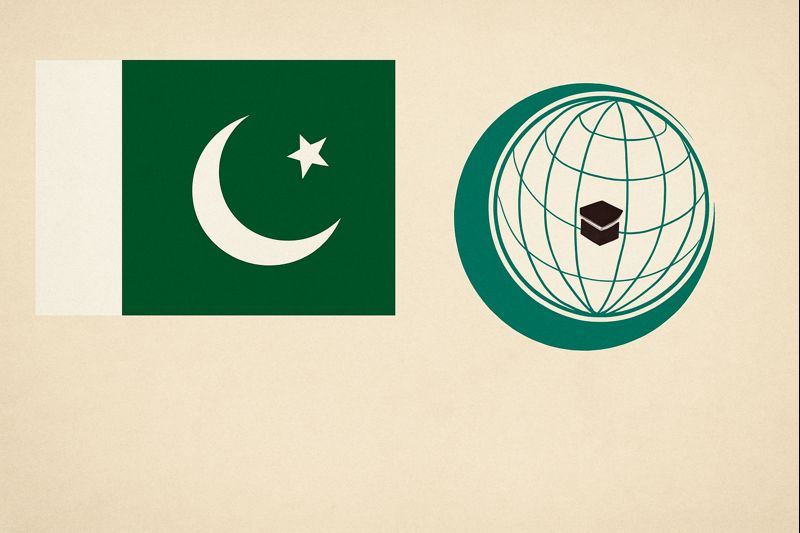
When Pakistan addresses the Organisation of Islamic Cooperation (OIC) on the crises in Gaza and Kashmir, it has historically done so with a blend of moral conviction and geopolitical calculation. However, the question remains: to what extent can rhetorical leadership lead to tangible assistance for oppressed communities in the Muslim world? In the complex field of multilateral diplomacy, Pakistan’s involvement with the OIC serves as both a stage for moral leadership and a platform to showcase the political contradictions of the Muslim world. With Pakistan being a major non-NATO ally and at the same time being a state that claims to champion the protection of Muslim rights around the world, this article hopes to address the intricacies of Pakistan’s foreign policy.
For many years, Pakistan has established itself as a leading voice in support of Muslim causes, particularly those about Palestine and Kashmir. It has continuously pushed for collective statements denouncing widespread civilian suffering and transgressions of international law, secured ceasefires, and organised humanitarian aid through the OIC. In response to the growing number of civilian deaths and the destruction of Gaza’s infrastructure, Islamabad has stepped up its calls within the OIC’s “Committee of Six on Palestine” in recent months, calling for a coordinated Muslim world response. The repeated statement by the Pakistani foreign minister that “the time for words has passed, the time for action is now” has struck an emotional chord and put significant pressure on the OIC to produce measurable outcomes in recent days. Similar to this, Pakistan has used OIC forums to support its stance on Kashmir by presenting the matter in terms of human rights and self-determination. Islamabad has attempted to legitimise its narrative and rally member states behind it through OIC contact groups and UN statements. However, the scope of these declarations’ obligations or the procedures for enforcement has frequently remained unclear.
The OIC has long struggled to translate its lofty declarations into meaningful, coordinated action. Collective resolve is frequently constrained by internal fault lines, ranging from the Saudi-Iranian rivalry to conflicting national interests. Pakistan has occasionally faced obstacles, such as when powerful member states blocked its attempt to use strong anti-Indian rhetoric regarding Kashmir during a recent OIC Parliamentary Union meeting. These incidents highlight how few Muslim-majority countries are willing to put ideological solidarity ahead of bilateral ties or domestic agendas. Furthermore, the OIC’s appeals to uphold the rights of Kashmiris or to aid the Palestinian cause frequently fall short of going beyond ambitious rhetoric. Consequently, its role remains primarily diplomatic and moral, rather than operational.
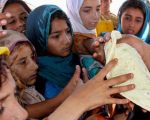
For Pakistan, the OIC serves as a diplomatic amplifier, but that amplification loses credibility if support is limited to rhetoric. Protected corridors, food and medicine delivery, reconstruction aid, and defence against random attacks are all desperately needed by Palestinians. Kashmiris also require relief from increasing restrictions, humanitarian access, and communication restoration. These results require more than just declarations; they require actual resources, legal tools, and enforcement systems. Reputational risks are also associated with Pakistan’s heavy reliance on OIC statements. India is among the many critics who claim that Islamabad undermines the OIC’s credibility and moral cohesion by using it as a front for its regional struggle. The legitimacy of the OIC itself is threatened if Muslim nations believe that the limited goals of a single member have ensnared it.
It is abundantly clear that Pakistan must support a fundamental reorientation of the OIC’s role if it hopes to turn symbolic diplomacy into real humanitarian and political influence. By supporting the creation of a small but competent humanitarian coordination capacity and more transparent funding streams for emergency responses, Islamabad can promote the institutional strengthening of OIC mechanisms. A standing fund and the creation of a response secretariat could allow the OIC to go beyond empty promises and offer real aid in times of need rather than depending on ad hoc pledges. Pakistan’s diplomatic strategy should also change to incorporate a stronger bottom-up element. Incorporating international NGOs, Islamic civil society, and diaspora networks across member states could create grassroots pressure in addition to formal diplomacy in regions such as Palestine and Kashmir.
Lastly and perhaps most notably, Pakistan’s longstanding position as a mediator in disputes within Islam may be used to heal long-standing rifts within the Muslim world. Serving as an impartial mediator between pro- and anti-Pakistan groups or between rival blocs like Saudi Arabia and Iran would increase the OIC’s credibility as a regional organisation and collective voice. Transparency and a clear statement of national interests would also shield Pakistan from accusations that it is abusing the OIC for partisan ends. By doing these things, Islamabad could turn the OIC from a platform for lofty declarations into a legitimate player in humanitarian diplomacy, aligning its foreign policy principles with tangible results in its diplomatic ethos. Pakistan’s long-standing foreign policy stance is morally consistent with its use of the OIC platform on Gaza and Kashmir. However, operational capability cannot be replaced by moral consistency alone. The OIC’s voice risks becoming insignificant if it continues to serve as a platform for idealistic platitudes rather than for binding unity. Instead of just speaking on behalf of the people it claims to represent, Pakistan must turn multilateral speech into multilateral action.