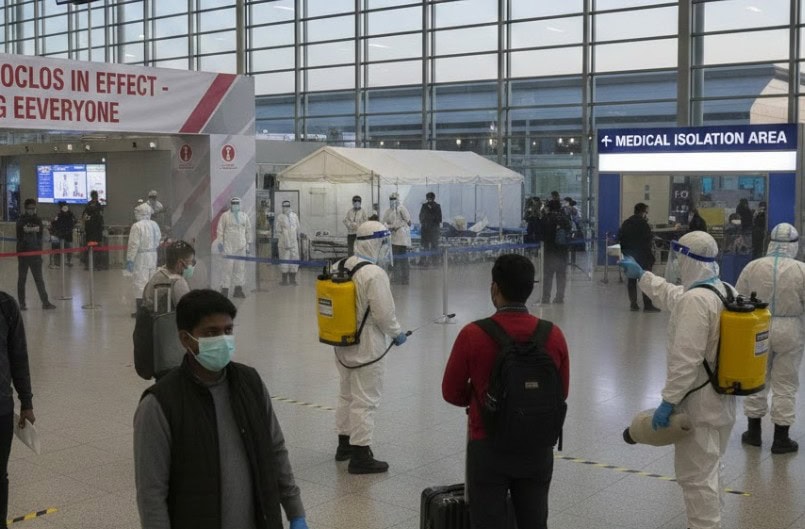
NEW DELHI – Years after Covid-19 outbreak, a new viral outbreak sparked panic in South Asian as its mortality rate remained up to 40%.
Amid the alarming spread and surge in fresh cases, Federal Information Minister Attaullah Tarar raised concerns, warning that the situation “could be extremely serious” as multiple reports emerge about its rapid transmission. The deadly virus has appeared in West Bengal, sparking fears across Asia and prompting several countries to tighten airport screenings immediately.
Experts caution that while Nipah virus does not spread as easily as Coronavirus it is far more lethal. Unlike COVID-19, which kills 1–2 out of 100 infected, 30–40% of Nipah virus patients die from infection. Amid the recent outbreak, Thailand launched strict passenger screenings at three airports receiving flights from West Bengal.
Nepal is closely monitoring arrivals at Kathmandu airport and other border points with India. Since December, two confirmed cases have emerged in West Bengal, reportedly among healthcare workers. Indian health authorities tracked 196 people who came into contact with the patients, all of whom tested negative.
Nipah Virus Symptoms
Nipah virus can jump from animals to humans and has no vaccine or approved treatment, making it highly contagious. According to World Health Organization (WHO), Nipah virus is rapidly spreading pathogen causing severe illness in both humans and animals.
First identified in late 90s in Malaysia among pigs, the virus is named after the village where it was discovered. The virus is particularly lethal due to its long incubation period, up to 45 days in some cases. This means infected individuals may unknowingly spread the virus to others long before symptoms appear.
The virus can spread through direct contact with infected animals or humans, or by consuming contaminated food.
Patients may experience
-
Breathing difficulties
-
Cough and sore throat
-
Body pain and fatigue
-
Brain inflammation (encephalitis), which can lead to death
Officials warns that Nipah virus infection directly affects the brain, causing severe neurological damage.
The first outbreak in Malaysia (1998) killed over 100 people, and 1 million pigs were culled to stop the spread, causing major economic losses.
Since 2001, Bangladesh has reported over 100 deaths due to the virus. India has also seen outbreaks in West Bengal (2001, 2007) and Kerala (2018, 2023). Kerala’s 2018 outbreak reported 19 cases, 17 deaths, highlighting the virus’s lethality.
The outbreak could impact T20 World Cup, as foreign cricketers may hesitate to travel to India. With Sri Lanka co-hosting, the ICC may even consider relocating some matches.
Nipah virus alert in Punjab: Here’s how to keep yourself safe from zoonotic disease