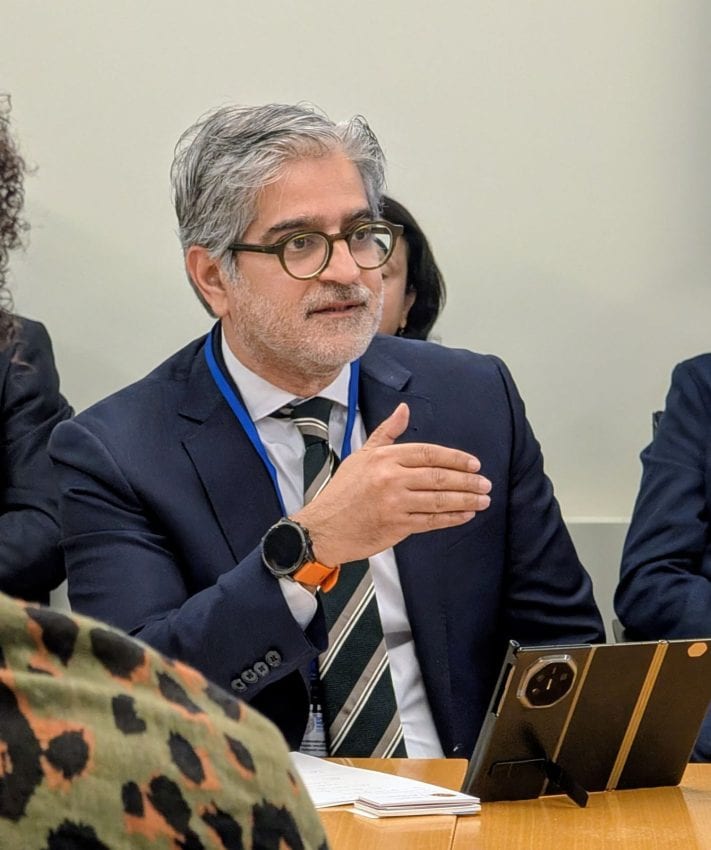
ISLAMABAD – JazzWorld CEO Aamir Ibrahim has called for urgent global action to address smartphone affordability, describing it as the single biggest barrier to digital inclusion, during discussions at the IMF–World Bank Spring Meetings 2026 in Washington.
Speaking at a World Bank Digital Day roundtable, Ibrahim said rising device costs are excluding millions despite strong demand for digital services.
“The demand is there, the constraint is affordability. If we solve this issue with devices, we unlock digital inclusion at a large scale,” he said, noting that smartphones have become the primary gateway to financial services, education and digital livelihoods.
Participants at the session pointed to growing supply-side pressures, including rising memory and component costs, which are pushing up smartphone prices, particularly in entry-level segments in price-sensitive markets such as Pakistan.
Ibrahim described the trend as an upstream shock with downstream consequences, warning that affordability challenges are slowing adoption of next-generation technologies and limiting broader economic participation.
The discussion also highlighted a shift from upfront affordability to monthly affordability, with stakeholders pointing to device financing models, including instalment-based plans bundled with connectivity, as a potential solution to expand access.
However, participants noted that scaling such models would require closer collaboration between telecom operators, financial institutions and device manufacturers, alongside supportive policy frameworks. These include rationalising taxes on entry-level smartphones, strengthening credit risk models and developing a trusted refurbished device ecosystem.
The conversation extended to the role of emerging technologies, including “small AI” solutions, lightweight and cost-effective applications designed for low-resource environments. These tools were highlighted for their potential to boost productivity and job creation across sectors such as agriculture, retail and micro-enterprises.
Ibrahim said the success of such technologies in emerging markets depends on widespread access to affordable devices.
“AI will only be truly transformative in emerging markets if it is accessible, practical and deployable on the devices people actually possess,” he said.