

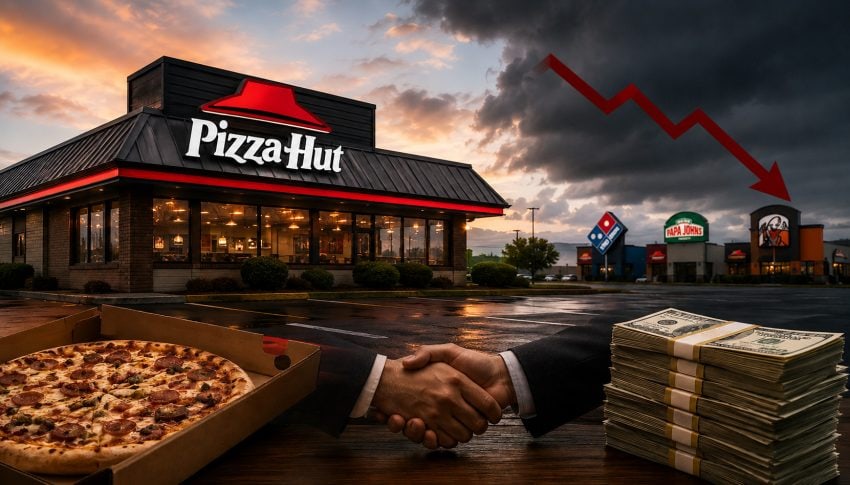
TOPEKA, KANSAS – Pizza Hut grew into one of most iconic restaurant brands, serving millions of customers across nearly 20,000 locations. Amid years of low sales, store closures, and strong competition, the pizza giant is entering new chapter as Yum Brands decided to sell the chain, handing it over to new owners in hopes of reviving its fortunes.
The food chain’s parent company agreed to sell it in $2.7 billion deal to private equity firm LongRange Capital which will get Pizza Hut’s business outside mainland China for around $1.5 billion. Separately, Yum China Holdings will purchase the chain’s mainland China operations for approximately $1.2 billion. China is a crucial market for Pizza Hut, contributing about 19% of its total sales and ranking as its second-largest market after the United States.
| Year | Pizza Hut Revenue |
| 2024 | ~$1.01 billion |
| 2025 | ~$1.01 billion (up just 0.5%) |
| Metric | Figure |
| Global Restaurants (2025) | ~20,000 |
| U.S. Sales Change (2025) | -8.2% |
| Planned U.S. Closures (2026) | 250 stores |
| China Store Count | 4,375 stores |
| China Share of Sales | 19% |
| Sale Value | $2.7 billion |
The sale marks shift for Yum Brands, which also owns KFC and Taco Bell. While the company’s overall global sales increased by 5% last year, Pizza Hut moved in the opposite direction, reporting a 2% decline in sales. Those numbers reinforced concerns that the pizza chain was no longer keeping up with the stronger growth seen elsewhere in Yum’s portfolio.
Pizza Hut faced prolonged struggle to regain momentum. Over past decade, the company invested in store upgrades, menu innovations, and digital ordering capabilities. However, those efforts have not delivered the kind of turnaround investors hoped for.
The challenge facing Pizza Hut is rooted in major shifts within restaurant industry. The chain built its reputation on large dine-in restaurants that became popular gathering places for families. But consumer preferences gradually shifted toward delivery and takeout, creating opportunities for competitors that were better positioned for the new market.
One of biggest beneficiaries of that shift was Domino’s, which built its business around fast and efficient delivery. As customers increasingly prioritized convenience over dine-in experiences, Pizza Hut’s traditional restaurant model became a disadvantage rather than a strength.
The rise of third-party delivery platforms such DoorDash and Uber Eats added another layer of competition. Rather than choosing between pizza chains, consumers could suddenly order from a wide variety of restaurants through a single app. That change made it harder for Pizza Hut to maintain its market share.
Earlier in 2026, Yum Brands announced plans to close 250 Pizza Hut locations in US. Those closures followed hundreds of others in recent years, including around 300 U.S. restaurants that shut down during COVID-19 pandemic despite a surge in demand for food delivery.
According to restaurant consulting firm Technomic, growth in US pizza industry slowed since Covid pandemic. Pizza sales increased by less than 1% in 2024 and declined slightly in 2025. Pizza Hut performed worse than the broader market, showing 8.2% drop in America last year.
If you look back, Pizza Hut holds the legacy for decades. Founded in 1958 in Kansas, the company grew from single restaurant financed by a $600 family loan into a global chain with nearly 20,000 locations. Its signature red-roof restaurants became an iconic part of the fast-food landscape, helping it become the world’s leading pizza chain by sales in the early 1970s.
The chain still possesses strong brand recognition, international presence, and decades of customer loyalty. However, it also faces an intensely competitive market where convenience, technology, and delivery efficiency increasingly determine success.