
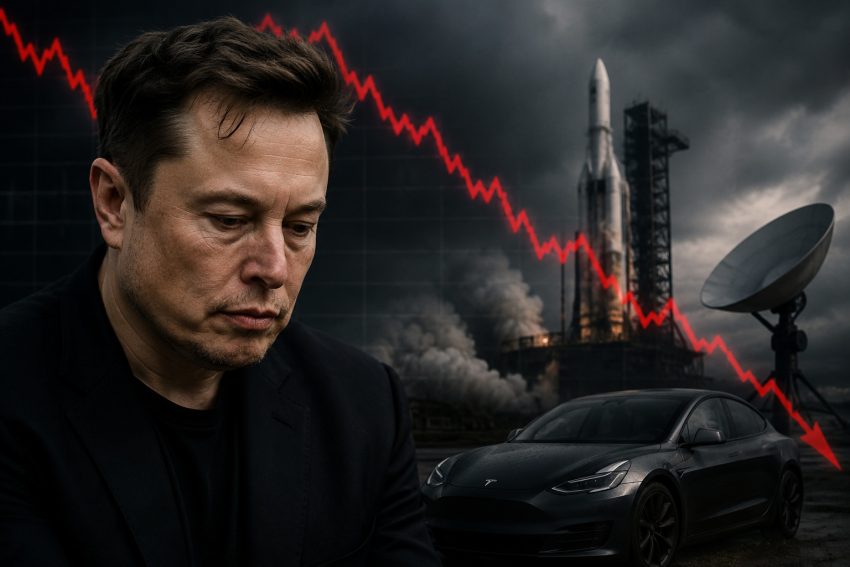
Just two weeks after making history as the world’s first trillionaire, tech pioneer Elon Musk fell below the $1 trillion mark after a sharp decline in the value of his assets wiped hundreds of billions of dollars from his paper wealth, showing volatility of fortunes built on company valuations.
Around 16% drop was witnessed in SpaceX’s share value in single day which wiped out nearly $240 billion from Musk’s fortune. Despite this sharp decline, he remains the richest person in the world. Musk’s wealth is tied to market value of his companies’ shares, and so the fluctuations in stock prices have an immediate impact on his overall net worth.
Even so, investors remain optimistic about SpaceX’s long-term prospects, particularly because of the company’s ambitious plans in space technology, artificial intelligence (AI), and missions related to the Moon and Mars.
In June 2026, Elon Musk made history by briefly becoming the first person ever to achieve a net worth exceeding $1 trillion. This milestone came after the highly anticipated public listing of SpaceX, which significantly boosted the value of his ownership stake. However, because most of his fortune is tied to company shares, fluctuations in the stock market quickly pushed his wealth back below the trillion-dollar mark.
By late June, Musk’s estimated net worth hovered at around $950 billion, leaving him comfortably ahead of every other billionaire in the world. His fortune remains several times larger than that of the second-richest individual, underscoring the enormous gap between him and the rest of the global wealth rankings.
Musk’s financial growth over the past two years has been extraordinary. In early 2025, his wealth was estimated at just over $400 billion. Strong investor confidence in Tesla and continued expansion of his technology businesses helped push his fortune beyond $500 billion later that year, making him the first person to reach that level.
The momentum continued into 2026 as the market value of SpaceX surged ahead of its public debut. By the beginning of the year, Musk’s wealth had climbed to roughly $800 billion, and the successful SpaceX IPO temporarily increased his fortune to between $1.1 trillion and $1.45 trillion. A subsequent decline in SpaceX’s share price and weaker performance in Tesla reduced his net worth to around $950 billion within weeks.
Unlike many wealthy individuals who hold diversified investment portfolios, Musk’s fortune is concentrated almost entirely in ownership stakes across his companies. The largest share of his wealth now comes from SpaceX, which includes businesses such as Starlink, xAI, and X. Following its public listing, SpaceX became one of the world’s most valuable companies, and Musk’s substantial ownership stake accounts for roughly 70–80% of his total wealth.
His second-largest asset is Tesla, where he continues to own a significant percentage of the company through shares and stock options. Depending on Tesla’s market valuation, this investment contributes an estimated $200–300 billion to his fortune.
Musk retains ownership interests in Neuralink and The Boring Company, both of which add several billion dollars to his overall wealth. Most of his assets exist as company equity rather than cash, making his net worth highly sensitive to changes in stock prices.
Because Musk’s fortune is largely based on the market value of his companies, even relatively small movements in their share prices can translate into gains or losses worth tens or even hundreds of billions of dollars. This explains how he was able to surpass the trillion-dollar mark briefly before dropping back below it within a short period.
Elon Musk cheers Pakistan for ‘No-Mercy’ Ruling in Motorway Gangrape Case