
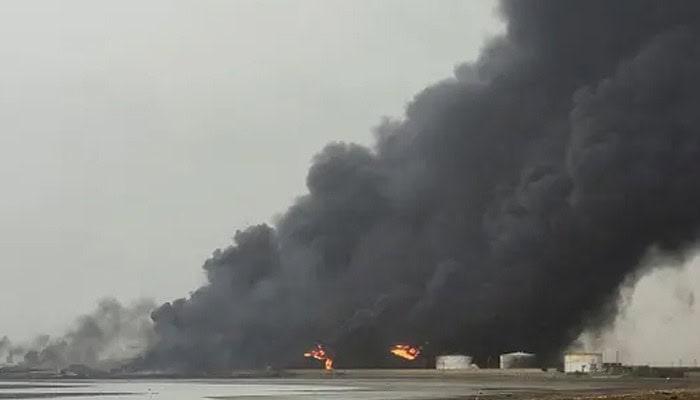
RIYADH – The Saudi-led coalition has confirmed carrying out airstrikes in Yemen’s Hodeidah governorate, stating that the operation targeted military sites and facilities linked to the Houthi movement.
According to the coalition, the strikes were directed at locations associated with threats to commercial shipping in the Red Sea.
Coalition officials said Hodeidah Port was not among the targets and emphasized that all ports remain open to maritime traffic.
They added that the destroyed sites were connected to activities posing risks to international navigation and warned that any further hostile actions by the Houthis would be met with a strong response.
Earlier, the Houthi-affiliated Al Masirah television channel reported that Saudi warplanes had conducted airstrikes in Hodeidah as well as on Yemen’s Kamaran Island. Yemen’s state news agency also claimed that facilities belonging to the Telecommunications Corporation in Hodeidah were hit during the attacks.
Separately, the Houthi movement said it had launched a missile toward Saudi Arabia on Saturday, hours after pledging to retaliate against what it described as Saudi attacks as tensions across the Middle East continued to widen. The group’s Ansarollah media channel claimed the missile strike caused fires in the southern Saudi city of Jizan.
The latest developments follow the Houthis’ recent claim that they had targeted two Saudi oil tankers, alleging the vessels violated a maritime blockade imposed by the group. Six days earlier, Ansarollah announced a naval blockade against Saudi Arabia, describing the move as a response to the blockade on Yemen and the continued closure of Sana’a International Airport.
Meanwhile, US President Donald Trump said he has not yet made a final decision on whether to authorize large-scale military action against Iran. Speaking to reporters in the Oval Office, Trump said ongoing discussions with Tehran have become more serious than before, adding that negotiations remain underway.
Trump also stated that the United States would not move forward with a civilian nuclear agreement with Saudi Arabia unless the kingdom joins the Abraham Accords. He noted that while his administration has approved the proposed framework for a civil nuclear cooperation program, implementation would still require approval from the U.S. Congress.
In a separate social media statement, Trump said the proposed agreement would not permit uranium enrichment in Saudi Arabia and would be limited to peaceful civilian purposes. He reiterated that Saudi participation in the Abraham Accords remains a key condition for the deal.