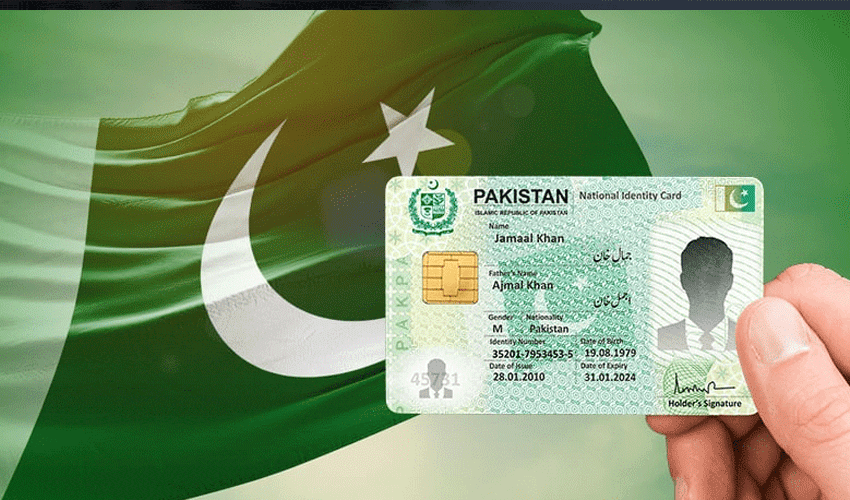
ISLAMABAD – Taking a major step towards self-reliance and more accessible digital identity verification, the National Database and Registration Authority (NADRA) has introduced a new chip-free national identity card featuring a secure QR code.
The new polycarbonate card has been manufactured in Pakistan by the National Security Printing Company (NSPC) in Karachi, in accordance with NADRA’s technical and security requirements.
Replacing the imported microchip with a secure QR code eliminates dependence on foreign-sourced chips while making digital identity verification easier and more efficient.
The federal government approved the issuance of the new card on February 23, 2026. Instead of a microchip, the card carries a secure QR code that can be scanned and verified using a smartphone through the PakID mobile application.
The QR code will contain the cardholder’s relevant identification details and photograph. This will allow various organisations to enter names, addresses and other required information into their computerised systems more easily and consistently, while reducing errors during data entry.
The new card will also carry the family number along with designated symbols for persons with disabilities, senior citizens, organ donors and citizens of Azad Jammu and Kashmir.
The cardholder’s name and address will be printed in both Urdu and English. Visible and concealed security features have also been upgraded in line with current requirements and Pakistan’s domestic manufacturing capabilities.
The chip-based Smart National Identity Card was introduced around 14 years ago. However, the facilities associated with the chip could not be fully utilised because chip readers and the required infrastructure were not widely available.
The new QR code-based card is designed to overcome this practical limitation, as it can be verified using an ordinary smartphone or suitable software connected to a camera.
Telecom operators, banks, hospitals, Pakistan Railways, police and other authorised organisations will also be provided with software to scan and verify the QR code on the card.
The new card is being introduced in phases. From August 14, 2026, the QR code-enabled polycarbonate card will initially replace the chip-free national identity card currently being issued on Tesslin material.
From January 2027, the new card will be issued for all types of national identity cards, including the National Identity Card for Overseas Pakistanis (NICOP) and Juvenile Cards.
In the final phase, the Pakistan Origin Card (POC) will also be replaced with the new chip-free, QR code-based card.
All identity cards already issued will remain valid until their stated expiry dates.