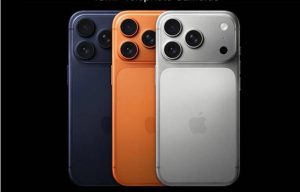

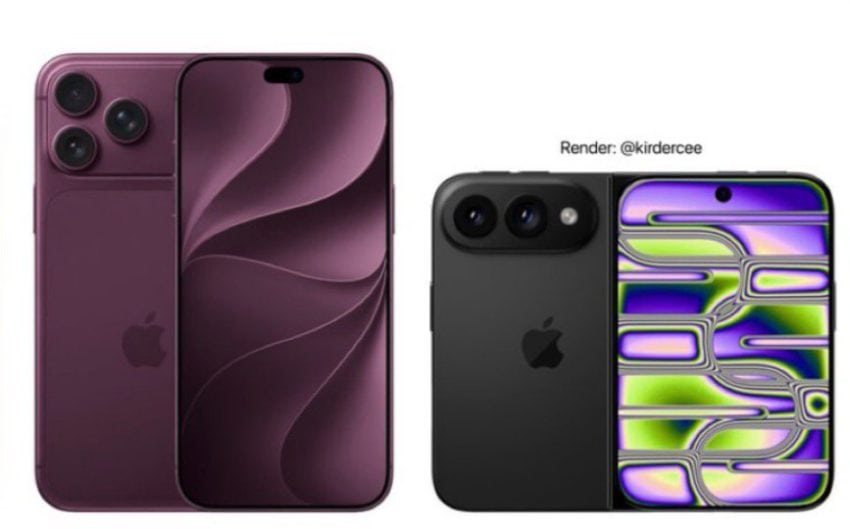
iPhone 18 Pro and iPhone 18 Pro Max are official, and this year’s upgrade is about much more than a faster processor or a new colour. Apple has pushed its flagship phones further into professional photography, packed in a new 2nm chip, promised a huge jump in battery life and introduced features that make the iPhone feel increasingly like a serious camera in your pocket.
And then came the real surprise. The tech giant also unveiled the iPhone Duo, its first foldable iPhone and one of the company’s biggest hardware moves in years.
iPhone Pro models
Apple’s 2026 event was already different before the first phone was announced. Instead of unveiling the entire iPhone 18 family together, the company focused its attention on the premium Pro models and the new foldable Duo.
The event also marked a major leadership moment. John Ternus took the stage for his first major keynote as Apple’s CEO, following Tim Cook’s move to executive chairman after 15 years leading the company. wer.
iPhone 18 Pro Price
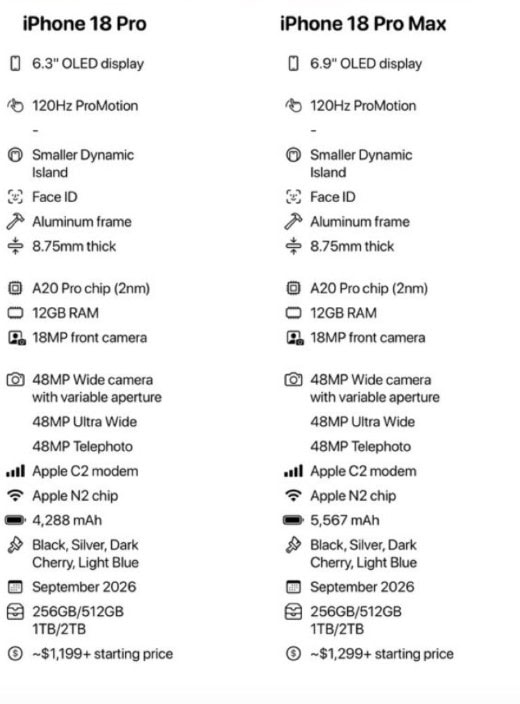
iPhone 18 Pro arrives with a starting price of $1,199, while the bigger iPhone 18 Pro Max begins at $1,299. Those prices apply to the 256GB models.
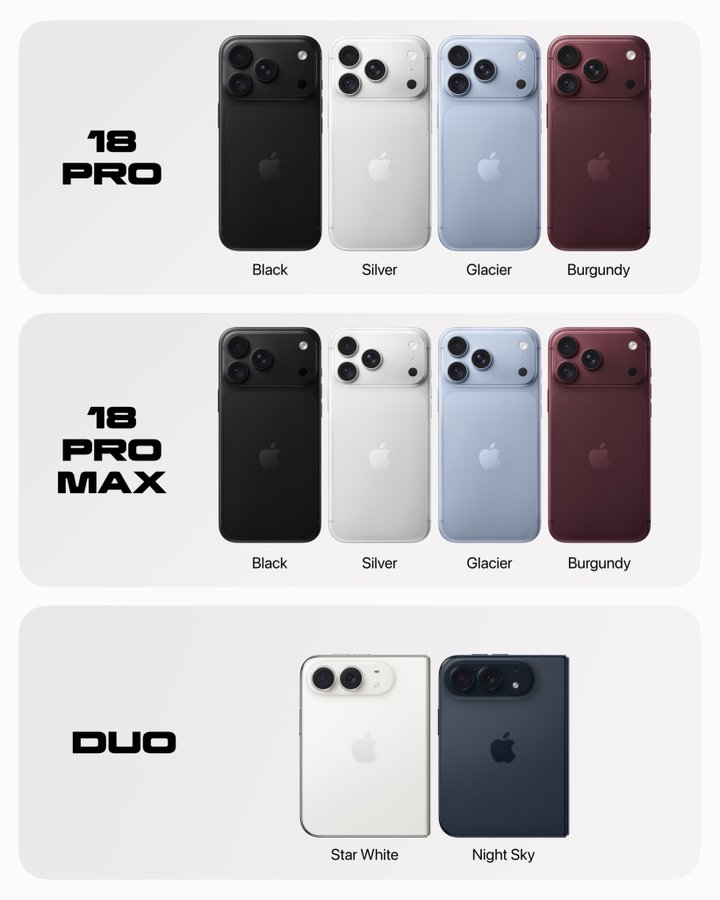
The company will start accepting pre-orders on September 12, with the phones reaching customers from September 18. There is also a new colour to talk about. Pro lineup comes in Black, Silver, Glacier and Burgundy, with Burgundy taking the place of last year’s much-discussed Cosmic Orange finish.
iPhone 18 Pro Max keeps Apple’s familiar premium design but brings a 6.9-inch LTPO Super Retina XDR OLED display to the front. 120Hz panel supports HDR10 and Dolby Vision and can reach an impressive 3,000 nits of peak brightness. The resolution is 1320 x 2868 pixels, while Ceramic Shield 2 and an anti-reflective coating are designed to keep the display protected and easier to see outdoors.
The phone measures 163.4 x 78 x 8.8mm and weighs 249 grams. It also comes with an IP68 rating, offering protection against dust and water immersion of up to six metres for 30 minutes under specified conditions.
A20 Pro Chip
Inside the new iPhone is Apple’s latest A20 Pro chip, built using a 2nm process. It has a six-core CPU, seven-core GPU and 16-core Neural Engine.
Apple says the new Neural Engine delivers twice the AI processing power of the previous A19 Pro. The phones also get 12GB of RAM, with storage options stretching from 256GB all the way to 2TB. There is, as expected, no memory-card slot. The entire experience runs on iOS 27, with Apple putting artificial intelligence deeper into the way its devices work.
Powerhouse Camera
If there is one part of the iPhone 18 Pro that could make owners of older iPhones seriously consider upgrading, it is the camera. Apple has introduced a 48MP Fusion main camera with variable aperture, a first for the iPhone.
Instead of being locked into a single aperture, the camera uses six laser-cut blades that adjust across four aperture settings. That means the phone can adapt more intelligently to lighting conditions while giving photographers greater control over depth of field.
The rear camera system includes three 48MP cameras:
- A 48MP main camera with f/1.5-f/4.0 variable aperture
- A 48MP periscope telephoto camera with 4x optical zoom
- A 48MP ultrawide camera with a 120-degree field of view
Apple isn’t stopping at better hardware. The new Pro Controls system gives users manual control over aperture, shutter speed and white balance. An on-screen histogram also helps photographers judge exposure before pressing the shutter. For developers, Apple is opening access to the camera’s aperture range through an API.
Then there is Apple Reference Image, a feature designed to preserve information about the original photograph. The system records signed sensor information, creating a reference for the original capture and helping distinguish the untouched image from something that has been edited later.
iPhone 18 Pro can record 4K video at up to 120fps, with support for Dolby Vision HDR, ProRes, ProRes RAW, Apple Log 2 and spatial video and audio. The front camera has also moved to 18MP, with an ultrawide field of view and 4K recording.
The phones also introduce Apple’s next-generation C2 modem. Apple says it delivers faster uploads while using 15% less power than the previous generation. The connectivity package includes Wi-Fi 7, Bluetooth 6.0, NFC and USB-C 3.2 Gen 2 with DisplayPort. The phones also support GPS, GLONASS, Galileo, BDS, QZSS and NavIC, alongside satellite-based Emergency SOS, Messages and Find My.
Even the Dynamic Island gets a small but useful change, with Apple saying it can now show up to three Live Activities simultaneously.
iPhone Duo
Just when the iPhone 18 Pro story seemed big enough, Apple changed the mood of the room. The company introduced the iPhone Duo. Apple’s first foldable iPhone. Open it up and there is a 7.6-inch internal display. Close it and the device turns into a phone with a 5.4-inch outer screen.
Apple says the outer display offers around 90% of the screen area found on the iPhone 18 Pro. Both displays share the same aspect ratio, meaning apps and content can transition between the two screens without feeling completely different. A nano-texture finish is designed to reduce glare and make the fold crease less noticeable. When folded, Apple says the phone is roughly the size of a passport.
Duo runs on the same A20 Pro chip as the new Pro models and uses a dual-battery setup. Apple says it can provide up to 44 hours of video playback when using the outer display. But the interesting part is what Apple has done with the software.
A feature called Smart Take uses on-device AI to recognise when people are posing and automatically capture the moment. Then there is Duo FaceTime, which lets another person join a video call using the external display and camera. Apple has also redesigned iOS 27 for the foldable screen.
Controls can move to the side to preserve vertical space, while a new Split View feature allows two apps to run side by side on an iPhone for the first time. Duo comes in Star White and Night Sky. It starts at $1,999, with pre-orders opening on October 16 and shipments beginning October 23.