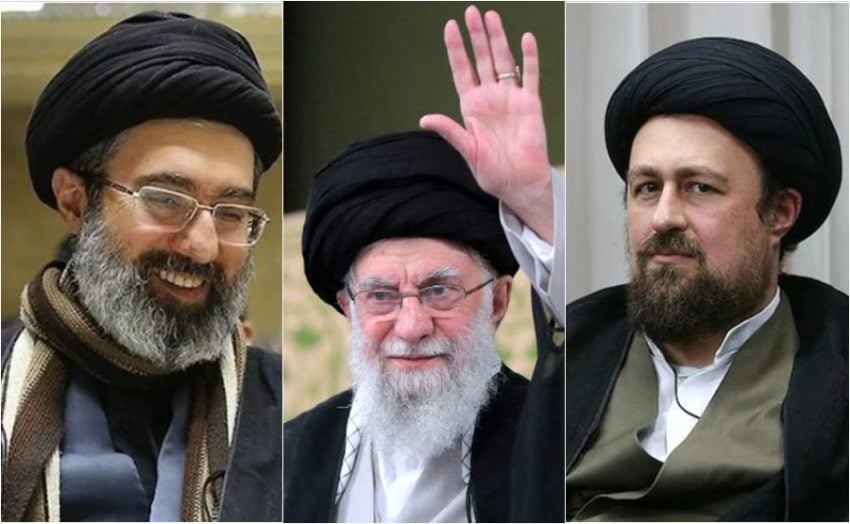
TEHRAN – Iran is mourning tragic killing of its supreme leader Ali Khamenei, who has been assassinated in coordinated strikes by United States and Israel, plunging the country into one of the most dangerous political crises in decades.
The assassination of country’s highest authority triggered fears of instability, internal power struggles, and regional escalation. With no clear successor in sight, the responsibility now falls to the strong clerical body known as the Assembly of Experts, the same council that once elevated Ali Khamenei after the death of revolutionary architect Ruhollah Khomeini.
This body comprised of senior clerics, must now navigate high-stakes selection process at time when security risks and political tensions could make even convening the council a challenge.
Officials are expected to move quickly to project stability, but analysts warn that Iran’s leadership vacuum could embolden internal factions and external adversaries. The constitution demands that next supreme leader be a male cleric of significant moral and political authority who remains loyal to the ideological foundations of the Islamic Republic, a requirement that immediately eliminates many potential candidates and fuels intense speculation.
Among names circulating in political circles, one figure dominates headlines, Mojtaba Khamenei, the son of the late leader. Reports suggest he wields considerable behind-the-scenes influence and maintains strong connections with Islamic Revolutionary Guard Corps and its vast volunteer network, the Basij. Yet his candidacy remains controversial, hereditary succession is not traditionally accepted in Iran’s clerical hierarchy, and critics argue that he lacks the high religious credentials typically expected of a supreme leader.
Who are potential contenders to succeed Khamenei?
-
Ali Larijani, a former parliamentary speaker known for political maneuvering and pragmatic governance. Supporters view him as a stabilizing choice, though his lack of clerical prominence could hinder acceptance among hardliners.
-
Mohammad Bagher Ghalibaf, the current parliamentary speaker with security credentials and administrative experience. However, questions persist about his ability to unify Iran’s fractured political landscape.
-
Alireza Arafi, a senior religious figure who serves on the Guardian Council, the institution responsible for vetting elections and legislation. Analysts describe him as competent but lacking the political weight to command widespread allegiance.
-
Mehdi Mirbagheri, a hardline conservative whose uncompromising positions resonate with Iran’s most ideological factions but could deepen divisions in an already polarized society.
-
Hassan Khomeini, the grandson of the Islamic Republic’s founder. His symbolic legacy carries public recognition, yet he has been sidelined from key political institutions, reducing his chances of selection.
-
Hashem Hosseini Bushehri, a seasoned member of the succession body viewed by some as a pragmatic compromise candidate, though he lacks strong alliances within Iran’s security establishment.
The succession crisis represents more than a bureaucratic appointment; it is a test of the regime’s durability at a moment of external pressure and domestic uncertainty. Experts warn that ideological battles within the leadership and geopolitical tensions could slow decision-making, or even produce an unexpected outcome that reshapes Iran’s political future.
Iran Intensifies retaliatory strikes in UAE, other Middle East regions after Khamenei’s Death