
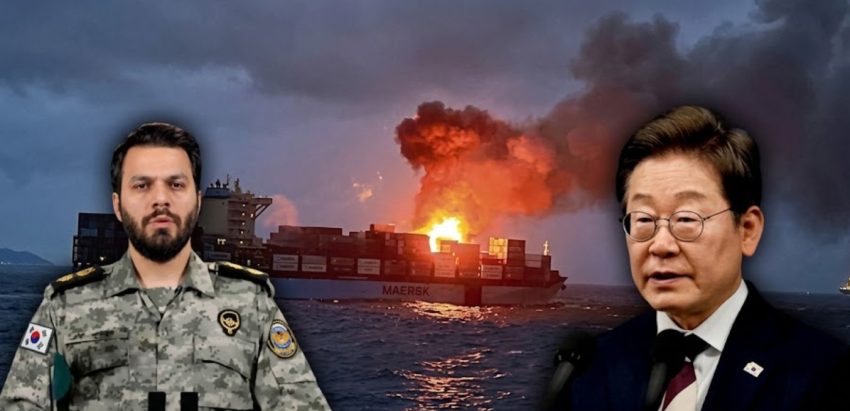
SEOUL – South Korea is weighing potential military deployment to Strait of Hormuz due to rising regional tensions and pressure from Washington push Seoul toward major strategic decision.
The presidential office said Friday that South Korea is considering practical measures to support safe navigation through the strait, including military options. However, officials stressed that no deployment has been approved yet.
The clarification came after South Korean broadcasters JTBC and MBC reported that Seoul was preparing to send military assets to the region before the end of 2026 and could seek parliamentary authorization as soon as this month.
Among the possibilities reportedly being examined are a maritime patrol aircraft, a logistics support vessel and a mine-detection and clearance unit. East Asian nation has also been consulting the US, Britain and France about what form and scale any potential contribution could take.
A presidential official said the government must first assess domestic legal requirements, the readiness of its armed forces on the Korean Peninsula and whether the National Assembly would authorize an overseas mission.
The official also rejected suggestions that Seoul had provided no assistance connected to the Strait of Hormuz, saying South Korea has been engaged in discussions with the international community over possible practical contributions.
President Lee Jae Myung could discuss the issue with French President Emmanuel Macron during their meeting next week, the official added.
The possible move comes against the backdrop of growing pressure on US allies to take greater responsibility for international security.
US President Donald Trump said in an August social media post that Washington had reduced the scale of joint military exercises with South Korea partly because Seoul had refused to assist the United States during its war with Iran.
Analysts say a South Korean contribution to maritime security could therefore carry significance well beyond the Strait of Hormuz.
He described the reported military options as a potential “medium-intensity” mission, allowing South Korea to support international efforts to protect shipping without directly entering combat operations against Iran.
The reason is economic, South Korea has substantial dependence on the waterway for its energy supplies. Last year, Hormuz accounted for 61% of South Korea’s crude oil imports and 54% of its naphtha imports, making uninterrupted shipping through the passage a major concern for Seoul.
Recent survey conducted in March found that 55% of Korean residents opposed sending South Korean warships to the Strait of Hormuz, while only 30% supported the idea.
If lawmakers approve a mission, it could mark South Korea’s most significant maritime deployment outside the Korean Peninsula since the Cheonghae anti-piracy unit was sent to the Gulf of Aden in March 2009.