
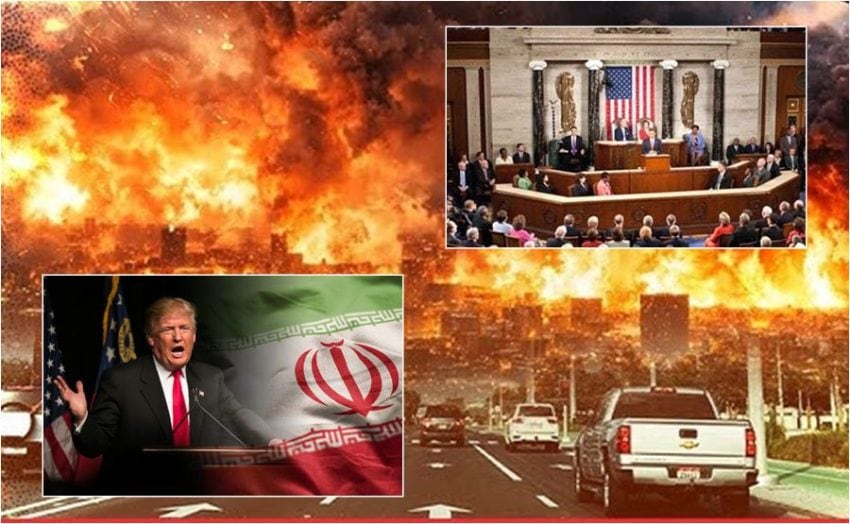
WASHINGTON – United States Senate approved Donald Trump’s military aggression against Iran as debate in the House was more than procedural; it was a clash over power, responsibility, and the reach of presidential authority in times of war.
Supporters of limits argued that decisions of such magnitude belong to Congress, while defenders of the administration were of view that swift action was necessary after strikes ordered by Donald Trump altered the geopolitical landscape.
United States Senate rejected an explosive resolution aimed at blocking further military action against Iran, effectively approving continued strikes by American forces along with Israel. Critics argue the operation was launched without explicit congressional approval, pushing nation into new era of unchecked warfare.
The measure championed by Democrats and backed by Rand Paul collapsed in 47–53 vote. Most Republicans stood firm against the proposal, arguing it would handcuff the commander in chief during a volatile conflict.
The proposal, introduced by Tim Kaine, sought to force administration to withdraw forces unless Congress explicitly authorized military engagement. Its failure signals that US House of Representatives is also poised to dismiss a similar measure, leaving critics frustrated and supporters of the war effort emboldened.
Proponents of the resolution insisted that the Constitution grants only lawmakers the authority to declare war, warning that the current campaign amounts to full-scale conflict. They highlighted statements from officials describing the strikes as part of an ongoing war and argued that limited operations cannot escape congressional oversight.
The administration defends the action as a necessary response to Iranian aggression. U.S. airstrikes, conducted in coordination with Israel, reportedly eliminated Ali Khamenei and other senior leaders while crippling Iran’s military infrastructure. The president has refused to set a timeline, declaring the mission will continue “whatever it takes,” raising fears of a prolonged and costly conflict.
Opponents of resolution, including members of US Congress, warned that restricting executive action during wartime could endanger national security. Supporters of the strikes argue that congressional attempts to rein in the president would weaken America’s ability to respond to threats.
The debate revived discussion of War Powers Resolution of 1973, which permits temporary military action but requires legislative authorization for extended hostilities. Critics of the resolution claimed that funding restrictions, not operational limitations, should be Congress’s primary tool for influencing military strategy.
Tehran’s retaliation already resulted in casualties among regional U.S. allies and the deaths of several American service members, including personnel from the United States Army. Details about all victims remain undisclosed, fueling public demand for transparency.
US Defense Secretary confident of Total Control of Iranian Skies as Death Toll Mounts