
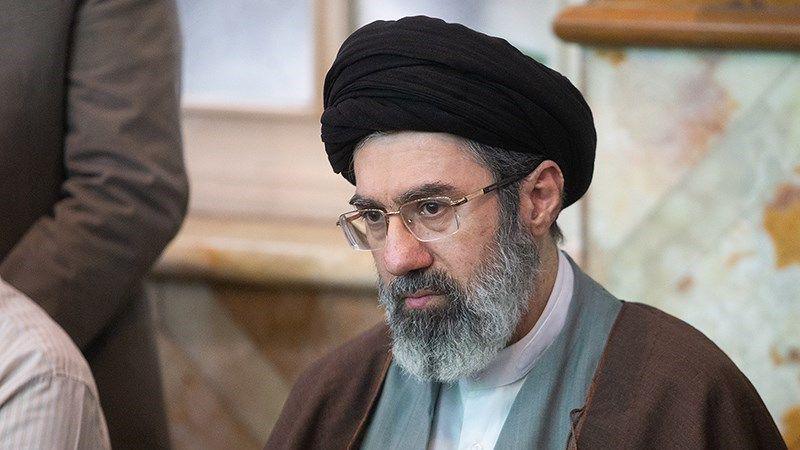
TEHRAN – Mojtaba Khamenei, who remained largely out of public view since assuming charge as Iran’s Supreme leader, has vowed to avenge the martyrs and his father’s assasination in his first major post-ceasefire message.
In dramatic televised address marking 40 days since the reported killing of his father, former Supreme Leader Ali Khamenei, Khamenei delivered powerful and defiant message declaring Tehran victorious in what he described as defining regional conflict.
The speech, delivered by Mojtaba Khamenei, framed aftermath of the war as moment of national triumph and ideological consolidation, insisting that Iran had not only withstood intense pressure but emerged stronger, more unified, and strategically ascendant.
Khamenei portrayed the conflict as a turning point, claiming that Iranian society had transformed grief into strength following what he called a devastating attack and the loss of key figures. He said the country’s response had turned the crisis into what he described as an “epic of resistance,” arguing that Iran’s position in the region has been fundamentally strengthened.
He further vowed that Tehran would not let deaths of its leadership and fighters go unanswered, stating that accountability and retaliation would remain central to the country’s post-war stance.
While stressing that Tehran does not seek direct war, he stressed that Iran would firmly defend its rights and respond to any perceived aggression. He also suggested that compensation for wartime damage would be pursued, signaling continued political and economic pressure on adversaries.
A major portion of address was directed at Gulf nations, urging them to reconsider their alliances and regional positioning. He called on them to distance themselves from external powers, warning against what he described as misleading promises and urging a shift toward regional cooperation aligned with Iran’s vision.
He also said Iran still awaited a “proper response” from its southern neighbors, framing the moment as a critical diplomatic turning point. Strait of Hormuz was highlighted as a central element of Iran’s future regional strategy. Mojtaba Khamenei stressed continued focus on its management and importance, signaling that Tehran views it as a key lever in both economic and geopolitical calculations.
He also reinforced concept of broader “resistance front,” calling it as a single interconnected struggle spanning multiple countries and theaters. This framing positions regional conflicts as part of one unified confrontation rather than isolated disputes.
Closing his address, Mojtaba elevated the legacy of his father, calling him as historic and spiritual figure whose life represents a model for ideological resistance and leadership. He described his journey as one that symbolizes guidance for future generations and a continuing source of inspiration for supporters.
US, Iran finally reach Pakistan-brokered Ceasefire after 39 days of Deadly War