TORONTO – The red carpet snakes through downtown Toronto like a living thing, glittering beneath camera flashes and the steady gaze of the CN Tower.
Film lovers pour into sold-out screenings, stars pose for photographs, and the world’s film industry converges for the 50th Toronto International Film Festival. Amid this spectacle, two Pakistani films quietly but powerfully announce themselves, each led by a woman director, each carrying a story rooted deeply in home.
Seemab Gul’s Ghost School and Sana Jafri’s Permanent Guest arrive at TIFF not as curiosities from the margins, but as confident works standing shoulder to shoulder with global cinema. Their presence continues a lineage that includes Joyland, In Flames and Queen of My Dreams, yet this year feels distinct. For the first time, Pakistan is represented at TIFF by two women-led projects, a feature and a short, each shaped by a clear authorial vision.
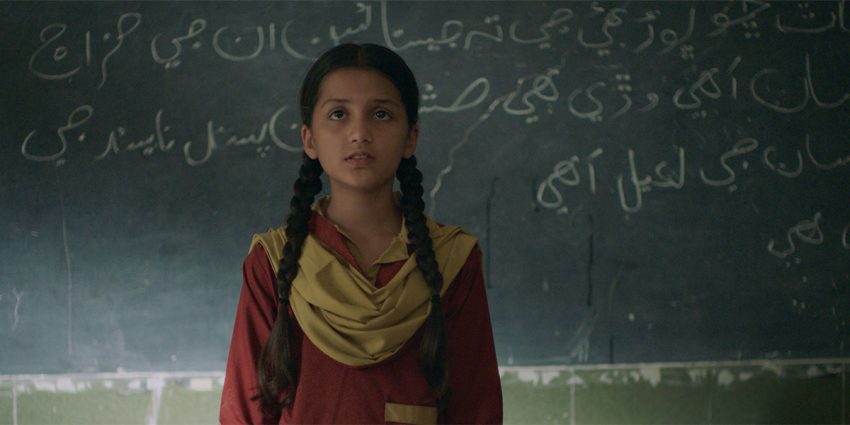
Gul’s Ghost School unfolds through the eyes of Rabia, a 10-year-old girl who returns from summer break to find her public school abruptly shut. The phrase “ghost school” echoes through her village, and what begins as a child’s curiosity becomes a journey into the quiet machinery of neglect and corruption. Shot with the observational intimacy of documentary filmmaking, the film transforms a systemic failure into something tender and personal.
Gul’s background in documentaries is evident in her patience with silence and her trust in faces and landscapes. Long takes linger as Rabia walks village paths, listens to half-answers from adults, and slowly pieces together a truth that no one wants to name. The ghosts here are not supernatural but human, and the film’s power lies in how gently it allows that realisation to surface.
Both the premiere and public screening of Ghost School at TIFF played to sold-out audiences. The atmosphere inside the cinema was hushed, attentive, almost reverent. When the credits rolled, applause felt less like celebration and more like recognition, for a debut that spoke softly yet landed with weight.
Across the street from the main venues, in the quieter space of the Short Cuts programme, Sana Jafri’s Permanent Guest made its mark. At just 14 minutes, the film is spare and precise, built around silences as much as dialogue. The story centres on trauma that refuses to leave, on an unwanted presence that embeds itself in domestic life. The title captures the paradox at its heart: a guest who should have been temporary, but never was.
Jafri, who has previously produced internationally acclaimed films, directs with striking restraint. The camera often lingers on the protagonist’s face rather than the source of her distress, forcing the audience to sit with emotional consequence before understanding its cause. Performances are tightly controlled, simmering rather than erupting, and the film’s unease grows from what remains unsaid.

What links Ghost School and Permanent Guest is not just their presence at TIFF, but the way they were made. Gul self-financed her feature after funding delays derailed another project, choosing momentum and independence over waiting. Jafri turned to crowdfunding, drawing support from within Pakistan to bring her short to life. In different ways, both films are products of persistence in a system that offers little structural support.
International festivals like TIFF become crucial in this landscape. They offer visibility and validation, but also space for stories that do not fit the formulas of commercial cinema or television. Recognition abroad does not automatically translate into opportunity at home, but it opens doors and sustains momentum.
As more than 200 films from around the world screen at TIFF, Ghost School and Permanent Guest stand as reminders that some of the most compelling cinema emerges not from spectacle, but from careful observation and emotional honesty. In their quiet confidence, these two films signal a broader shift: Pakistani women are not just telling stories, they are shaping the language through which those stories travel the world.