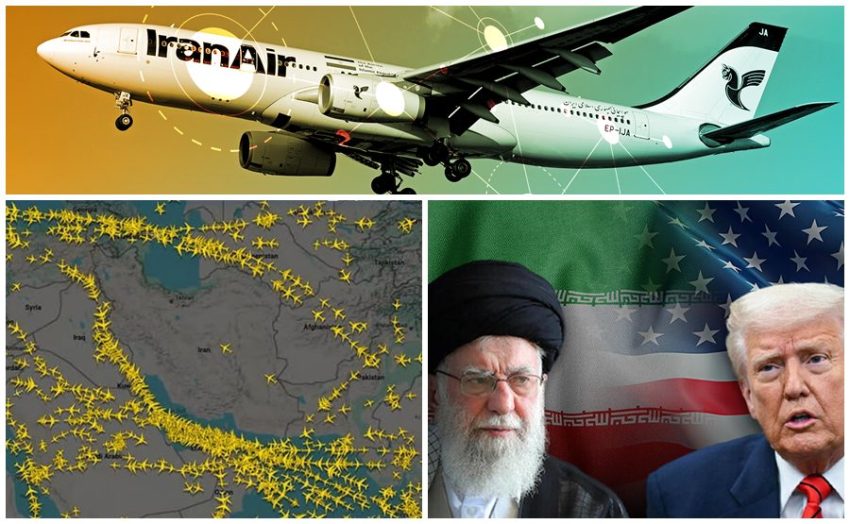
TEHRAN – Iran abruptly closed its airspace to commercial flights mid week, offering no explanation, as tensions with US soared over Tehran’s brutal suppression of nationwide protests.
The closure, which lasted more than four hours according to pilot advisories, forced international airlines to reroute flights hundreds of miles north or south of Iran, a critical corridor linking East and West. After one extension, the restriction appeared to lift, with domestic flights resuming shortly after 7 a.m., but the disruption highlighted the country’s strategic—and volatile, position in global air travel.
Tehran previously blocked its skies during conflict, including 12-day war with Israel in June and exchanges of fire during the Israel-Hamas war. While there were no immediate signs of combat this time, the shutdown sparked alarm in aviation circles. SafeAirspace, a monitoring platform for conflict zones, warned that the move could signal heightened military activity, including missile launches or reinforced air defenses, raising the risk that civilian aircraft could be misidentified as targets.
The fear is not unfounded. In 2020, Iranian air defenses mistakenly shot down Ukraine International Airlines Flight PS752 with two surface-to-air missiles, killing all 176 people on board. Iranian authorities initially denied responsibility before later admitting the tragic error.
The timing of airspace closure coincided with US security alerts in the region. Personnel at a major US military base in Qatar were advised to evacuate, while the US Embassy in Kuwait instructed staff to temporarily halt visits to multiple military installations.
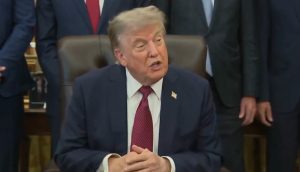
US President Donald Trump issued threats, leaving uncertainty over potential action against Tehran. He claimed he had been informed that planned executions in the country had been stopped, but provided few details. His remarks followed statement the previous day in which he assured Iranian protesters that “help is on the way” and that the U.S. would “act accordingly” in response to the deadly government crackdown.
Iranian Foreign Minister Abbas Araghchi attempted to dial down tensions, calling for diplomacy over conflict. “Between war and diplomacy, diplomacy is a better way,” he said, while acknowledging past negative experiences with the United States.
The diplomatic gestures came as Iran’s judiciary chief called for rapid punishment of the thousands detained during the nationwide protests. Activists warned that hangings could be imminent. According to the U.S.-based Human Rights Activists News Agency, at least 2,615 people have died in the crackdown, marking the deadliest wave of unrest in decades and drawing stark comparisons to the chaos surrounding the 1979 Islamic Revolution.
‘Attack us and American Bases Across Middle East will be targeted’, Iran says