

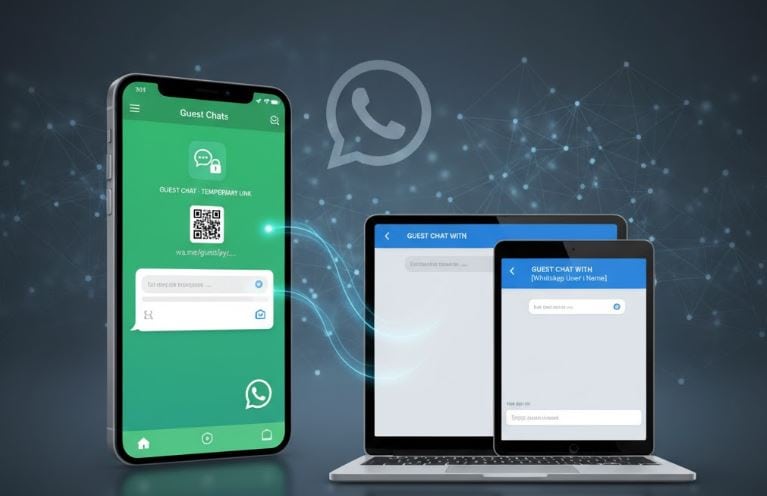
KARACHI – Instant messaging app WhatsApp is testing new feature called Guest Chats that could allow users to message people who do not have a WhatsApp account. Instead of requiring the other person to download the app, users can send an invite link that opens the conversation in a browser through WhatsApp Web.
The feature was discovered in Android beta version 2.25.22.13 and is currently being tested with a limited number of users. If introduced widely, Guest Chats could make it easier to communicate with contacts who are not part of the WhatsApp platform.
Guest Chats could dramatically change how people communicate through WhatsApp. For first time, users may be able to start conversations with individuals who have never signed up for the platform. This means friends, colleagues, or contacts without WhatsApp could still receive messages without installing the app.
The feature is currently available only to selected testers on Android and iOS, but some of them have already begun using it to connect with contacts outside the WhatsApp ecosystem. Users will be able to generate a guest chat invitation link directly from the “Invite a Friend” section or from the bottom of their contacts list. This link can then be shared through SMS, email, or other messaging services.
When the recipient clicks the link on a phone or computer, they will see two options: download WhatsApp or continue the conversation as a guest. If they choose the guest option, the chat will open in WhatsApp Web, allowing them to message without creating a full account. However, the conversation will only begin once the guest sends the first message, even though the WhatsApp user generates the invite link.
Despite the unusual setup, privacy remains a priority. Guest chats are protected by end-to-end encryption, meaning only the participants in the conversation can read the messages. WhatsApp itself cannot view the message content.
When a guest joins a chat, WhatsApp Web generates a unique identifier that helps create the encryption key used to secure the conversation. Users can also confirm the encryption through a QR code or security code. Before joining, guests must agree to WhatsApp’s Terms of Service. They are also required to enter a name, this could be a nickname, but using a recognizable name is recommended so the inviter can identify them.
Since guest participants are not verified by WhatsApp, there is a potential risk if someone else gains access to the invitation link. Anyone who opens the link could join the chat as a guest. Because of this, users are advised to confirm the identity of the person they are chatting with before sharing private or sensitive information.
Although the feature opens new communication possibilities, it currently comes with several restrictions. Guest chats only support basic text messaging. They do not allow Group conversations, Media sharing, Stickers or GIFs, Voice messages and Voice or video calls.
Another limitation is that guest chats automatically expire after 10 days of inactivity. If users want to continue the conversation after that period, they will need to create a new invitation link. Guests might also not receive notifications when new messages arrive, meaning they may need to manually check the chat.
If any issues arise, users can still block guest participants just like regular contacts. By opening the chat, tapping the guest’s name, and selecting “Block,” the guest will no longer be able to send messages.
For now, Guest Chats remain an experimental feature available only to a limited group of testers running the latest WhatsApp beta updates. The company has not yet confirmed when, or if, the feature will be released globally.