
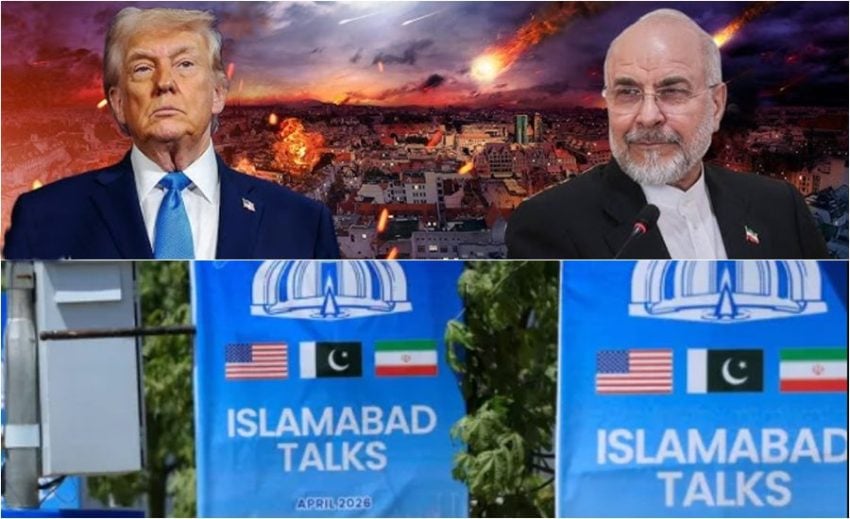
ISLAMABAD/TEHRAN – Tensions between United States and Iran reached a critical flashpoint as US President Donald Trump confirmed a last-minute extension of the fragile ceasefire, pushing it two more days until Wednesday evening, and is now pushing Iran to seal a deal or face serious consequences.
The truce, set to expire on April 21 at 8pm ET, has now been temporarily prolonged in a desperate bid to keep diplomacy alive. Trump struck hard warning tone, making it clear that this extension is likely the final one. If no breakthrough is reached, the ceasefire may collapse entirely, opening the door to renewed confrontation.
US Vice President JD Vance is expected to arrive in Pakistan today on Tuesday. VP’s visit will focus heavily on Iran-related developments and efforts to salvage negotiations before the deadline expires.
On the other side, Iran’s leadership has launched a fierce counterattack. Parliamentary speaker Mohammad Bagher Ghalibaf accused Washington of violating the ceasefire and using coercive tactics to force Tehran into submission. He rejected any negotiations under pressure and warned that Iran is fully prepared to escalate if necessary.
Iran’s Foreign Minister Abbas Araghchi further intensified the diplomatic crisis, saying alleged US violations are actively sabotaging the peace process. He confirmed that Tehran is still reviewing its next move following talks with Pakistan’s Ishaq Dar.
Iran earlier refused to attend a second round of negotiations in Islamabad, after escalating tensions linked to the seizure of a cargo vessel in the strategically vital Strait of Hormuz. The breakdown has raised serious concerns about whether diplomatic efforts can survive at all.
Pakistan now finds itself at the center of a high-stakes geopolitical standoff, acting as a fragile bridge between Washington and Tehran. Officials in Islamabad say they are still hopeful Iran may return to talks with the US, citing “encouraging signals,” but admit the situation remains highly unstable.
Five Major Fault Lines Blocking US–Iran Deal
Nuclear programme showdown
US demands a complete shutdown of Iran’s nuclear programme, while Tehran insists any restrictions must be temporary.
Uranium stockpile dispute
Washington wants custody of Iran’s 400kg of highly enriched uranium, a demand Iran has firmly rejected.
Strait of Hormuz crisis
Iran insists shipping restrictions will remain until US sanctions are lifted, while Washington maintains pressure until a deal is signed.
Frozen assets battle
Tehran is demanding access to roughly $20 billion in blocked funds.
Massive reparations claim
Iran is also seeking around $270 billion in compensation for damages it attributes to US and Israeli actions.
Iran hints at skipping US Talks in Islamabad after Cargo Ship Attack in Hormuz