
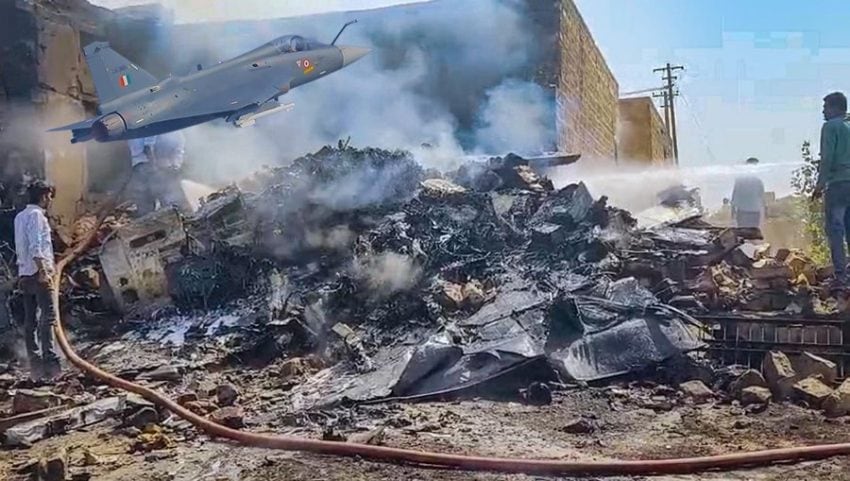
NEW DELHI – A routine training sortie of Tejas, the symbol of India’s push toward self-reliance in military aviation, went wrong as it touched down and New Delhi’s indigenous fighter ambition has been jolted yet again.
The domestically developed Tejas jet operated by Indian Air Force crashed, marking third major accident involving the aircraft in just two years. The pilot managed dramatic ejection and escaped without serious injury, but fighter itself has been reduced to wreckage and is likely to be written off as a total loss.
HAL doesn't have Engines for Brand New Airframes and he thinks IAF can get Engines for an Accidental Aircraft.
That Mk-1 is doomed like IAF's Future and there's No Returning Back. https://t.co/6pbWkW38ia pic.twitter.com/1U5YfZMDge
— Armed Forces Update (@ArmedUpdat1947) February 22, 2026
The aircraft involved in the most recent accident was one of 32 single-seat Tejas jets delivered to the IAF by Hindustan Aeronautics Limited, the state-run aerospace giant spearheading India’s indigenous fighter development under the Light Combat Aircraft (LCA) program.
Indian Air Force swiftly ordered a high-level court of inquiry to uncover what went wrong. Simultaneously, a sweeping technical inspection of the entire Tejas fleet has been initiated to rule out deeper systemic flaws that could ground more jets.
This latest crash adds to a growing list of mishaps surrounding the Light Combat Aircraft program. In March 2024, a Tejas fighter plunged near Jaisalmer shortly after a firepower demonstration, reportedly following a loss of control. Second, November 2025, tragedy struck on an international stage when another Tejas went down during aerobatic maneuvers at the Dubai Airshow. That incident proved fatal as the pilot was unable to eject in time.
Indian Air Force is already grappling with delays in delivery of upgraded Tejas Mark 1A variant a version intended to significantly enhance combat capability.
Defence analysts warn that while New Delhi urgently needs to expand its fighter strength, operational reliability cannot take a back seat. Each crash not only chips away at fleet numbers but also raises concerns about maintenance standards, quality control, and training protocols.
The comprehensive technical audit ordered by the Air Force signals that authorities are treating the matter with seriousness, but the stakes are high. Any indication of systemic faults could have significant operational and reputational consequences.
Tejas Jet Crash in Dubai puts Indian Air Force corruption under global spotlight