
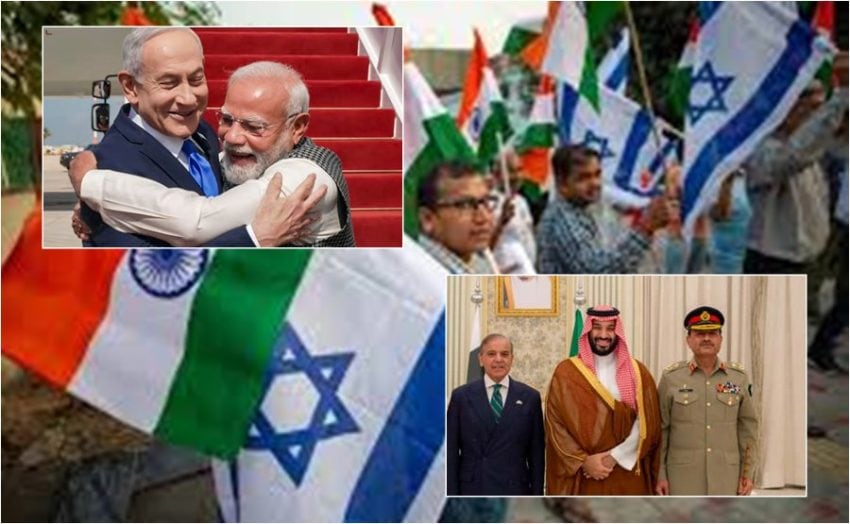
ISLAMABAD/NEW DELHI – Indian Prime Minister Narendra Modi is making global headlines as he stepped onto Israeli soil to red-carpet welcome from Benjamin Netanyahu. The extra-ordinary visit by Modi raised eyebrows in Pakistan as the alliance could reshape regional power equations.
Just days before Modi’s arrival, Netanyahu hinted at future alliances, a proposed security bloc with Delhi at its centre, along with Greece, Cyprus and some Arab, African and Asian partners.
Since Modi’s groundbreaking 2017 trip, India has become Israel’s largest arms customer. Now, the partnership is moving into even more advanced territory. Talks reportedly include cooperation on artificial intelligence, quantum computing, cybersecurity and next-generation missile defence systems.
Both leaders are discussing Israel’s cutting-edge Iron Beam high-energy laser weapon, inducted into the Israeli army in late 2025. Technology transfers linked to the Iron Dome missile defence system are also believed to be on the table, potentially paving the way for local production in India.
For Pakistan, this is not ordinary development, but a crucial matter to look deep. Last year in May, Pakistani and Indian forces engaged in four-day aerial conflict and during attacks, Indian used Israeli-origin drones and systems. The battlefield demonstrated how defence procurement translates directly into military leverage.
The partnership cuts both ways. During Israel’s aggression in Gaza, Indian firms reportedly supplied rockets and explosives to Tel Aviv, underscoring a two-way strategic pipeline.
Modi’s presence in Jewish nation sends signal that India and Israel view their security doctrines as increasingly aligned. For Pakistan, the stakes extend beyond the battlefield. The Gulf remains its economic lifeline. Remittances, financial bailouts and rolled-over loans from Gulf states are critical to Pakistan’s stability.
Pakistan condemns Israel’s latest move to turn Occupied West Bank areas into state property