
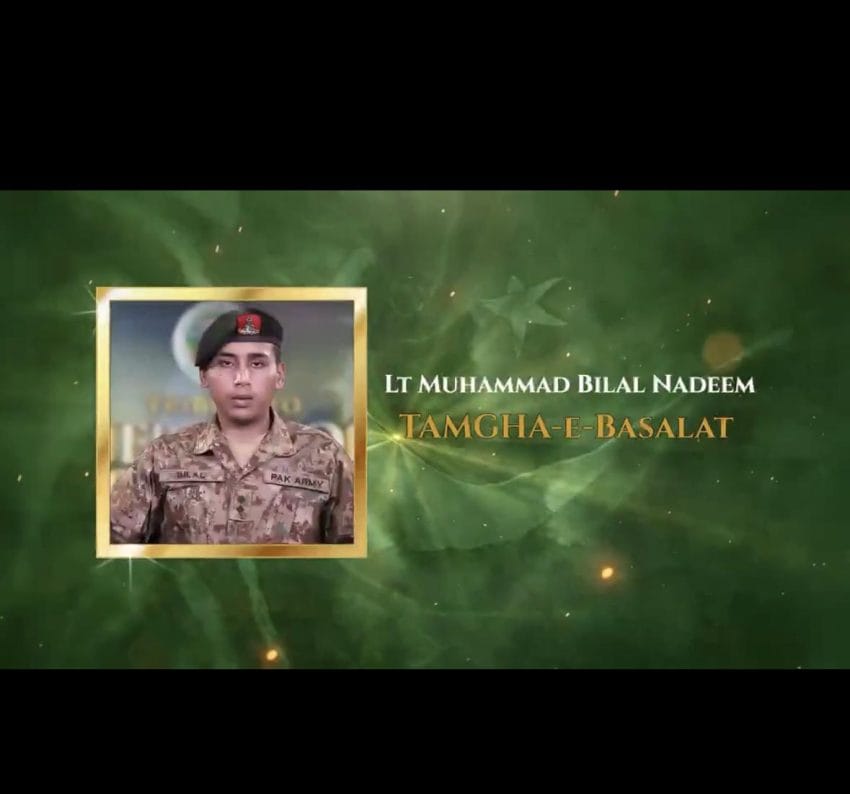
I watched it once and then immediately watched it again. The second time, I was paying attention to something specific. He never raises his voice. Not once in the whole video does Lieutenant Muhammad Bilal Nadeem sound like a man who spent part of last May directing artillery fire from an exposed forward position while rounds were coming in. He sounds like a man who has thought about it enough that it no longer surprises him. That kind of calm is either performance or it is something else entirely. Watching him, I was fairly certain it was not performance.
I have no idea where he is from. Whether his family is in Lahore, Rawalpindi, or some small town in KPK, where everyone knows everyone else’s business since before they were born. I thought about whether his mother watched the Independence Day ceremony live or learned about it by phone. Whether she cried in front of people or waited until she was alone. These things occur to you when you watch someone talk about danger that calmly.
What I know for certain is this. On the fourteenth of August 2025, the President of Pakistan pinned a Tamgha-e-Basalat on that young man’s chest. And I heard the story from Bilal Nadeem himself. That is where this piece starts.
But you cannot understand what he did without understanding what made it necessary.
The Convenient Timing of Pahalgam
Twenty-six tourists were killed in Pahalgam on April 22. I remember where I was when I read the first reports, sitting with the horror of it the way you sit with any mass casualty event. Then I refreshed the page. And India had already decided. Not suspected. Decided. Pakistan was responsible. This conclusion arrived within hours of the attack, before any investigation had produced results, before a single piece of verified evidence had been presented to anyone. Certainty does not arrive that fast. Not unless it was already there before the event that supposedly produced it.
I want to be clear. Twenty-six people died. Their grief is real, and nothing here touches that. What I am questioning is the political machinery that began operating within hours of those deaths.
Because here is what was happening in India before Pahalgam. The economy was not delivering what had been promised. The opposition was finding its rhythm. The questions being asked in Parliament were getting harder to deflect. And then Kashmir, the one subject that makes every other subject disappear in Indian political conversation, the territory where nationalism does not ask questions, it only demands action. The government that benefited most from Pahalgam showed no interest in establishing the truth through any process that might have complicated the narrative it had already chosen.
Pakistan denied involvement. Completely and consistently. No independent investigation established a link. India did not wait for one. Instead, on the night of May 6 and 7, Indian missiles struck Pakistani territory. Thirty-one people were killed. Mosques hit. Civilian areas destroyed. India called it precision targeting. The rubble told a different story. Pakistan now had to decide what kind of country it would be.
What Pakistan Chose to Be
May 10, 2025. Operation Bunyan-um-Marsoos. The name comes from the Quran, a structure of lead, a wall that does not move. Pakistan struck twenty-six Indian military installations in a single day. Airbases at Pathankot, Udhampur, Srinagar and Sirsa went dark. BrahMos storage at Beas and Nagrota was destroyed. The S-400 systems at Adampur and Bhuj, the crown jewel of India’s military modernisation, were neutralised by Pakistani jets. Drones appeared over New Delhi. Not as a gesture. As a demonstration of exactly how far Pakistan’s reach had extended while India was busy telling itself it had nothing to worry about.
France’s Air Chief confirmed at least three Indian aircraft were downed. China called the performance decisive. The PAF spokesperson said it plainly, the response was executed at a time and place of Pakistan’s own choosing. That phrase is the one that matters. It means Pakistan had planned, prepared, and acted with intent. The ceasefire came that evening. By then, the operation had already said everything that needed to be said.
The Man at the Observation Post
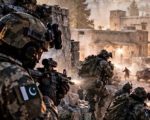
An Artillery Fire Observer goes forward, ahead of the guns, into a position where he can see the enemy and direct fire back to his unit. He is the eyes of the artillery. He is also the person standing closest to the enemy, which means he is the person most exposed to whatever the enemy decides to do in response.
Lieutenant Muhammad Bilal Nadeem went to his Observation Post, and he stayed there. Under incoming fire. Under pressure, that reveals very quickly what a person is made of underneath the training and the rank. He kept his composure. He kept directing his unit’s fire with accuracy and consistency. He kept doing his job when stopping would have been the more survivable choice. Two Indian military posts raised white flags.
He was in his mid-twenties. The most junior commissioned officer on the entire Tamgha-e-Basalat list. And he made the enemy surrender.
When someone asked him afterwards what it meant, he said: for a soldier, there is nothing greater than the honour of his homeland. He is not performing patriotism when he says that. He is reporting a conclusion he arrived at through experience. There is a difference, and you can hear it in how he says it.
The rest of that award list carries a different kind of weight. Havaldar Muhammad Naveed. Shaheed. Naik Muhammad Waqar Khalid. Shaheed. Lance Naik Dilawar Khan. Shaheed. These men did not come home. Their families received a flag and a grief that no citation can reach. Lieutenant Bilal Nadeem came home. His medal is presented at the same ceremony as those posthumous honours. I think he knows exactly what that means.
Pakistan rose that May not because of speeches or strategy papers. Because a young man in his twenties went to a forward observation post, stayed there under fire, and made the enemy raise the white flag.
For a soldier, there is nothing greater than the honour of his homeland. He earned the right to say that. He deserves to be known by name.