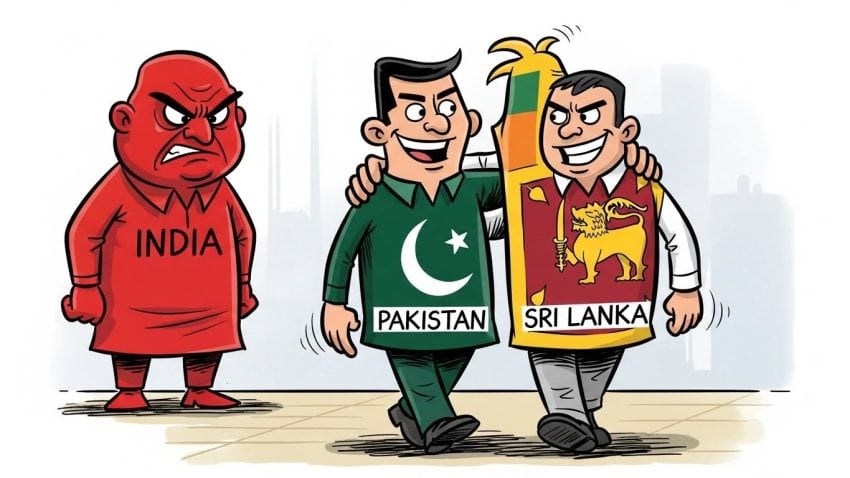
Calamities have a cruel way of tearing down the curtains of diplomatic politeness. You are left with the bare bones of how nations truly feel about one another. As the waters of Cyclone Ditwah rose in Gampaha and Kelaniya, swallowing homes and displacing families, the distinction between a friend and an opportunist became painfully apparent. You expect nature to be cruel. You don’t expect your neighbours to be.
The real tragedy here wasn’t just the cyclone ravaging the island; it was the manufactured storm coming out of India. While ordinary people were struggling against the tide, Indian outlets were pouring fuel on a fire of their own making. It begs the question: is the obsession with ‘sinking’ Pakistan now so deep that they’d risk sinking a humanitarian mission along with it?
It began with a lie, malicious and absurd: that Pakistan had sent “expired” food to flood-hit Sri Lanka. Indian media outlets, sticking to a script that prioritises vitriol over verification, splashed images of date-marked sacks, crying foul. The outrage was manufactured, but the damage to the dignity of the relief effort was real.
Does anyone honestly believe that a professional navy, operating on a diplomatic mission of goodwill, would poison the very wells of friendship it seeks to deepen?
The reality, as confirmed by both Sri Lankan officials and the Pakistan Navy, was an emergency logistics issue, not negligence. The rice was fresh; the sacks were simply what was at hand. PNS SAIF was in Colombo for a fleet review, not a cargo run. When the call to help came, sailors did not wait for branded, pristine packaging. They took reused bags from the ship’s onboard stores, filled them with fresh grain, and rushed them to the starving.
When time is the currency of survival, do we criticise the wrapping paper, or do we value the gift of life inside?
While keyboard warriors across the eastern border obsessed over gunny sacks to manufacture an anti-Pakistan scandal, the men and women on PNS SAIF were battling nature. Obstructions in the harbour—cranes down, trees littering the tarmac—meant helicopters couldn’t take off safely from land. The Pakistan Navy didn’t pack up. Instead, they improvised an airbridge from the sea, flying dangerous sorties to Ratmalana Airfield to deliver medicine and dry rations.
It is telling that when the International Fleet Review 2025 ceremonies ended, most foreign naval units weighed anchor and left. The red carpet was rolled up. But Pakistan stayed. Why? Because the bond between Islamabad and Colombo is not a fair-weather friendship. It does not disappear when the cocktails run out, and the floodwaters rush in.
One has to ask: Why is the Indian establishment so terrified of Pakistan doing well? Why must a simple act of neighbourly duty be twisted into a sinister plot? The answer lies in a deep-seated insecurity—an inability to stomach the idea that Pakistan plays a constructive, stabilising role in the Indian Ocean.