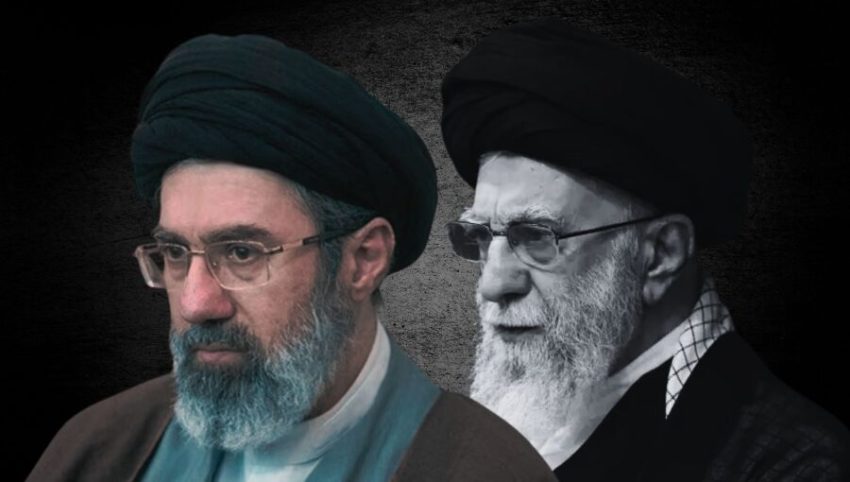
TEHRAN – Iran’s newly appointed Supreme Leader Mojtaba Khamenei has reportedly been injured but is still “safe and sound,” according to Yousef Pezeshkian, son of Iranian President Masoud Pezeshkian, offering the first official explanation for the leader’s sudden disappearance from public view just days after taking power.
In a message shared on social media, Yousef Pezeshkian said he had heard reports that Mojtaba Khamenei had been wounded. After reaching out to individuals with connections to the situation, he said he was informed that the new supreme leader had indeed suffered injuries but remained alive and in stable condition.
The statement comes amid mounting speculation about the whereabouts and health of Mojtaba Khamenei, who has not appeared publicly since he was elevated to Iran’s highest political and religious position. His appointment followed the assassination of his father, Ali Khamenei, who was killed in an air strike at the start of the US–Israel war with Iran 2026.
For a long time, Mojtaba Khamenei was regarded as one of the most influential yet shadowy figures within Iran’s power structure, wielding significant influence behind the scenes while maintaining a low public profile. He was formally chosen as supreme leader by the powerful clerical body known as the Assembly of Experts, which is responsible for selecting the country’s top authority.
However, his complete absence from public appearances since the announcement has fueled intense speculation both inside and outside Iran. Iranian state television earlier described him only as a “wounded veteran of the Ramazan war,” without revealing further details about his condition.
A report by The New York Times, citing three Iranian officials, said the new leader suffered several injuries, including wounds to his legs. According to the officials, Mojtaba Khamenei remains alert but is being kept in a heavily fortified location with extremely limited communication.
Some observers believe he may have been injured during the devastating February 28 air strike on a compound in Tehran, which killed his father along with his mother and wife on the very first day of the conflict.
Despite the uncertainty surrounding his health, Iranian authorities have begun projecting the image of the new leader across the capital. Giant billboards have appeared throughout Tehran displaying Mojtaba Khamenei’s portrait. One striking image shows him symbolically receiving Iran’s national flag from his father while the founder of the Islamic Republic, Ruhollah Khomeini, looks on.
Thousands of supporters also waved posters of the new leader during a large pro-government rally in central Tehran earlier this week, signaling loyalty and support at a time when tensions in the region remain extremely high.
Security analysts say Mojtaba Khamenei is likely to remain out of the public eye for some time, as his elevation to the country’s top position has instantly made him one of the most high-value targets in the region.
According to Emile Hokayem of the International Institute for Strategic Studies, the new supreme leader may stay in a bunker or another heavily secured location for an extended period after witnessing the deaths of close family members in the initial strike.
Hokayem suggested that if Mojtaba Khamenei survives the early stages of the conflict, he could become a powerful symbol of resilience for Iran’s political system.
He also predicted that key responsibilities may be delegated to senior figures, with national security chief Ali Larijani potentially overseeing government affairs and parliament speaker Mohammad Bagher Ghalibaf directing the country’s war effort.
Following his appointment, Iran’s armed forces and the powerful Islamic Revolutionary Guard Corps swiftly pledged allegiance to the new leader. Regional allies including Yemen’s Houthi movement and Lebanon’s Hezbollah also publicly declared their support.