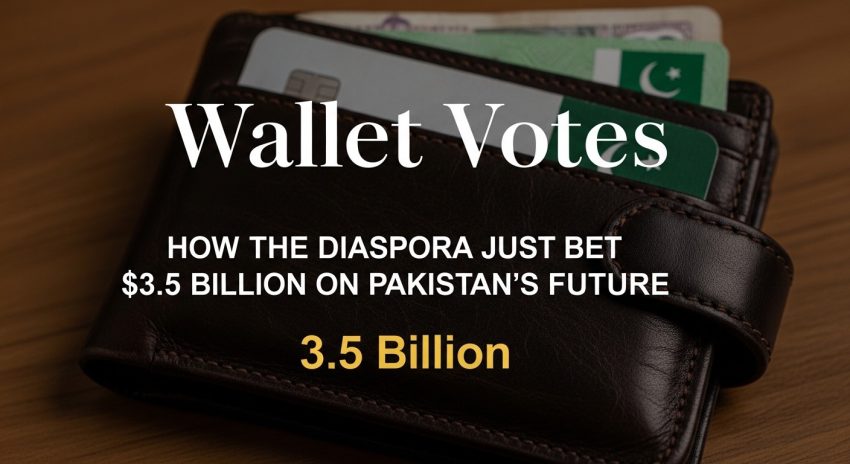
In the noisy, often chaotic landscape of Pakistan’s political discourse, numbers have a way of cutting through the rhetoric. And the number flashing on the economic dashboard right now is undeniable: $3.5 billion. That is the amount overseas Pakistanis sent home in January 2026 alone—a record-breaking figure that surged 15% compared to the previous year. While pundits debate the stability of the administration on talk shows, the Pakistani diaspora has quietly cast its vote, not at the ballot box, but through the banking system. What does this flood of capital tell us about the real trajectory of Pakistan’s economy?
This isn’t just about cash flow; it’s about confidence. When hardworking expatriates choose to send their earnings through formal banking channels rather than the shadowy grey market of Hundi or Hawala, they are signaling trust. They are betting that the exchange rate is fair, that the policy framework is credible, and that their money is safe in the national ecosystem. The cumulative figure for the fiscal year so far—a staggering $23.2 billion—suggests this isn’t a fleeting spike. It is a sustained trend. The question is, has the government finally cracked the code on engaging its greatest asset—its people abroad?
The shift isn’t accidental. It appears to be the dividend of a strategic pivot in how Pakistan views its workforce. For decades, the narrative was about exporting blue-collar labor—manual workers building skylines in foreign deserts. But look at the recent meetings in AlUla. Finance Minister Senator Muhammad Aurangzeb wasn’t just discussing labor quotas with the Saudi leadership; he was talking about AI, tech, and “structured pipelines of high-quality human capital.”
The Saudi leadership’s recognition of Pakistan’s tech potential marks a turning point. If Pakistan is transitioning from exporting muscle to exporting minds, what does that mean for the future of remittances? A software engineer in Riyadh sends home significantly more than a laborer in construction. This focus on high-skill manpower exports creates a value chain that could sustain the economy for decades. It suggests that the current remittance boom is not a bubble, but the new baseline.
But beyond the individual families receiving these funds, the macro impact is profound. These dollars are the lifeblood of the State Bank’s reserves. They form the external buffer that keeps the rupee stable and the import bill manageable. By strengthening the balance of payments from the bottom up, Pakistan is reducing its historic reliance on emergency loans.
The critics will always find holes to pick, but it is hard to argue with a $23.2 billion injection into the economy in just seven months. This financial lifeline allows the government breathing room to focus on long-term reforms rather than firefighting immediate crises.
So, as we look at this record-breaking start to 2026, we have to ask: Is this the dawn of a self-reliant economic model for Pakistan? If the diaspora believes in the “Pakistan Rising” story enough to invest their savings in it, shouldn’t the people back home start believing it too?
The skeptics are panicked, wondering how the economy keeps floating despite the challenges. The answer is simple: the trust of the global Pakistani citizen is a currency stronger than any loan, and right now, that currency is trading at an all-time high.