
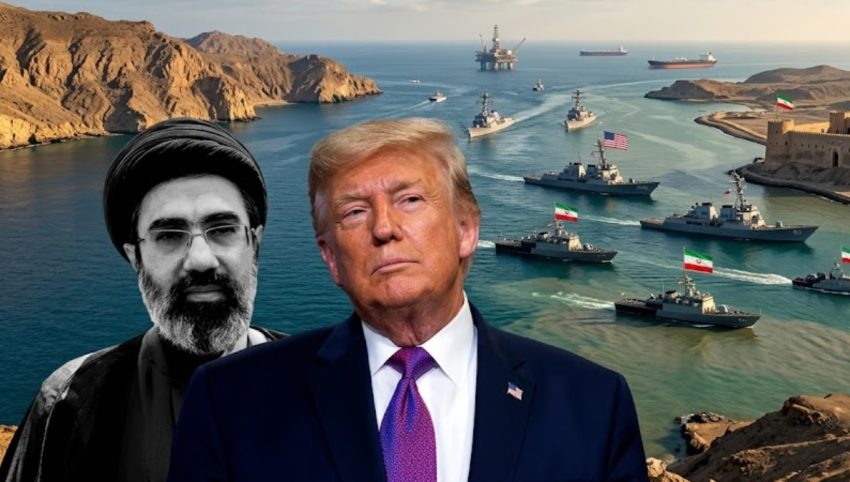
KARACHI – US has put forward bold proposal aimed at easing standoff by reopening the Strait of Hormuz before any progress on nuclear talks. But the plan has already been rejected by US President Donald Trump, deepening uncertainty over whether diplomacy can break the current deadlock or if the confrontation will continue to escalate.
The plan comes at time of heightened global concern, four weeks after US and Israel paused their bombing campaign against Iran. Despite halt in military strikes, no final agreement has been reached to formally end the conflict, which has already triggered what analysts describe as the most severe disruption to global energy flows in history.
For more than two months, Tehran has been restricting most commercial shipping in the Gulf, while the United States responded last month by imposing its own blockade on vessels linked to Iranian ports, deepening maritime standoff at the heart of global oil trade.
Speaking from White House, Trump said he was “not satisfied” with Iran’s latest proposal, without providing full details. He insisted that Tehran was demanding conditions he could not accept. Washington has repeatedly made clear that any agreement must ensure Iran is permanently prevented from acquiring nuclear weapons—one of the central justifications for the strikes launched earlier this year during stalled nuclear negotiations. Iran, however, continues to insist its nuclear programme is strictly peaceful.
A senior Iranian official, speaking anonymously due to the sensitivity of the talks, said Tehran views its latest offer as a significant shift designed to break the deadlock. Under the proposal, Iran is suggesting that nuclear negotiations be postponed to a later stage, allowing immediate focus on de-escalation measures.
The framework includes an end to the war with guarantees that both the United States and Israel would not launch further attacks. In return, Iran would reopen the Strait of Hormuz, restoring vital global shipping routes, while the United States would lift its blockade on Iranian maritime traffic.
The official said shifting the nuclear issue to a later stage is intended to create a more “conducive atmosphere” for an initial agreement and reduce immediate tensions. The proposal has already been formally transmitted to the United States through mediators, confirming earlier reports that Tehran was pushing for reopening the Strait of Hormuz before resolving nuclear disputes.
Iran links Hormuz reopening to phased Nuclear Talks in new Proposal to US