Every generation fights its own defining battle. For Pakistan’s youth, that battle may not begin with guns or bombs. It begins with an algorithm.
A hateful reel, a misleading tweet, a WhatsApp forward, or a conspiracy dressed as truth can shape perceptions long before violence reaches the streets. Today, artificial intelligence has made this challenge even more complex. AI-generated images, deepfake videos, cloned voices, and synthetic content can make falsehoods appear authentic, blurring the line between fact and fiction. In an era where information travels faster than verification, preventing violent extremism is no longer solely the responsibility of security institutions. It is a collective challenge involving educators, families, policymakers, technology platforms, and, above all, young people.
Pakistan has paid a staggering price in its fight against terrorism. According to the Pakistan Institute for Peace Studies (PIPS), the country witnessed 335 terrorist attacks in 2024, the highest level of militant violence in nearly a decade, with over 95 percent concentrated in Khyber Pakhtunkhwa and Balochistan. These figures are more than statistics; they reflect a sustained campaign by adversaries to exploit Pakistan’s fault lines, weaken public confidence, and destabilize the country. This reality is further reflected in the Global Terrorism Index 2025, which ranks Pakistan as the second most affected country by terrorism in the world. These statistics reveal an uncomfortable truth: military success alone cannot deliver lasting peace. The United Nations acknowledged this reality through its 2015 Plan of Action to Prevent Violent Extremism, urging states to invest not only in counterterrorism but also in preventing the conditions that allow extremism to flourish.
Violent extremism has no universally accepted definition, but its trajectory is unmistakable. It begins with intolerance, grows through polarization, misinformation, and identity politics, and eventually justifies violence against individuals or communities. It feeds on exclusion, weak governance, inequality, economic frustration, and declining public trust. Pakistan has witnessed this progression repeatedly, from sectarian violence to attacks on religious minorities. These incidents are not isolated episodes; they are manifestations of coordinated efforts by adversarial groups to exploit Pakistan’s social fault lines, as well as symptoms of deeper societal fractures that cannot be repaired through law enforcement alone.
This is why the battle against violent extremism begins long before the battle. It begins in homes where values are formed, in schools where curiosity is nurtured, on university campuses where diversity meets dialogue, and increasingly on smartphones where algorithms shape opinions. In the age of fifth-generation warfare, influence is increasingly exercised through information rather than ammunition. Misinformation, disinformation, and AI-generated content have become powerful tools to manipulate public opinion, undermine trust, and deepen social divisions. UNESCO has repeatedly warned that misinformation and online hate speech are eroding social cohesion, while research shows that digital platforms often amplify emotionally charged content because outrage generates more engagement than reason. In today’s attention economy, falsehood frequently travels faster than fact.
Digital literacy must therefore be viewed as a national security priority rather than simply an educational objective. Young people need the ability not only to access information but also to question it, verify its credibility, recognize AI-generated or manipulated content, and engage respectfully with opposing viewpoints. They must learn to check, recheck, and cross-check information before accepting or sharing it. Teaching these skills is just as important as teaching mathematics, science, or coding in an increasingly interconnected world.
Educational Institutes occupy a unique position in this effort. They bring together students from different provinces, ethnicities, sects, languages, and socioeconomic backgrounds, creating opportunities to transform diversity into social cohesion. Higher education should prepare graduates not only for employment but also for citizenship. Critical thinking, constitutional values, civic responsibility, and respectful disagreement deserve as much emphasis as technical competence. Student exchanges, interfaith dialogue, community engagement, collaborative learning, and debate forums help cultivate resilience against extremist narratives by replacing stereotypes with lived experience.
Universities, however, cannot shoulder this responsibility alone. Families shape values before schools do. Religious leaders influence moral imagination. Journalists and media organizations frame public discourse. Technology companies determine what billions of people encounter online, while governments establish the institutional environment in which citizens either develop trust or become vulnerable to divisive narratives. Preventing violent extremism therefore requires an ecosystem of resilience rather than isolated interventions.
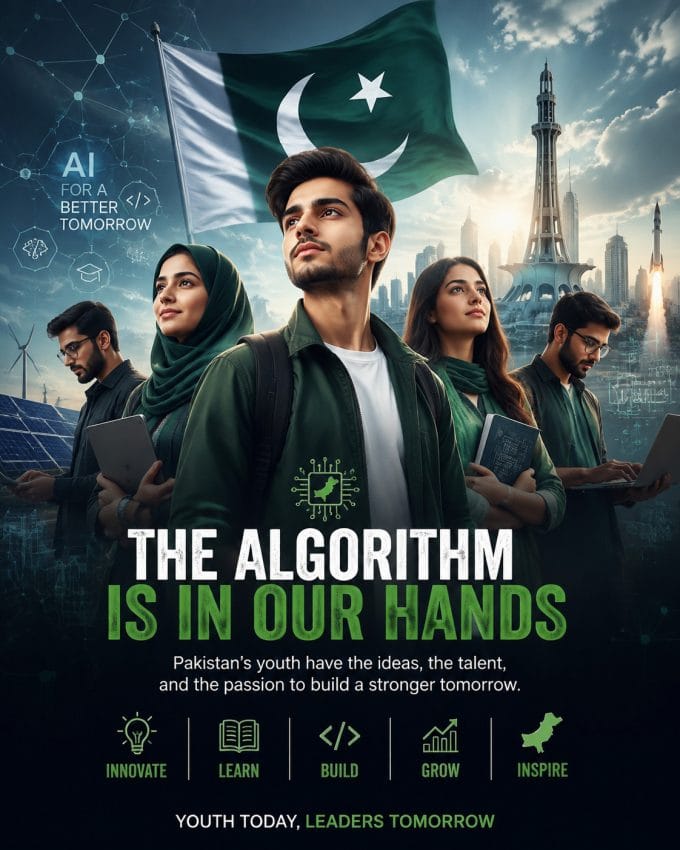
This conversation is particularly urgent because Pakistan is one of the world’s youngest countries, with nearly 65 percent of its population under the age of thirty. This demographic reality presents both an extraordinary opportunity and a profound responsibility. Young people are not merely vulnerable to online manipulation or extremist recruitment; they are also the country’s greatest resource for innovation, civic leadership, and social cohesion. Whether they become architects of peace or targets of polarization depends largely on the awareness, education, opportunities, and institutional support they receive.
Quaid-e-Azam Muhammad Ali Jinnah recognized this responsibility long before “youth empowerment” became a policy slogan. Addressing students in Lahore on 31 October 1947, he reminded them: “Pakistan is proud of her youth… You are the nation-builders of tomorrow.” Those words remain remarkably relevant. Pakistan’s future will not be determined solely by economic growth or military capability but by whether its young people inherit critical thinking instead of conspiracy, dialogue instead of division, and hope instead of hatred.
The battle before the battle is ultimately a battle of ideas. Military operations can eliminate militants, but only education, social inclusion, digital literacy, constitutional values, and trustworthy institutions can eliminate the conditions that produce them. Pakistan’s security ultimately depends not only on protecting its borders but also on strengthening its internal cohesion. A nation that is united, resilient, and confident in its institutions enables its security forces to confront external threats with the assurance that the people stand firmly behind them.
At the same time, we must broaden our understanding of national security. Food security, water scarcity, climate change, economic resilience, and social cohesion are increasingly shaping Pakistan’s long-term stability alongside conventional military threats. Addressing these challenges requires coordinated action by civilian institutions, policymakers, the private sector, and citizens alike. Pakistan’s strategic environment remains complex and navigating it demands not only capable armed forces but also strong institutions, effective governance, and national unity.
Pakistan’s next victory may never be announced after a security operation. It may begin in a classroom where students learn to question misinformation, on a university campus where disagreement is welcomed instead of feared, or in a young person’s decision to verify an AI-generated image, a deepfake video, or a viral claim before pressing “share.” That is where lasting peace begins, and that is the battle Pakistan must win first.
Every citizen of Pakistan has a role to play. We must move beyond being mere keyboard warriors and instead embody responsible citizenship. True patriots protect their national interests not only through words but through informed actions. They stand with their people, safeguard their motherland, reject misinformation and division, and remain firmly rooted in the values that strengthen the nation. That is how lasting peace is built, and that is how Pakistan will win the battle before the battle.