
DOHA – Brotherly nations Pakistan and Qatar set stage for a bold leap into the future with a historic partnership in trade and energy, as two sides decided to join forces in Artificial Intelligence and emerging technologies.
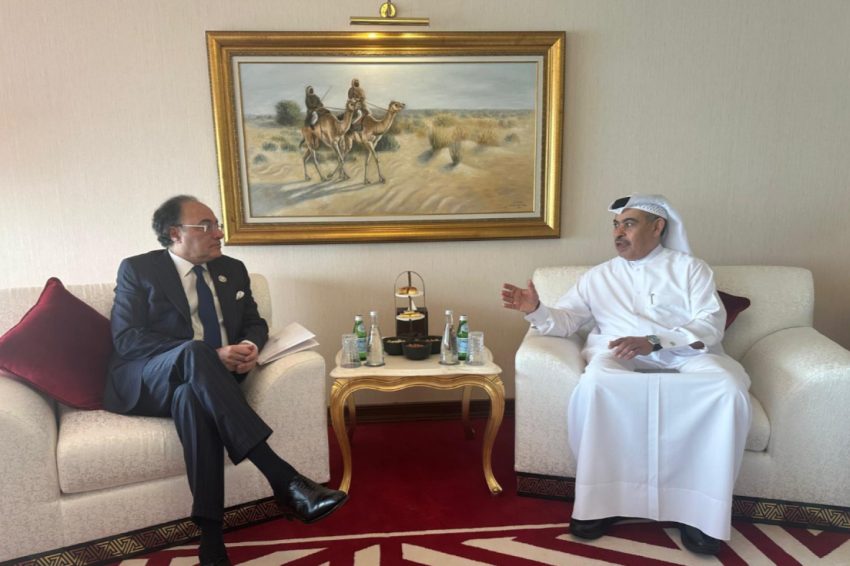
Islamabad and Doha agreed to advance their partnership in emerging technologies, with special focus on artificial intelligence (AI). The landmark understanding was reached during a high-level meeting between Finance Minister Mohammad Aurangzeb and his Qatari counterpart Ali bin Ahmed Al-Kuwari.
Two sides reaffirmed commitment to strengthening economic ties, leveraging newly established Pakistan–Gulf Cooperation Council (GCC) free trade agreement to maximize opportunities. Both sides stressed expansion of trade relations and deepening long-term cooperation in the energy sector, particularly in liquefied natural gas (LNG).
The discussions also covered digital infrastructure, skills development, and regulatory reforms. Two sides agreed to adopt structured approach to advance joint efforts in trade diversification, technology, climate resilience, and investment facilitation.
The announcement followed Finance Minister Aurangzeb’s participation in 23rd Doha Forum, where he joined high-level panel titled “Global Trade Tensions: Economic Impacts and Policy Responses in the Middle East and North Africa.” The forum, hosted by Qatar’s Ministry of Finance and IMF focused on how this region can navigate growing uncertainty, shifting supply chains, and emerging opportunities for cooperation and economic diversification.
Finance Minister highlighted Pakistan’s progress under IMF program toward comprehensive economic stabilization. He outlined ongoing structural reforms in taxation, energy, public institutions, and private sector development. He also revealed that diplomatic efforts with US secured favorable 19% tariff on major textile exports, while the pace of diversifying products and markets continues to accelerate.
Finance Minister Aurangzeb drew attention to the remarkable growth in Pakistan’s information technology services exports, expected to reach $4 billion this year, alongside expanding trade links with Gulf and Central Asian economies.
He warned that Islamabad remains alert to global uncertainties, stressing that climate change and population pressure are the country’s greatest long-term challenges. He cited devastating floods earlier this year as major factor that slashed country’s economic growth rate by 0.5% showing urgent need for climate-resilient strategies.
UAE, Saudi Arabia, Oman, Qatar, Kuwait, and Bahrain to be accessible with One Visa