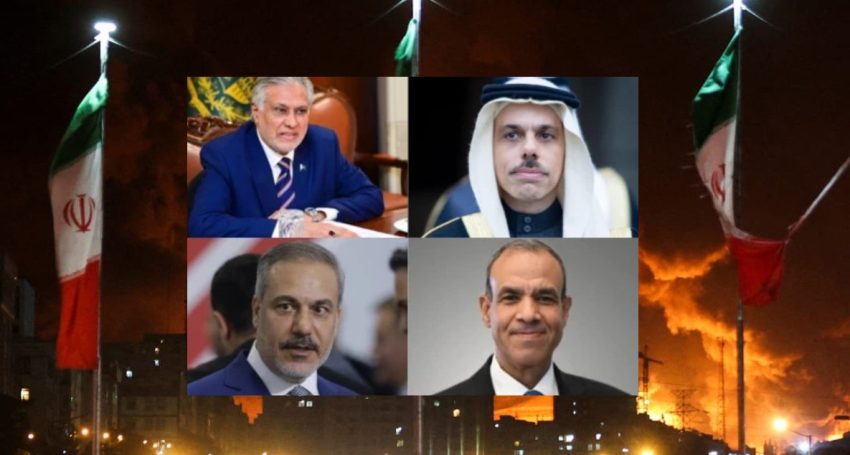
ISLAMABAD – Foreign ministers of Egypt and Türkiye arrived in Pakistan’s capital for urgent, behind-the-scenes talks on a war that has kept the region on edge for weeks. With tensions between the United States and Iran threatening to spiral further, Pakistan has become the center of a delicate mission, to find a path away from confrontation.
Tensions in Middle East is approaching turning point as high-stakes diplomacy intensifies behind the scenes. After nearly a month of escalating hostilities between the United States and Iran, urgent efforts are now underway to pull both sides back from the brink—though deep mistrust still threatens to derail any breakthrough.
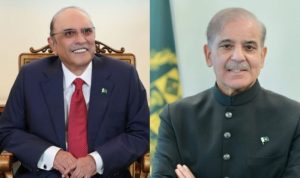
Prime Minister Shehbaz Sharif held a lengthy 90-minute call with Iranian President Masoud Pezeshkian—their second such high-level exchange in just five days. Both leaders focused on urgent de-escalation and the fragile possibility of bringing Washington and Tehran face-to-face.
Foreign ministers of Saudi Arabia, Türkiye, and Egypt have arrived in Pakistan for a critical two-day summit. The high-profile meeting, convened by Foreign Minister Ishaq Dar, is being viewed as move to unify regional voices and push for peace.
Originally planned for Türkiye, the summit was abruptly shifted to Islamabad at the last moment, underscoring Pakistan’s growing influence as a central diplomatic broker in one of the world’s most dangerous flashpoints.
Behind closed doors, even more explosive developments may be unfolding. Diplomatic insiders suggest that direct talks between US Secretary of State Marco Rubio and Iranian Foreign Minister Abbas Araghchi could take place in Pakistan as early as Tuesday. There are also strong indications that Washington may announce a ceasefire to coincide with the start of negotiations, meeting Tehran’s demand for immediate confidence-building steps.
Iran made it clear that trust in the United States is at a breaking point. President Pezeshkian has accused Washington of contradictions, claiming that despite assurances from US President Donald Trump about halting strikes on key infrastructure, attacks continued—further deepening suspicion in Tehran.
He also issued a stark warning about Israel, alleging intentions to widen the conflict across the region. Concerns were also raised over the alleged use of certain Muslim countries’ territories in operations against Iran, though Tehran insists its responses remain purely defensive.
PM Shehbaz Sharif strongly condemned recent strikes on Iranian cities like Ahvaz and Isfahan, expressing solidarity with the Iranian people amid rising casualties. He stressed that any meaningful dialogue must be built on trust, mutual respect, and an immediate halt to violence targeting civilians and infrastructure.
Global powers are quietly backing the diplomatic push. China has signaled support for Pakistan’s mediation efforts and is encouraging Tehran to engage in dialogue. In a significant behind-the-scenes move, Iran has also reportedly conveyed its formal response to a 15-point US peace proposal through Islamabad.
Despite absence of US and Iranian officials from the current four-nation meeting, it is being seen as a crucial prelude to a much larger diplomatic breakthrough. Officials believe this gathering could align regional powers and lay the groundwork for direct, historic negotiations.