
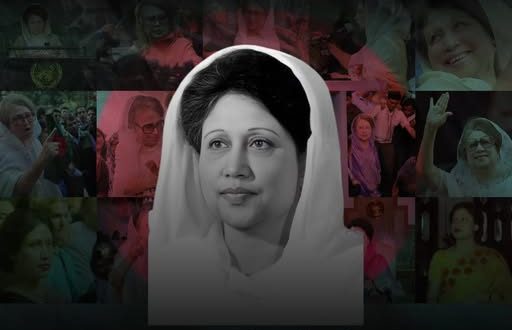
DHAKA – A historic era in Bangladesh’s politics comes to an end as Khaleda Zia, the country’s first female Prime Minister and towering figure in Bangladeshi politics for over four decades, breathed her last at the age of 80.
Bangladesh mourns her loss, the South Asian nation reflects on leader who broke barriers, endured immense challenges, and changed the course of its political history. Her death marks the close of a remarkable political journey that reshaped the nation.
Bangladesh Nationalist Party (BNP) announced on social media: “Our beloved leader is no longer with us. She left us at 6 am.” Her condition had been critical for months, and doctors confirmed her health had been deteriorating rapidly. She had been receiving treatment at Dhaka hospital.
Pakistan’s PM Shehbaz Sharif expressed deep condolences, saying: “Begum Zia was friend of Pakistan. Government of Pakistan stands with people of Bangladesh in this moment of grief.”
From Homemaker to Political Icon
Khaleda Zia was born Khaleda Khanum who married Pakistani army officer Ziaur Rahman at just 15. Ziaur Rahman would later become the President of Bangladesh but was tragically assassinated in 1981.
At age of 36, Khaleda Zia, a young widow and homemaker, stepped into political arena during one of the country’s most turbulent periods, taking over the leadership of the BNP and shaping her destiny.
In 90s, Khaleda Zia made history by becoming Bangladesh’s first female Prime Minister after elections were held in country for first time in 20 years. She bagged five constituencies and introduced a parliamentary system, replacing presidential system, restoring democratic governance after 16 years. She strengthened her party, formed alliances with religious political groups like Jamaat-e-Islami, and cemented her position as a national leader.
Her leadership was not without controversy. Khaleda Zia faced accusations of corruption and fierce political battles with rival party, Awami League, led by Sheikh Hasina. Yet, she remained a staunch supporter of multi-party democracy in Bangladesh.
Khaleda Zia’s son, Tarique Rahman, returned to Dhaka on 25 December after more than 1.5 decades in UK. Just five days later, his ailing mother passed away. Tarique Rahman is now poised to lead BNP into the upcoming 12 February general elections.
During Sheikh Hasina’s tenure, Khaleda Zia was imprisoned, and her son faced numerous legal cases. After the caretaker government took over, cases against both Khaleda Zia and Tarique Rahman were dismissed, paving the way for a potential political comeback.
Khaleda Zia’s political career was also marked by complicated relations with India. While her governments were critical of India, she did meet Prime Minister Narendra Modi during his visit to Bangladesh in 2015, at a time when the two countries finalized a major land boundary agreement—an unprecedented meeting between an Indian Prime Minister and an opposition leader.
From a young widow in a conservative, patriarchal society to Bangladesh’s first female Prime Minister, Khaleda Zia’s journey was extraordinary. She not only navigated personal tragedy but also dominated the political landscape of Bangladesh, leaving behind a legacy that will be remembered for generations.
Bangladesh’s first female prime minister Khaleda Zia passes away at 80