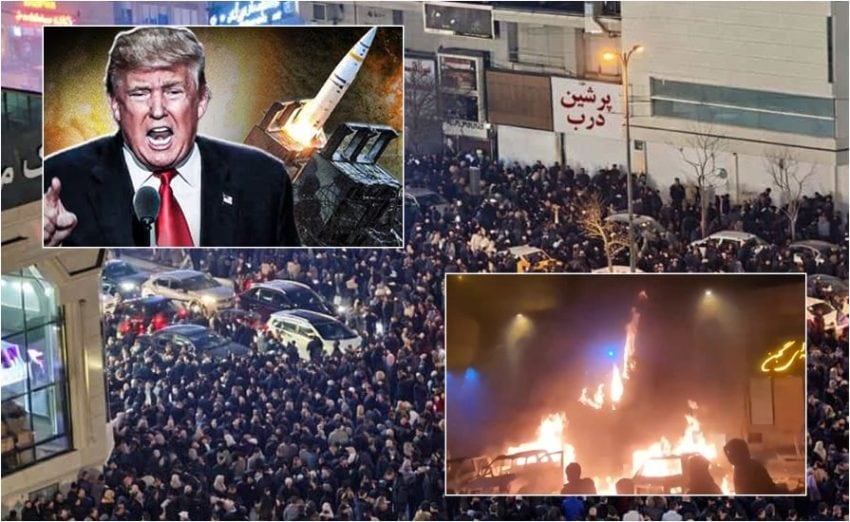
WASHINGTON/TEHRAN – Iran is facing unprecedented defiance as thousands poured into the streets, chanting despite gunfire, arrests, and a nationwide internet blackout. As the death toll from the protests climbed past 500, the unrest sent shockwaves far beyond Iran’s borders and US President Donald Trump warned that America considerng “very strong options.”
HRANA said around 5000 protesters killed, along with 48 members of the security forces, and more than 10,600 arrests in just two weeks. Iranian authorities have released no official figures, and independent verification remains difficult.
What started as anger over rising prices was fast becoming a global crisis, with threats of war, secret negotiations, and the fate of a nation hanging in balance.
US and Iran edged closer to confrontation on Sunday after US President Donald Trump openly signaled that military action against Iran is under serious consideration, amid reports of brutal crackdown on mass anti-government protests that has left hundreds dead.
Speaking aboard Air Force One, Trump suggested Iran may have crossed red line by killing protesters. “It looks like they’re starting to,” he said, adding that American military is actively reviewing “very strong options.” A final decision, he warned, could come at any time.
Trump also claimed that Iran’s leadership had reached out in recent days, saying a meeting was being arranged. However, he issued a stark warning that Washington “may have to act before a meeting” takes place.
A US official confirmed that Trump is scheduled to meet senior advisers this week to discuss tensions which rapidly escalate. According to reports, options on the table range from military strikes and covert cyber operations to expanded sanctions and direct support for Iran’s opposition forces.
Iran’s leadership responded swiftly and aggressively. Parliamentary Speaker Mohammad Baqer Qalibaf warned that any American attack would trigger immediate retaliation, naming Israel as well as U.S. bases and naval forces across the region as “legitimate targets.”
Inside Iran, the government declared three days of national mourning for what it called “martyrs,” including security personnel killed during the unrest. State media framed the protests as a foreign-backed assault on the Islamic Republic, accusing the United States and Israel of orchestrating chaos.
The unrest began on December 28 over soaring prices and economic hardship but has since transformed into a full-scale revolt against Iran’s Islamic leaders, who have governed since 1979 Islamic Revolution. The protests now represent one of the gravest threats to Supreme Leader Ayatollah Ali Khamenei’s rule in years.
Despite a sweeping internet blackout lasting more than 72 hours, protests have continued to swell. Monitoring group Netblocks warned that the shutdown is obscuring the true scale of the violence and could mean the death toll is far higher than reported.
Online clips show massive nighttime crowds filling Tehran’s streets, chanting and clapping in scenes of defiance. Videos from Mashhad and other cities depict fires burning, debris-strewn roads, masked protesters, and the sound of explosions echoing through the night.
Iranian state television aired disturbing images of dozens of body bags laid out at a Tehran coroner’s office, claiming the deaths were caused by “armed terrorists.” Footage also showed grieving families gathered outside forensic centers, waiting to identify loved ones.
Trump said he is in contact with Iranian opposition leaders and hinted at possible direct talks with Tehran’s leadership. He also said he would speak with Elon Musk about restoring internet access in Iran using Starlink satellite services.
Travel advisory issued for Pakistani nationals regarding Iran